Introduction
Imam Ali bin Mousa al-Reza (AS), the eighth Imam of the Shia, is of the progeny of Prophet Muhammad (PBUH) and his eighth successor. At the age of 35, he became the leader of the Islamic union. His life was contemporary to the Abbasid reign and therefore, he suffered great difficulties made by the Abbasids. Finally, he was martyred by Ma’mun (the contemporary Abbasid Caliph) at the age of 55.
| Detail |
Information |
| اسم |
Ali bin Musa (AS) |
| Mother |
Al-Khayzran (Najmah) |
| Kunniyat (Patronymic) |
Abu al-Hasan |
| Laqab (Title) |
Al-Rida |
| Birth |
148 AH – Madinah |
| Martyrdom |
203 AH – Poisoned, buried in Khurasan, Iran |
His Name, Title and Honorary Name
His name is Ali, his title is Abu al-Hassan, and his most famous honorary name is Al-Reza, meaning Satisfaction. According to his son, Imam Muhammad Taqi (AS), the ninth Imam:
“The glorious and mighty Lord named him Reza because Allah was pleased with him in the heavens and the Prophet of Allah and the Imams of guidance were pleased with him on earth. Also, his friends and relatives and even his enemies were satisfied with him because of his great moral qualities.”
One of his famous titles is Alim Al Muhammad (Scholar of the Prophet’s progeny). His success in the different disputes with the scholars of various religions indicates his high knowledge. This ability and superiority in knowledge is a proof for his Imamate, as can be inferred from his sayings.
His Father and Mother
His father was Imam Mousa al-Kadhim (AS), the seventh Imam. He was martyred by Haroon in 183 AH. His mother was Najmah, a woman of great piety and nobility.
His Imamate
His Imamate was announced repeatedly by his father, grandfathers, and Prophet Muhammad (PBUH). Especially Imam Kazim (AS) mentioned him as the Imam after himself several times. One of his followers narrates:
“One day Imam Kazim (AS) came to us, holding his son’s (Ali) hand. There were 60 people. He said: Do you know me? I said: You are our leader. He said: Say my name and title. I said: You are Mosa bin Jafar bin Muhammad. He said: Who is this guy with me? I said: Ali bin Mosa bin Jafar. He said: So profess that he is my representative during my life and my successor after my death.”
He is further introduced as the eighth Imam in a saying of the Prophet (PBUH) narrated by Jaber. Also, Imam Sadegh (AS) told Imam Kazim (AS) that the knowledge of the Prophet’s (PBUH) progeny is of your sons, and he is your successor.
His Life in Madinah
Before traveling to Marv, Imam Reza (AS) lived in Madinah. He accepted the position under strict conditions. He would not appoint anyone as a governor. He would not dismiss anyone. He would be a distant adviser in the affairs of the state. He was occupied with guiding people, indicating Islamic education and the Prophet’s (PBUH) Sirah (manner and behavior).
People of Madinah loved him and assumed him as their father. Although he had spent most of his life in Madinah, he had many followers throughout the Islamic counties. He points out this fact in a discussion about succession:
“In fact, succession didn’t make a distinction for me. When I was in Madinah, people in the east and west obeyed me and nobody was superior to me. They told me their requirements and I granted their requests and they treated me as a magnate.”
Political Situations
Imam Reza’s (AS) Imamate lasted eight years, which can be divided into three periods:
- The first ten years was contemporary to Haroon’s caliphate
- The next five years was contemporary to Amin’s caliphate
- The last five years was contemporary to Ma’mun’s caliphate
It was during the first period that great disasters, especially the martyrdom of Imam Kazim (AS), happened to the Alavi people (the children of Imam Ali (AS)). Haroon was instigated to kill Imam Reza (AS) but had not found the opportunity. After Haroon, Amin became the caliph. At that period, the government was weakened. Amin was drowned in corruption and paid no attention to Imam and his followers. This period was peaceful for Imam and his followers.
However, Ma’mun killed his brother, Amin, and became the caliph. He suppressed the objectors and gained control of all the Islamic countries. He gave the leadership of Iraq to one of his agents and settled in Marv. He then chose Fazl ibn Sahl, who was a great politician, as his minister. But the Alavi people were a threat to his government. After suffering murder, plunder and torture for a century, they had found the opportunity to object to the government and to overthrow it. They were successful in gaining people’s support, because they also had suffered great losses from the Abbasid Caliphate.
Therefore, Ma’mun decided not to confront them and wanted to bring back peace and security to strengthen his government. So, after consulting Fazl, he came up with a treacherous plan. He decided to offer the caliphate to Imam Reza (AS) and withdraw himself. Because whether the Imam accepted or not, it would still be a victory for Ma’mun. If Imam accepted and became Caliph, allowing Ma’mun to be the vice-caliph, that would guarantee the legitimacy of Ma’mun’s government. Thus Ma’mun decided to force the position of Caliph on Imam.
The Noble Status of Imam Ali Reza (AS)
Imam Ali ibn Musa al-Reza (AS), the eighth Imam from the Ahlul Bayt (AS), is one of the most revered figures in Islamic history, especially among followers of the Shia school of thought (Fiqh-e-Jafaria). Known for his unmatched knowledge, deep spirituality, and moral excellence, the noble status of Imam Reza (AS) continues to inspire millions across the world. His shrine in Mashhad, Iran, remains a prominent site of pilgrimage, reflecting his eternal spiritual impact.
A Divine Leader from the Ahlul Bayt (AS)
Imam Reza (AS) was born in 148 AH (765 CE) in Madinah. He was divinely appointed as the successor to his father, Imam Musa al-Kazim (AS), and served as a spiritual guide in a time of political unrest. As the representative of Allah on earth, he played a crucial role in preserving the true teachings of Islam during the oppressive rule of the Abbasid Caliphate.
Why He Was Called Al-Reza
The title “Al-Reza” (The Contented) was given to Imam Ali (AS) by Allah, as narrated by his son, Imam Muhammad al-Taqi (AS). It means “the one who is content with Allah’s will and accepted by Allah and His Messenger (PBUH).” This reflects his spiritual state and the divine recognition of his noble character.
Imam Reza’s Knowledge and Public Debates
Imam Reza (AS) was renowned for his vast knowledge of the Qur’an, Hadith, theology, medicine, philosophy, and other sciences. Under Caliph Ma’mun, he participated in open debates with Christian priests, Jewish rabbis, Zoroastrians, and scholars from different sects. These debates highlighted his unmatched intellectual authority and strengthened the position of true Islamic teachings.
— Bihar al-Anwar, Allama Majlisi
The Political Context of His Journey
The journey of Imam Ali Reza (AS) from Madinah to Khurasan was not a simple act of religious invitation; it was deeply rooted in political motives. The Abbasid Caliph Ma’mun, facing rising opposition and instability within the empire, especially from the Shia community, decided to use Imam Reza (AS) as a means to gain legitimacy.
Why Ma’mun Summoned Imam Reza (AS)
Imam Reza (AS) had earned widespread respect and spiritual influence among Muslims, particularly the followers of Ahlul Bayt. Ma’mun feared this growing popularity could threaten his rule.
Legitimacy Tactic: By appointing Imam Reza (AS) as the crown prince (Wali al-Ahd), Ma’mun hoped to silence the Shia community and strengthen his image as a just caliph.
The Imam’s Reluctant Acceptance
Imam Reza (AS) initially refused the offer but was forced to accept under political pressure. He accepted the position under strict conditions:
- He would not be involved in governmental decisions
- He would not endorse or legitimize any unjust practices of the Abbasid court
A Political Move Turned Spiritual Journey
Though Ma’mun’s intention was to politically contain Imam Reza (AS), the result was quite the opposite. During his journey and stay in Khurasan, Imam Reza (AS) spread the teachings of Ahlul Bayt, engaged with scholars, and earned the love of the masses. His presence turned Khurasan into a center of knowledge and spirituality. This unintended influence worried Ma’mun, ultimately leading to the Imam’s martyrdom by poisoning in 203 AH in Tus (now Mashhad).
The Painful Journey from Madinah to Tus
The journey of Imam Ali Reza (AS) from Madinah to Tus was one of sorrow, separation, and silent resistance. It was not a voluntary journey but one imposed upon him by the Abbasid Caliph Ma’mun under political pressure. This journey became one of the most emotional and significant episodes in history.
Forced Departure from Madinah
Imam Reza (AS) was living peacefully in Madinah, serving as a spiritual leader and guide. In 200 AH, Ma’mun sent a forceful invitation for the Imam (AS). Before departing, the Imam gathered his family and companions and bid them farewell with tears, saying:
“I am leaving Madinah and I will not return. I shall be buried in a land far away, next to strangers.”
— Bihar al-Anwar
This farewell foretold his impending martyrdom.
Key Stops on the Journey
Basra & Ahvaz: He was not allowed to pass through major Shia centers like Kufa and Qom to avoid public gatherings in his support.
Nishapur: One of the most notable stops. Here, thousands gathered to meet him. He narrated the famous Hadith al-Silsilat al-Dhahab (The Golden Chain Hadith):
“La ilaha illallah is My fortress; whoever enters My fortress is safe from My punishment.”
Then he added: “With its conditions — and I am one of its conditions.”
— Al-Amali of Sheikh Sadooq
Tus: Upon reaching Ma’mun’s court, he was forcefully declared crown prince — an honor he did not seek or accept in practice.
The Selselah al-Zahab (The Golden Chain) Tradition
Wherever he stopped during his journey towards Marv, he caused many blessings upon the people. At one point on his way, he entered the city of Neishaboor. A large crowd of people gathered to welcome his entrance. Meanwhile, two learned men who had recorded many prophetic traditions came with scholars of Hadith, took the halter, and said: “You, the great Imam and you, the son of great Imams, for the sake of your innocent fathers and your great grandfathers, show us your shining face and narrate us a tradition from your fathers and your great grandfather, the messenger of Allah, to be as a reminder for us.”
The Imam ordered them to stop and the people obeyed. Once they saw his face, they became so happy that some of them started crying and some who were close to him kissed his carriage. A big clamor was made throughout the city, so the elders of the city wanted people to be quiet so they could hear a tradition from Imam Reza (AS). After a while the crowd got silent and Imam dictated this tradition word by word from his honored father, which was narrated from his pure grandfathers and from the messenger of Allah and from Gabriel and from Almighty Allah:
“The word of La Ilaha Illa al-Allah is my fortress; then whoever says this has entered my fortress, and whoever enters my fortress will be saved from my punishment.”
Imam paused for a while and then said: “But on some conditions — I am one of its conditions.”
This tradition indicates that one of the necessities of saying the word of La Ilaha Illa al-Allah, which is to strengthen the principle of divine unity, is confirming his Imamate, obeying, and accepting his words and deeds that have been specified by the Almighty Allah. In fact, Imam believes the Oneness of God (Tawhid) as the condition of being safe from Allah’s punishment, and the acceptance of leadership and Mastership (Imamate and Wilayah) as the condition of believing in the Oneness of Allah.
Succession to Caliphate
When Imam Reza (AS) entered Marv, Ma’mun welcomed him royally and publicly through a speech in front of all the key characters of the government. He said: “All should know that I do not know anyone better and more deserving of succession than Ali ibn Mousi al-Reza in the descendants of Abbas or Ali (AS).”
After that he turned his face to Imam and said: “I have decided to dethrone myself and announce you as the Caliph.” Imam Reza (AS) said: “If Allah has specified Caliphate for you, then it is not permitted to give it to another one, and if it is not yours, then you do not have the authority to give it to another one.” Ma’mun insisted on what he wanted, but Imam said: “Never will I accept that.”
When Ma’mun got disappointed, he told Imam: “Then accept to be the Caliph after me, and successor of me.” The insistence of Ma’mun on his wants and Imam Reza’s (AS) refusal lasted for two months. He did not accept and said: “I have heard from my fathers that I will die before you and will be martyred with poison, and angels of the earth and skies will cry for me, and I will be buried in the land of nostalgia beside Haroon al-Rashid.”
But Ma’mun insisted on the succession of Imam Reza (AS) in such a way that he threatened Imam to death in a secret and private ceremony. Thus Imam said: “Now, since I am obliged, I accept it but on the condition that I do not appoint or depose anyone and do not change any custom or rule and control affairs imperceptibly.” Ma’mun had no choice but to accept this condition.
After that Imam raised his hands and said:
“O my God, You know that they opposed me under duress and I chose it by force. So please do not take me to task, just as Your two prophets, Yusuf and Danyal, did when they accepted the leadership position of the kings of their time. O my God, there is no vow except Yours and no Mastership except Yours. So please help me to establish Your religion and to follow Your Prophet’s custom. Indeed, what a good Master and a good assistant You are.”
The Martyrdom of Imam Ali Reza (AS) in Tus (Mashhad)
The martyrdom of Imam Ali Reza (AS) is among the most sorrowful events in Islamic history, marking the end of a life dedicated to knowledge, spirituality, and the defense of truth. His death in Tus (now Mashhad) was not only a political assassination but also a great loss to the Ummah.
The Rising Popularity That Alarmed Ma’mun
As Imam Reza (AS) settled in Tus, his influence grew rapidly. Scholars, students, and people from all walks of life were drawn to his knowledge, purity, and guidance. His popularity deeply unsettled Caliph Ma’mun, who feared the Imam’s spiritual authority would eventually challenge his political rule. Despite making Imam Reza (AS) the crown prince, Ma’mun never allowed him real power or freedom. The Imam consistently distanced himself from the corrupt politics of the Abbasids, which exposed Ma’mun’s hypocrisy even more.
The Method of Martyrdom
Historical sources state that Ma’mun poisoned Imam Reza (AS), most likely through a dish of grapes or pomegranate juice. The Imam suffered greatly after consuming the poisoned food, and despite the pain, he continued to glorify Allah in his final moments. Imam Muhammad Taqi (AS), his young son, who was in Madinah at the time, miraculously appeared by his side to assist and perform the funeral rites — an event reported in several Shia narrations, emphasizing the divine connection of the Imams.
Burial and the Formation of Mashhad
After his martyrdom in 203 AH (818 CE), Imam Reza (AS) was buried in the village of Sanabad, next to the grave of Harun al-Rashid, an Abbasid caliph and notorious enemy of the Ahlul Bayt. Over time, this humble grave became the focal point of millions of devotees. The area came to be known as Mashhad al-Ridha — meaning “The Place of Martyrdom of al-Ridha” — and today it stands as one of the largest and most beautiful shrine complexes in the Islamic world.
The Virtues and Rewards of His Ziyarat
The Ziyarat pilgrimage to the holy shrine of Imam Ali Reza (AS) in Mashhad, Iran, holds immense spiritual significance. The Ahlul Bayt (AS) have left behind powerful narrations on the importance of visiting the grave of Imam Reza (AS).
Imam Jafar Sadiq (AS)
“A piece of me will be buried in the land of Khorasan. No distressed person visits him but that Allah relieves him of his distress. Visiting him is equivalent to seventy accepted Hajj.”
— Wasail al-Shia, Vol. 14, p. 557
Imam Muhammad Taqi (AS)
“Whoever visits my father’s grave in Tus (Mashhad), Allah will forgive his past and future sins.”
— Kamil al-Ziyarat, Book 2, Chapter 101, Hadith 3
Ziyarat Equals the Reward of Hajj
Imam Musa Kazim (AS), while pointing towards his son Imam Ali Reza (AS), said: “Whoever visits the grave of this son of mine, recognizing his right and status, Paradise becomes obligatory upon him.”
A narrator reports from Imam Musa Kazim (AS):
“Whoever visits the grave of my son, Allah grants him the reward of seventy accepted Hajj.”
The narrator, astonished, asked: “O Master, seventy accepted Hajj?”
Imam (AS) replied: “Rather, seven hundred accepted Hajj.”
Again, the narrator asked in amazement: “Seven hundred accepted Hajj, O Master?”
Imam (AS) said: “Even seven thousand accepted Hajj.”
The narrator again asked: “O Master, seven thousand accepted Hajj?”
Imam (AS) affirmed: “Yes! And know that many Hajj are not even accepted by Allah, but the reward for visiting this grave will be equal to accepted Hajj. And whoever spends a night there after performing the Ziyarat, it is as if he has visited Allah at His Throne (Arsh).”
— Kamil ul-Ziyarat, Book 2, Chapter 101
Spiritual Transformation of Pilgrims
Those who have had the honor of visiting the shrine of Imam Ali Reza (AS) often speak of a profound inner peace and transformation. The atmosphere is filled with spirituality, the sound of weeping, whispered prayers, and heartfelt salams to the Imam. Pilgrims return with increased love for the Ahlul Bayt (AS), renewed faith and commitment, and a sense of inner purification and peace. Visiting the shrine becomes more than an act of devotion — it becomes a life-changing journey for the soul.
Mashhad – A Sacred City
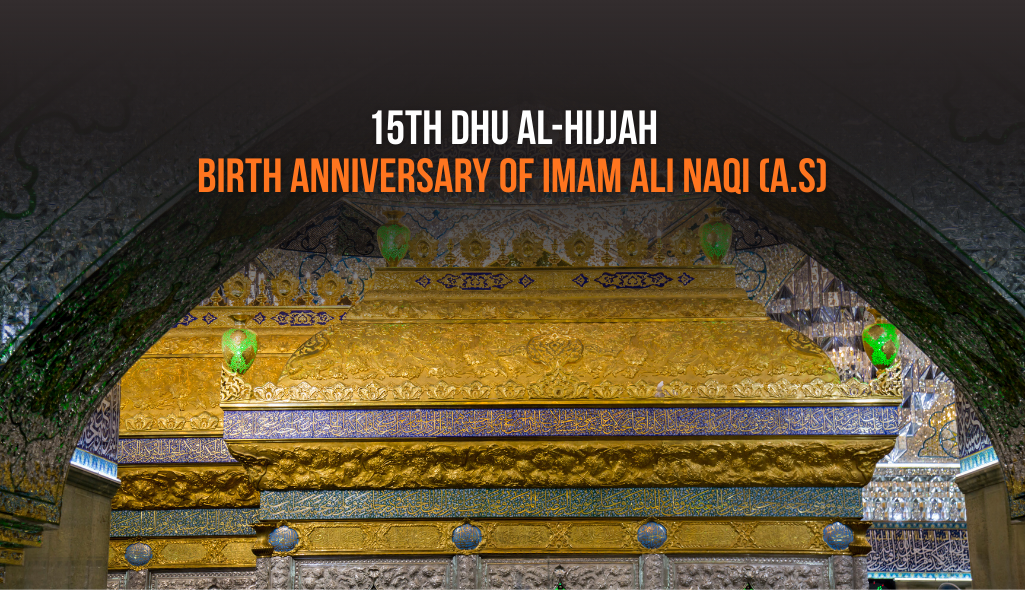
The holy shrine of Imam Ali Reza (AS) is located in the heart of Mashhad, Iran, and stands as a prominent spiritual, religious, and historical center in the Islamic world. This blessed sanctuary is not only a source of Ziyarat (pilgrimage), blessings, and deep recognition (Ma’rifah) for the followers of Ahlul Bayt (AS), but also for Muslims of all backgrounds.
The central Golden Dome of the shrine is its most striking feature, visible from afar and drawing visitors with its spiritual grandeur. Surrounding it are expansive courtyards, majestic halls, and radiant chambers — each a masterpiece of Islamic architecture. Every corner of the shrine is illuminated with the light of the Qur’an, Hadith, and the remembrance of the Ahlul Bayt (AS).
The shrine complex houses several important and sacred sites, including:
- The Holy Zarih: The burial site of Imam Reza (AS), where his pure body rests
- Imam Khomeini Hall, Dar al-Hadith, Dar al-Dhiyaafah, and Sahn-e-Inqilab: Venues for religious gatherings and services for the comfort of pilgrims
- Library and Center for Islamic Sciences: Home to rare manuscripts, valuable books, and extensive research resources
The shrine remains open 24/7, welcoming millions of visitors who engage in prayer, supplication, Ziyarat, and worship. The serene and sacred environment inspires humility, love, and closeness to Allah in the hearts of its visitors. This shrine is not merely a structure — it is a living symbol of Wilayah (Divine Guardianship) and the love of the Ahlul Bayt (AS).
خاتمة
The journey of Imam Ali Reza (AS) was far more than a geographical migration — it was a profound symbol of patience, sacrifice, and divine leadership (Wilayah). From Madinah to Tus (Mashhad), the Imam traveled for the sake of Allah’s pleasure and the guidance of the Ummah. In the end, he embraced martyrdom in the path of truth and righteousness. His blessed life reflects the highest levels of knowledge, forbearance, and spiritual greatness, offering timeless guidance for every generation.
Today, when we visit his sacred shrine and are honored with the opportunity of Ziyarat of Imam Reza (AS), it is not just a ritual — it is a living spiritual connection that links the heart of the pilgrim to the light of their beloved Imam. This Ziyarat becomes a means of forgiveness, a source of peace, a door to answered prayers, and a treasure of spiritual purification.
What we truly need is to not only perform this Ziyarat physically, but to embody his noble character in our daily lives — learning from his knowledge, ethics, and piety, and enlightening our lives with the light of Wilayah.
The shrine of Imam Reza (AS) in Mashhad remains a sanctuary for the oppressed, the deprived, and the seekers of truth across the world. Let us strengthen our bond with this great Imam, so that we may attain his intercession and pleasure in this world and the hereafter.
May Allah grant all of us the opportunity to visit the sacred shrine of Imam Reza (AS) in Mashhad very soon.





 12-فبراير-2026