Introduction
In the vast landscape of Islamic history, there are only a few personalities whose lives radiate such purity, patience, and unwavering piety that they continue to inspire humanity across generations. Among these exalted figures, Lady Fatima Zahra (peace be upon her) holds a unique and unmatched position. She was not only the beloved daughter of the Holy Prophet Muhammad (peace be upon him and his family), but also the embodiment of spiritual excellence, devotion, and sacrifice.
Every aspect of Lady Fatima’s life reflects the practical teachings of the Holy Qur’an and the Sunnah. Whether as a devoted daughter caring for her father, as a loyal and supportive wife to Imam Ali (a.s.) or as a nurturing mother raising noble personalities like Imam Hasan (a.s.), Imam Husain (a.s.), and Lady Zainab (s.a.) her life is a shining example for all.
This blog aims to explore the various stages of Lady Fatima Zahra’s blessed life, drawing lessons that can guide us in our own spiritual and worldly journeys. Her life teaches us that by adopting purity, patience, and piety, we can lead a meaningful existence and find success both in this world and the Hereafter.
Birth of a Blessed Soul The birth of Lady Fatima Zahra (peace be upon her) was a deeply spiritual and extraordinary event that added a new dimension of light and hope to the Islamic message. She was born on the 20th of Jumada al Thani in the fifth year after the declaration of Prophet hood (around 615 CE) in the holy city of Makkah. Her noble parents were none other than the Seal of the Prophets, Prophet Muhammad (peace be upon him and his family), and the Lady of Faith and sacrifice, Khadijah al-Kubra
(peace be upon her).
At the time of her birth, the Prophet (PBUH) was facing immense hostility and emotional pain in Makkah. The disbelievers would mock him for not having surviving sons, claiming that his lineage would be cut off. In response to this cruelty, Allah revealed Surah al Kawthar a chapter that served as divine reassurance and honor for the Prophet (PBUH).
According to numerous Islamic scholars and commentators, the word “Kawthar” in this Surah refers to Lady Fatima Zahra (PBUH) a symbol of abundant blessings and a divine gift through whom the pure lineage of the Prophet would continue. Thus, her birth was not merely the arrival of a daughter, but a heavenly declaration that the light of Prophet hood would remain eternal through her. Historical narrations also mention that during her birth, heavenly women such as Lady Maryam, Lady Asiyah, and Lady Hawwa descended to assist and bless the occasion. This divine presence is a clear indication that her birth was not just a physical event, but a deeply spiritual and celestial phenomenon.
The Holy Prophet (PBUH) received her birth with immense love and pride, later bestowing upon her the noble title of “Sayyida Nisa’ al-Alaameen” the Leader of the Women of the Worlds.
Her Childhood and Bond with the Prophet (PBUH) The childhood of Lady Fatima Zahra (peace be upon her) was an extraordinary period marked by hardship, sacrifice, and deep love for her father, the Holy Prophet Muhammad (PBUH). She grew up in a time when the disbelievers of Makkah inflicted severe persecution upon the Prophet and his followers. During the three year siege in the Valley of Abu Talib, young Fatima endured hunger, hardship, and pain alongside her family.
After the passing of her beloved mother, Lady Khadijah (PBUH), Fatima experienced emotional loss and loneliness. However, it was during this time that her spiritual and emotional bond with her father grew even stronger. She took on the responsibility of caring for him, soothing his grief, tending to his wounds, and being his source of comfort. The Prophet (PBUH) loved her deeply and affectionately called her “Umm Abiha” the mother of her father highlighting the nurturing and selfless role she played in his life. Her childhood is not only a symbol of endurance and compassion but also a clear sign that she was divinely chosen from an early age to be a woman of greatness and spiritual nearness to Allah.
Marriage and Married Life The marriage of Lady Fatima Zahra (peace be upon her) is considered one of the most sacred and exemplaryunions in Islamic history. When she reached maturity, several noble companions approached the Prophet (PBUH) with marriage proposals for her, but by divine command, her marriage was solemnized with Imam Ali ibn Abi Talib (peace be upon him). This blessed union was decreed in the heavens and carried out on Earth as a divine symbol of purity. Her dowry was modest yet meaningful, and the ceremony itself reflected simplicity, devotion, and spiritual elegance. The Prophet (PBUH) described this marriage as the union of two lights.”
On the day after their marriage, the Prophet (PBUH) asked Imam Ali(PBUH),
“How did you find my daughter Fatima?” Imam Ali (PBUH) replied with deep affection and spiritual insight: “I found her to be the best companion in worshipping Allah.”
This profound reply beautifully illustrates the spiritual foundation of their relationship one rooted in faith,
support, and a shared journey toward divine nearness. In their married life, Lady Fatima (PBUH) showed immense loyalty, patience, and self sacrifice. She was not only a loving wife but a devoted partner who stood by Imam Ali (PBUH) through poverty and struggle. Their home became a sanctuary of worship, knowledge, and pure upbringing, where luminous personalities such Imam Hasan (PBUH), Imam Husain (PBUH), Lady Zainab (PBUH), and Lady Umm Kulthum (PBUH) were raised.
Children and Upbringing Lady Fatima Zahra (peace be upon her) was blessed with five noble children, each a beacon of spirituality and moral strength: Imam Hasan (PBUH), Imam Husain (PBUH), Lady Zaynab (PBUH), Lady Umm Kulthum (PBUH), and the martyred unborn son, Mohsin (PBUH). Mohsin (PBUH) was tragically martyred while still in his mother’s womb due to the brutal attack on the door of Lady Fatima’s house. His martyrdom marks a painful yet luminous chapter in the sacrifices of the AhlulBayt (A.S.).
Lady Fatima’s (PBUH) parenting was deeply rooted in the Qur’an, Prophetic teachings, and divine wisdom. She raised her children with love, awareness, piety, and spiritual discipline. Her children exemplified manners, obedience, and deep religiosity. According to narrations, whenever Imam Hasan or Imam Husain (PBUT) attended the Prophet’s sermons in the mosque, they would return home and narrate everything to their mother. This illustrates her nurturing spirit and how she inspired her children to value knowledge and communication with reverence.
It is also reported that her children never made unreasonable demands And if they ever expressed a wish, the guardian of Paradise (Malik) would personally come to fulfill it demonstrating their unmatched purity and the celestial esteem of their household. Lady Fatima’s (PBUH) approach to motherhood remains a guiding light for every mother who hopes to raise children devoted to God, rich in character, and courageous in faith.
Patience and Sacrifice: A Beacon of Light Lady Fatima Zahra (peace be upon her) stands as one of the brightest examples of patience, sacrifice, and unwavering commitment to truth. Her life was marked by personal pain and immense trials, yet she bore every hardship with unmatched dignity and faith. After the passing of the Holy Prophet (PBUH), she faced unimaginable oppression. Her door was set ablaze, her home attacked, her right to Fadak confiscated, and her husband Imam Ali (PBUH) was forcefully dragged to the court. Despite all this, she never abandoned patience or faltered in her stance for truth.
She endured all injustices for the sake of Allah’s pleasure. Her resilience was not silent submission but a powerful defense of justice. Her famous Fadak sermon remains one of the most eloquent expressions of resistance, filled with knowledge and spiritual strength. Her legacy teaches us that when it comes to defending truth and preserving faith, no sacrifice is too great and that patience in the face of oppression becomes a light that guides generations.
The Sermon of Fadak: A Beacon of Truth, Wisdom, and Resistance Background:
After the passing of the Holy Prophet Muhammad (PBUH), the family of the Prophet especially Lady Fatima Zahra (SA)faced intense oppression and political injustice. Among these injustices was the confiscation of the land of Fadak, a gift given to Lady Fatima (SA) by the Prophet (PBUH) during his lifetime.
In response, Lady Fatima Zahra (SA) delivered a powerful and eloquent sermon in the Prophet’s Mosque in Madinah, famously known as the Sermon of Fadak. It was far more than a claim over property—it was a timeless declaration of truth, faith, and Islamic values.
Key Themes of the Sermon:
1. Monotheism and Divine Knowledge explained with unmatched eloquence
2. Praise of Prophethood and the Holy Prophet’s (PBUH) mission
3. Explanation of the purpose and wisdom behind Islamic laws
4. A legal and Qur’anic defense of her right to Fadak
5. A direct address to the people of Madinah regarding their betrayal
6. Subtle yet powerful references to Imam Ali’s (AS) rightful leadership
Selected Translated Excerpt from the Sermon:
All praise is due to Allah for what He has bestowed, and thanks be to Him for all that He has granted. I bear witness that there is no god but Allah He is One and has no partner. And I testify that Muhammad is His servant and messenger. O people! Know that I am Fatima, the daughter of Muhammad. I say what is true not what is false, and I speak with certainty not confusion. Do you think that I should not inherit from my father? Has Allah revealed in the Qur’an that one does not inherit from the Prophet?
Did not Allah say: ‘And Solomon inherited from David’? And: ‘Indeed, I fear the successors after me, so grant me from Yourself an heir who will inherit from me and from the family of Jacob’?
Are you more knowledgeable than Allah and His Messenger? Or do you claim that I am ignorant of my own
father’s religion?”
The Legacy and Message of the Sermon: The Khutbah of Fadak is a masterpiece of Islamic oratory, filled with knowledge, courage, and unwavering commitment to justice. It reflects Lady Fatima Zahra’s (SA) intellectual brilliance, deep understanding of Islamic law, and her role as the defender of truth and rights. Through this sermon, she warned the Muslim community about the deviation from prophetic teachings and laid bare the hypocrisy of those in power. Her words were not only a defense of her right but a universal message of courage, resistance, and standing up for justice.
Timeless Lessons:
Truth must be spoken, even if it means standing alone Islamic knowledge and logic are powerful tools against oppression Women can and must lead in spiritual, social, and intellectual resistance Martyrdom: A Symbol of Injustice and Eternal Greatness
The martyrdom of Lady Fatima Zahra (peace be upon her) is one of the most tragic and heartbreaking episodes in Islamic history. It reflects the betrayal, oppression, and spiritual decline that befell the Muslim Ummah shortly after the passing of the Holy Prophet (PBUH).Context:
Soon after the Prophet’s demise, Fatima (SA) was subjected to physical and emotional persecution. Her door was burned, her house was attacked, and her unborn child Baby Mohsin (AS) was martyred in her womb due to the violence. She endured unbearable pain but never compromised on the truth. Her suffering was a continuation of the Prophet’s mission to stand for justice no matter the cost.
Her Final Will:
Before her death, Lady Fatima (SA) left behind a will that reflected her protest:
Her funeral should be held at night She should be buried in secret Those who oppressed her should not attend her funeral This was her eternal protest a message that echoes through the ages.
Date of Martyrdom:
Different narrations mention her martyrdom as occurring 75 or 95 days after the Prophet’s passing, and her age at the time was only 18. Grief of the Ahlul-Bayt (AS):
Imam Ali (AS) said:
After the Prophet, I have never seen a day more sorrowful than the day of Fatima’s death. Her children Imam Hasan, Imam Husayn (peace be upon them), Lady Zainab, and Umm Kulthum (SA) carried her grief in their hearts for the rest of their lives.
Shrine of Lady Fatima Zahra SA The exact location of the grave of Lady Fatima Zahra (SA) remains unknown, as per her own will. She requested: Bury me at night, and hide my grave from those who wronged me.
However, historical reports suggest three possible locations:
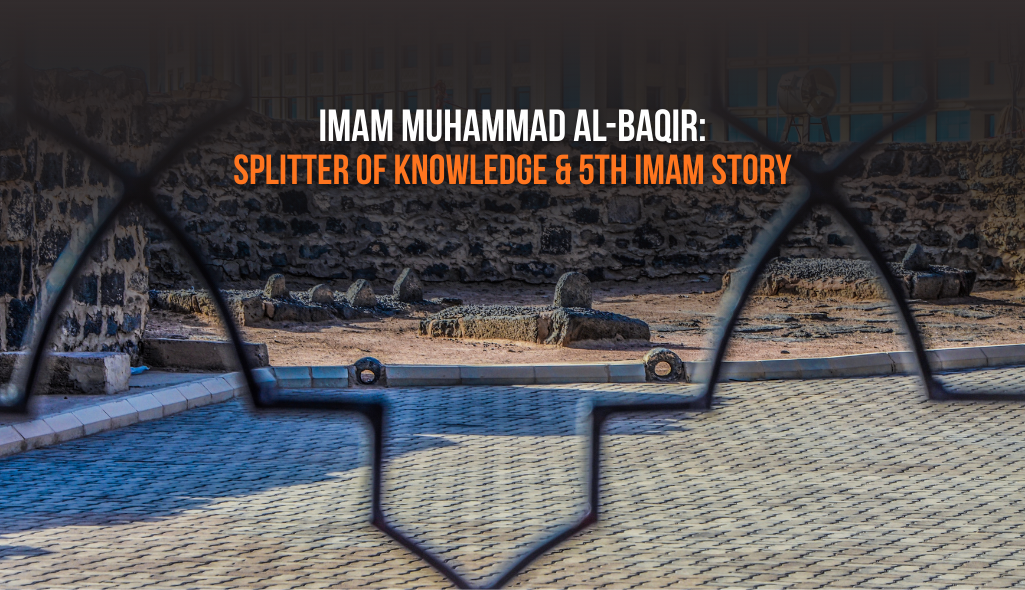
1.Jannat al-Baqi Cemetery in Madinah the most widely believed site
2.Near the Prophet’s (PBUH) resting place inside Masjid al-Nabawi
3.The house of Lady Fatima (SA) now part of the Prophet’s Mosque Her hidden grave remains a symbol of her oppression and protest, and a reminder of the painful injustices suffered by Ahlul-Bayt (AS). “Whoever wishes to perform the Ziyarat (pilgrimage) of Lady Fatima Zahra (SA) should go to Qom and perform the Ziyarat of Lady Fatima Masooma of Qom (SA), for the reward of her Ziyarat is like the reward of the Ziyarat of Lady Fatima Zahra (SA).”
A massage from the Purest Soul; Lessons from bibi Fatima Zahra SA
A Prayer for the Neighbors Imam Hasan (a.s.) once observed that his mother, Lady Fatima (s.a.), always prayed for the neighbors and other believers before herself. He asked her, “Mother, why don’t you pray for yourself?”
She replied:
“The neighbor comes first, then the house.” Prayer in the Grief of a Father After the sorrowful demise of the Prophet Muhammad (PBUH), Lady Fatima (s.a.) gathered the women in her house and began to mourn in a traditional Arab style. She then advised the women:
“Leave lamenting and turn to prayer.” “O mourners! Leave the poetry and expressions of grief, and turn instead to supplication and worship.” Dates A Gift of Health.
Lady Fatima (s.a.) said: “The best gift for a believer is a date.” Dates are highly beneficial and considered a blessed food for believers. Pure Worship The True Devotion Every deed has a value, and the value of worship and human actions lies in sincerity. True worship means performing acts solely for the sake of Allah.
“Whoever sends pure worship to Allah, He sends back the best of His blessings.”
Reward of Good Character Meeting others with a smiling face and kind words is a beautiful act of goodness.
“A smiling face toward a believer leads to Paradise, while to an enemy saves from Hellfire.”
Smiling with good manners brings great rewards both in this world and the hereafter. Jalwa E Noor
Conclusion:
The life of Lady Fatima Zahra (S.A), the daughter of the Holy Prophet Muhammad (PBUH), stands as a shiningbeacon of faith, purity, courage, and devotion. From her early childhood surrounded by divine revelation, toher unwavering support of her father, her marriage to Imam Ali (A.S), and her role as the mother of theImams, every chapter of her life radiates spiritual excellence and moral strength. Despite enduring immense hardships and injustice, she upheld the principles of Islam with dignity and grace. Her legacy is not only asource of pride for the followers of Ahlul Bayt (A.S), but also a timeless inspiration for all those who seek truth and righteousness. May her noble life continue to guide our hearts and strengthen our connection to the pathof divine light. May Allah grant us all the ability to follow in the footsteps of Lady Fatima Zahra (S.A). Ameen.





 12-فبراير-2026