Introductory Words.
History is adorned with countless names men and women who shaped their times with wisdom, courage, and justice. Yet, there are some souls so luminous, so profound, that they transcend the pages of history and become eternal beacons for the human spirit. Among these rare souls stands Imam Ali (a.s) a name that echoes with reverence across generations and creeds.
He is known as the Lion of God, whose sword broke the gates of Khaybar, and as the Beacon of Justice, whose fairness left even his enemies in awe. His life was a perfect harmony of strength and humility, knowledge and piety, justice and compassion. Whether in the battlefield or the court, in the mosque or among the poor Imam Ali (a.s) stood as a living embodiment of divine values.
This blog is a humble reflection on the radiant facets of his personality a glimpse into the heart of a man
who remains, to this day, a guiding light for all those seeking truth, courage, and justice in a darkened world.
Lineage and Early Life of Imam Ali (a.s): Born in the House of God, Raised by the Messenger of God
1. Noble Roots: The Glorious Lineage of Imam Ali (a.s)
Imam Ali (a.s) hailed from the noblest lineage of the Quraysh. His father, Abu Talib (a.s), was the courageous guardian of Prophet Muhammad (PBUH) a man who stood firm by the Prophet during the darkest trials of early Islam. His mother, Lady Fatima bint Asad (s.a), was a pious woman deeply respected by the Prophet, who considered her as his own mother and honored her in life and death.
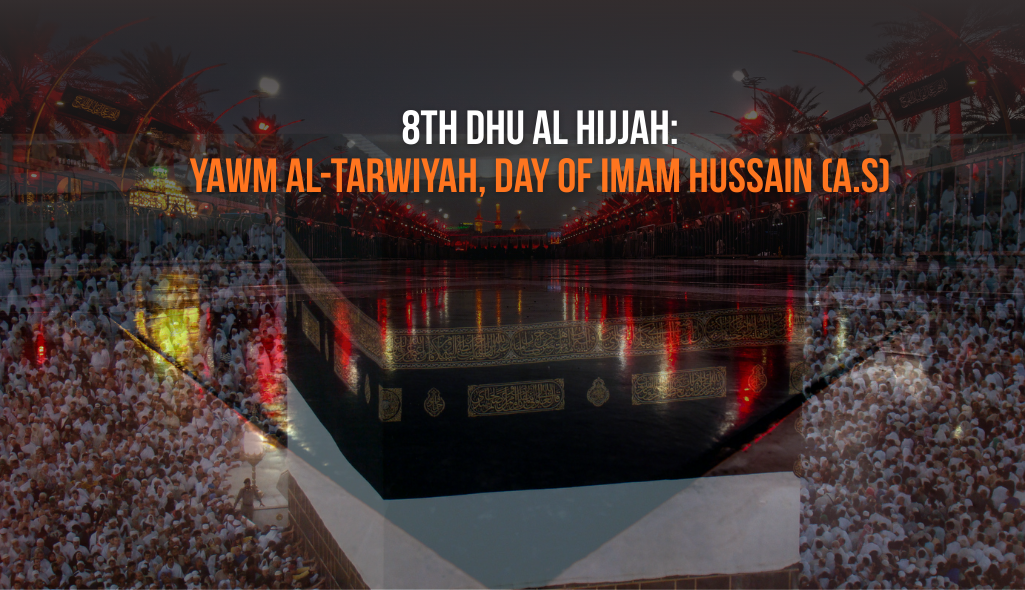
2. A Miracle Birth Inside the Kaaba: A Sign from the Divine The story of Imam Ali’s birth is not just historical it is miraculous. He was born on the 13 of Rajab, 30 Aam Al-Feel a date etched in Islamic History. When Lady Fatima bint Asad approached the Kaaba in labor, the sacred wall of the House of God miraculously split open, allowing her to enter. There, within the sanctified space of the Kaaba, she gave birth to her son. Imam Ali (a.s) remains the only person in history born inside the Kaaba, a divine sign of his unique stature in Islam.
3. Raised by the Prophet: A Childhood Bathed in Prophet-hood From early childhood, Imam Ali (a.s) was raised in the blessed household of the Holy Prophet (PBUH). Under the direct care and spiritual guidance of the Messenger of God, Imam Ali (a.s) absorbed divine wisdom and prophetic character. The Prophet once said, “Ali is from me, and I am from Ali.”
4. The First Male Muslim: A Heart Pure from Idolatry Despite growing up in a society entrenched in idol worship, Imam Ali (a.s) never bowed to any idol not even for a moment. In fact, at the time of his birth inside the Kaaba, it was filled with 360 idols. It is narrated that Imam Ali (a.s) did not open his eyes for three days while inside the Kaaba. Only after emerging in the arms of his mother did he open his eyes and his first gaze fell upon the radiant face of the Holy Prophet Muhammad (PBUH). This profound moment was the beginning of an inseparable spiritual bond between the two.
5. A Soul Molded by Revelation: Prepared for Greatness This sacred upbringing, nurtured by divine hands, shaped Imam Ali (a.s) into the embodiment of faith, knowledge, and unwavering loyalty a foundation upon which his extraordinary life would be built.
The Lion of God: A Living Embodiment of Bravery and Valor. The bravery of Imam Ali (a.s) was not ordinary courage it was a divine force, rooted in faith, trust in Allah, and unmatched spiritual insight. He was not merely a warrior of the sword; he was a champion of justice, ethics, and truth. When mighty warriors trembled on the battlefield, it was Ali (a.s) who stood firm like a mountain, facing entire armies with unwavering resolve.
In the Battle of Khandaq (The Trench), when the feared warrior Amr ibn Abd Wudd challenged the Muslims and none dared to face him, the Holy Prophet (PBUH) declared:
“Today, the whole of faith goes forth to face the whole of disbelief.” Ali (a.s) marched into the battlefield and vanquished the enemy of Islam. After his victory, the Prophet (PBUH) proclaimed:
“The single strike of Ali on the Day of Khandaq is greater than the worship of all humans and jinn combined.”
Similarly, in the Battle of Khaybar, when repeated attempts to conquer the fortress had failed, the Prophet
(PBUH) said:
“Tomorrow, I shall hand over the banner to one who loves Allah and His Messenger, and whom Allah and His Messenger also love. He charges the enemy and never flees.” The next day, to the anticipation of all, the banner was given to Ali (a.s). With divine strength and the cry of “Allahu Akbar”, he stormed the fortress and ripped open the Gate of Khaybar, which several men together could not lift.
But Imam Ali’s bravery was not limited to battlefields. He fought against his inner self (nafs), ruled with justice, and spoke the truth in the face of oppression. His courage was not only in the sword’s swing it was in the firmness of his principles, the light of his piety, and the strength of his character.
Indeed, he was the Lion of God a lion whose might subdued enemies, and whose compassion comforted the oppressed. The Beacon of Divine Justice: Imam Ali (a.s) and His Model of Governance If the world has ever seen justice in its most living and luminous form, it was in the person of Imam Ali (a.s). Every moment of his caliphate was a reflection of equity, piety, humility, and accountability before God. He was a ruler whose nights were spent helping the destitute in secret, and whose days were spent upholding divine justice from the pulpit of governance.
To Imam Ali (a.s), leadership was never about power or prestige—it was a sacred trust from Allah, aimed at restoring the rights of the oppressed, halting the hands of tyrants, and guiding humanity toward morality and truth. He once said:
“If I were given the seven kingdoms with all that lies under the heavens, in exchange for snatching a grain of barley unjustly from the mouth of an ant, I would never do so.” One of the most striking examples of his uncompromising justice is the incident involving his own brother, Aqeel ibn Abi Talib, who was struggling with poverty. Aqeel requested extra support from the public treasury (Bayt al-Mal). Imam Ali (a.s) refused. When Aqeel insisted, Imam took an iron rod, heated it slightly, and brought it close to him. Aqeel pulled back in fear. Imam Ali (a.s) then said:
“You tremble from a flame made by man, and yet you wish for me to burn in the Fire of Allah on the Day of Judgment by being unjust? Do you want me to stand before my Lord as a traitor to justice for the sake of kinship?” Is there any ruler in history who weighed his own brother on the scales of divine justice, and chose God’s pleasure over blood ties?
Imam Ali (a.s)’s justice was not blind it was deeply aware . It heard the cries of orphans, felt the hunger of the poor, and saw the needs of every soul under his care. He used to say:
“A society can survive with disbelief, but never with injustice.”
The governance of Imam Ali (a.s) remains, to this day, a timeless model for every leader, every judge, and every seeker of truth.
The Ocean of Knowledge and Wisdom: Imam Ali (a.s)
If knowledge were an ocean, Imam Ali (a.s) would not merely be its shore he would be its unfathomable depth. His wisdom was not derived from books or scholars, but from divine insight nurtured under the light of revelation. The Holy Prophet Muhammad (peace be upon him and his family) said:
“I am the city of knowledge, and Ali is its gate.”
This was not just a metaphor it was reality. The words spoken by Imam Ali (a.s) continue to illuminate minds across centuries. Be it his sermons in Nahjul Balagha, his unparalleled verdicts, or his deep insights into theology and jurisprudence, each reveals the boundless height of his intellect.
On one occasion, Umar ibn al Khattab was confronted with a legal dilemma he couldn’t resolve. He turned to Imam Ali (a.s) for help”. The Imam resolved the matter in moments with clarity and precision. In awe, Umar exclaimed: “Had it not been for Ali, Umar would have perished!”
In another incident, a man asked the Imam: O Ali, how is it that you respond to every question without hesitation? Don’t you ever need time to think?
Imam Ali (a.s) smiled and asked:
“Tell me, how many fingers do you have on one hand?”
The man replied, “Five.”
Imam asked, “Why didn’t you pause to count? Why did you answer immediately?”
He said, “Because it is in front of my eyes there’s no need to think.”
Imam Ali (a.s) then said:
“Just as your fingers are always in front of your eyes, the knowledge of the Qur’an and Sunnah stands before
me with that same clarity.”
His knowledge wasn’t limited to theory it encompassed the inner dimensions of hearts, the needs of his era, and the ultimate truths that transcend time and place. His words, judgments, and sermons are treasures of eternal wisdom, unbound by the chains of time.
Imam Ali (a.s) once said:
“The heart is revived by wisdom, and wisdom is lit by knowledge.” His teachings remain a beacon for seekers of truth, and his knowledge, a guiding light for all of humanity.
Asceticism, Worship, Compassion, and Justice: The Illuminated Life of Imam Ali (a.s)
Every moment of Imam Ali’s (a.s) life reflected asceticism and God consciousness. Detached from the glitter of worldly wealth, he longed only for closeness to Allah. His nights were soaked in tears and prostrations, his supplications echoing through the silence, and his days were devoted to justice, mercy, and serving the people.
He once said:
“This world of yours is worth less to me than a worn out shoe unless I can use it to uphold someone’s right.”
Imam Ali (a.s) treated his people not as subjects, but as his own family. He would walk the streets of Kufa at night, seeking out widows, orphans, and the poor helping them silently, without revealing his identity. His generosity was so discreet that even his left hand didn’t know what his right hand gave. This was not just the conduct of a ruler it was the compassion of a father, the humility of a servant, and the light of a true
vicegerent of God.
He once declared:
“People are either your brothers in faith or your equals in humanity.” These words are the cornerstone of universal human dignity, justice, and empathy. As a ruler, Imam Ali (a.s) left behind a timeless code of ethical governance, most notably in his letter to his governor, Malik al Ashtar. In it, he commanded:
Let your heart be filled with mercy, love, and kindness for your subjects. Do not behave like a ferocious beast
against them, thinking of them as prey. Remember, they are either your brothers in religion or your equals in
creation.
He advised his governors to never place the elite above the poor, to be accessible to the common man, and to ensure that justice was not tilted by bribes or bias, but grounded in truth and fairness. His ascetic lifestyle freed him from the chains of materialism, his worship connected him to the heavens, his compassion gave shelter to the oppressed, and his governance laid the foundation of justice in the Islamic state. Imam Ali (a.s) didn’t rule hearts by force he ruled by love, truth, and unwavering devotion to Allah.
The Caliphate of Imam Ali (a.s): A Reign of Justice.
When Imam Ali (a.s) assumed the caliphate, the Muslim ummah was torn apart by internal strife, political unrest, and deep rooted corruption. For him, the caliphate was not a pursuit of power—it was a divine
responsibility to uphold justice, equity, and truth. One of his first actions as caliph was to reform the misused
public treasury, abolish favoritism, and ensure equal distribution of wealth—whether Arab or non Arab, slave or noble.
This bold implementation of justice threatened powerful elites, and soon, Imam Ali (a.s) faced three major battles, not against non-believers but against factions within the Muslim community:
1. Battle of Jamal (The Camel): Fought against Aisha, Talha, and Zubair, who led a rebellion in Basra. Imam Ali (a.s) made repeated efforts for peace, but was left with no choice but to defend the unity of the state. After victory, he treated Aisha with respect and sent her back to Medina with honor.
2. Battle of Siffin: Fought against Muawiyah, the governor of Syria. When Imam Ali (a.s) was on the verge of victory, Muawiyah’s forces deceitfully raised copies of the Qur’an on spears, creating confusion and halting the battle. Imam Ali was reluctantly forced into arbitration by his own army, which deeply weakened his position.
3. Battle of Nahrawan: The Khawarij, who were once Imam Ali’s own supporters, turned against him after Siffin, labeling him a disbeliever for accepting arbitration. Imam Ali (a.s) tried to reason with them, but when they resorted to violent rebellion, he was compelled to take decisive action.
Despite facing rebellion, betrayal, and hypocrisy from all directions, Imam Ali (a.s) never deviated from the path of divine justice and moral leadership. He once said:
“A government may last with disbelief, but not with injustice.”
His brief but luminous caliphate remains a timeless example of how a ruler can stand firm on truth, humility, and God consciousness, even when surrounded by treachery.
The Martyrdom of Imam Ali (a.s): Blood of Justice in the Niche of Worship The martyrdom of Imam Ali (a.s) stands as one of the most tragic and soul piercing events in Islamic history. His entire life was a beacon of justice, piety, and unwavering truth. Yet, such a life of principle and Godconsciousness could not be tolerated by the power hungry and hypocritical factions of his time.
After the Battle of Nahrawan, a group of surviving Khawarij conspired to assassinate the prominent leader of
the Muslim world: Imam Ali (a.s). So called Muslim leader Muawiyah, and Amr ibn al As in their eyes, eliminating “the root of all discord.” But in truth, it was a plot to extinguish the light of justice.
On the night of the 19th of Ramadan, Imam Ali (a.s) was staying at the house of his beloved daughter Lady Umm Kulthum (sa). That night, he stepped out several times into the courtyard and gazed silently at the sky. Seeing this unusual behavior, his daughter gently asked:
Father, why do you keep looking up at the sky?”
Imam Ali (a.s) replied with profound serenity:
My dear daughter, this is the night that was promised to me. Tonight, I shall reunite with my Beloved Lord.” As dawn approached, Imam Ali (a.s) made his way to Masjid al Kufa for the Fajr prayer. While he was in prostration, immersed in communion with Allah, the assassin Abdul Rahman ibn Muljim struck him with a poisoned sword. Blood gushed from the wound, staining the niche of the mosque.
From his lips came the immortal words: “By the Lord of the Ka’bah, I have succeeded!” (Fuztu wa Rabb al-Ka’bah) This was not just an attack on a person it was an assault on the embodiment of truth, wisdom, and divine justice. Imam Ali (a.s) was carried home in a wounded state, where he spent his final moments giving precious advice to his sons, urging them to uphold piety, compassion for orphans, connection with the Qur’an, and justice for the people.
On the 21st of Ramadan, 40 AH, the man who was born inside the Ka‘bah left this world from the mihrab (niche) of worship, his blood sealing the covenant of divine leadership and sacrifice.
From Will to Return: Imam Ali’s Final Moments and the Ummah’s Lament
When Abdul Rahman ibn Muljam struck Imam Ali (a.s) with a poisoned sword during his prostration, blood poured from his blessed head, soaking the mihrab of the mosque. From his lips came the serene and
triumphant words: “By the Lord of the Ka‘bah, I have succeeded.”
The Imam was carried home in a critical state. The poison rapidly spread through his body, yet his heart remained deeply concerned for the well-being of the Ummah. Despite the intense pain, he summoned his beloved sons, Imam Hasan (a.s) and Imam Husayn (a.s), held their hands, and delivered his final will: “My sons, never abandon your prayers. Show kindness to orphans, always stand by the oppressed, and oppose the oppressor. Stay connected to the Qur’an live it, act upon it. Treat people with compassion, and strive to unite the hearts of the community.”
He also gave parting counsel to his brother Muhammad ibn al-Hanafiyyah, and other family members, urging them to hold firmly to patience, righteousness, and justice.
Imam Ali (a.s) was buried in the darkness of the night to protect his grave from desecration by enemies. He was laid to rest in Najaf Al Ashraf (Iraq), and his resting place remained hidden for years.
The martyrdom of Imam Ali (a.s) left a deep scar on the soul of the Ummah. The world had lost a leader whose likeness was unmatched before or after. Mosques, pulpits, and even the walls of Kufa mourned the loss of the man who was the embodiment of justice. His death echoed a timeless truth: the path of truth is never easy, but it is the only road to divine proximity and eternal success.
Ziyarat of Imam Ali (a.s): A Gateway to Divine Mercy and Intercession The shrine of Imam Ali (a.s) in Najaf al-Ashraf is not merely a resting place it is a beacon of divine proximity, where angels descend, and hearts ascend in remembrance and love. The spiritual merits of visiting
this sacred site are profound, and supported by numerous narrations from the Ahlul-Bayt (a.s).
The Weight of Ziyarat in the Eyes of the Imams Imam Abu Abdullah Ja‘far al-Sadiq (a.s) once received a visitor in Madinah who admitted he had not yet visited the grave of Amir al-Mu’mineen Ali (a.s). The Imam responded with grief and disappointment:
You have done a terrible thing. If you were truly one of our Shi’a, you would not abandon the ziyarat of any of us especially those whom Allah Himself has made obligatory to visit, and whom the prophets themselves
visit.
When the man apologized and said he was unaware, the Imam replied:
Know this: Amir al-Mu’mineen (a.s) is superior to all prophets in the sight of Allah.
The Promise of the Prophet (s.a.w) for the Visitors of Ali (a.s)
Imam Ja‘far al-Sadiq (a.s) also narrated that Imam Husayn (a.s) once asked the Prophet (s.a.w): “O Grandfather, what is the reward for the one who visits you during your life or after your martyrdom?”
The Prophet replied:
Whoever visits me, or visits your father Ali (a.s) after me, it becomes my responsibility on the Day of Judgment to visit him in return and intercede for the forgiveness of his sins.
Kamil Uz Ziyarat
The First Piece of Earth Touched by Divine Worship It is narrated in Qisas al-Anbiya that Imam Ali (a.s) said: The very first piece of land on which Allah was worshipped is the rear of Kufa known today as Najaf alAshraf. When Allah commanded the angels to bow to Adam, it was on this very spot that they performed their
prostration.
This gives Najaf a unique spiritual status it was not only the place of the first divine command on Earth, but
also chosen as the eternal resting place of God’s Lion, the voice of justice, and the mirror of divine knowledge.
Visiting Najaf Al-Ashraf Toda A visit to the shrine of Imam Ali (a.s) is a journey of the heart. It is not just a ritual—it is an act of love, loyalty, and longing. It carries the reward of accepted Hajj and Umrah, the cleansing of sins, and nearness to the Ahlul Bayt (a.s) in this life and the next.
Imam Ali (a.s): Acknowledged Across Civilizations Imam Ali (a.s) is not only revered within the Islamic world, but his character and intellect have been admired by thinkers, poets, philosophers, and historians across cultures and religions. Renowned scholars like Khalil Gibran, George Jordac, and even Mahatma Gandhi have praised his justice, wisdom, and spirituality. The book Nahj ul Balagha a collection of his sermons, letters, and sayings is a timeless treasure trove of ethical and philosophical insight, often compared to the works of Plato and Aristotle.
Timeless Gems of Wisdom from Nahj ul Balagha Here are five selected sayings from Nahj ul Balagha, showcasing Imam Ali’s (a.s) unmatched depth of knowledge and insight:
1. The Value of Words and Silence.
Hikmat #113
A man’s worth is in the excellence of his speech, and his honor lies in guarding his tongue.
2. True Wealth
Hikmat #57
Wealth in a foreign land is like a homeland, and poverty in one’s own land is like exile.
3. Know Yourself
Hikmat # 4
He who knows himself, knows his Lord.
4. The Power of Patience
Hikmat #49
Patience in faith is like the head to the body—if the head is severed, the body dies.
5. The Root of Conflict
Hikmat #119 The root of every trial is the love of this world.
Conclusion.
The Imam of Every Era, the Master of Every Heart The life of Imam Ali (a.s) teaches us timeless lessons that transcend cultures, languages, and centuries. He was not just a historical figure he is a living beacon of truth for every seeker of justice, wisdom, and spiritual.
connection.
Here are the core principles reflected in his life: Without knowledge, the character remains incomplete. Imam Ali (a.s) combined deep intellect with perfect integrity. Without justice, governance becomes false hood. He established a model of governance rooted in absolute fairness. Without worship, nearness to God is unattainable. His nights were spent in prayer, his heart always bowed before the Divine. Without the love of Ahlul-Bayt, salvation is impossible.
His love is a bridge to the Prophet (s.a.w) and the path of divine mercy.
Imam Ali (a.s) is the *Imam of every age guiding through the light of his words. He is the *Master of every heart living in the love of every soul who seeks truth.





 12-فبراير-2026