Abstract
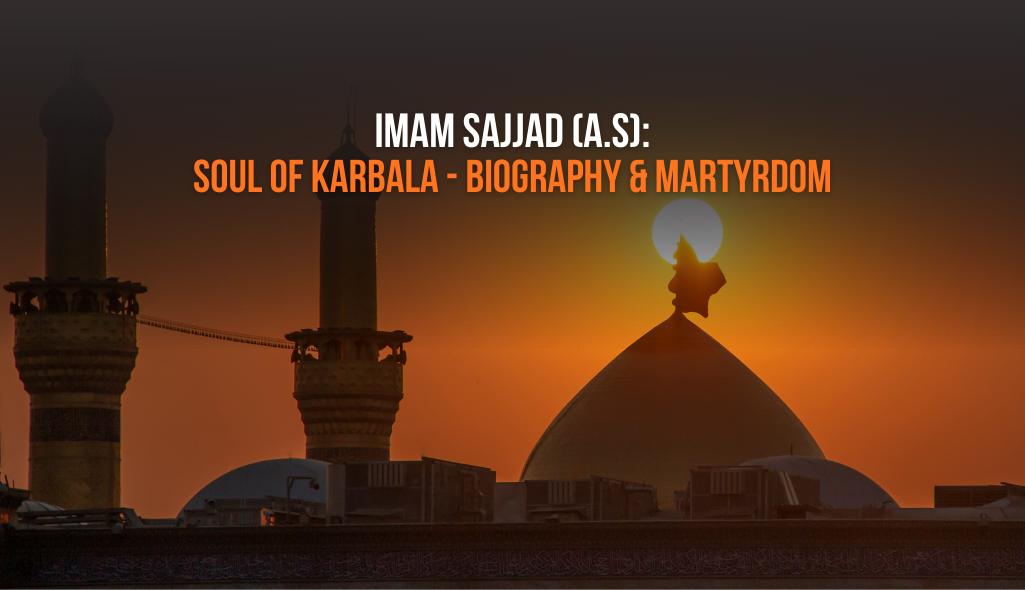
Imam Ali ibn al-Husayn Zain-ul-Abideen (AS) known as Sajjad, the one who prostrated in the dust of servitude stands as the living soul of Karbala. While the swords of Ashura silenced many voices, Allah preserved His light through Imam Sajjad’s wounded, chained, and grief-stricken presence. His survival was not mere escape, it was a divine mission.
The martyrdom of Mola Sajjad (AS) marks the completion of the Karbala tragedy. After decades of worship, tears, duas, and silent resistance, he was poisoned by the Umayyad ruler (poison mixed in his food). With his departure, the Ummah lost the last eye-witness of Ashura, the guardian of the oppressed, and the bearer of the message of Hussain (AS).
His martyrdom reminds us that Karbala did not end with the fall of swords—it lived on through patience, prayer, and unbreakable truth that flowed from the heart of Imam Sajjad (AS).
Qur’anic Ayah Related to His Patience
يَا أَيُّهَا الَّذِينَ آمَنُوا اسْتَعِينُوا بِالصَّبْرِ وَالصَّلَاةِ ۚ إِنَّ اللَّهَ مَعَ الصَّابِرِينَ
Translation: “O you who believe! Seek help through patience and prayer. Indeed, Allah is with those who are patient.”
— Surah Al-Baqarah, 2:153
This verse perfectly reflects the life of Imam Sajjad (AS), whose patience after witnessing Karbala preserved Islam’s true message.
Biography
| Name: |
Ali ibn al-Hussain (علی بن الحسین) |
| Kunyat: |
Abu Muhammad |
| Alqabat (Titles): |
Zayn-ul-Abidin (زین العابدین), Al-Sajjad (السجاد), Sayyid-us-Sajidin |
| Father: |
Imam Hussain ibn Ali (AS) |
| Mother: |
Bibi Shaharbanu (daughter of Persian king Yazdegerd) |
| Date of Birth: |
5th Sha’ban or 15 Jamid ul Awal (other narrations) — Madinah al-Munawwarah |
| Presence in Karbala: |
Present during Ashura (10th Muharram, 61 AH), but divinely protected due to severe illness |
| Role after Karbala: |
Spokesperson of Karbala in Kufa and Damascus, revived Islamic morals through duas and teachings |
| Famous Work: |
Al-Sahifa al-Sajjadiyya (The Psalms of the Ahlul Bayt) |
| Date of Martyrdom: |
25th Muharram, 95 AH |
| Place of Martyrdom: |
Madina |
| Cause of Martyrdom: |
Poisoned by order of Walid ibn Abdul Malik |
| Burial Place: |
Jannat-ul-Baqi, Madina |
Background and History Before His Birth
Imam Sajjad (AS) was born into a period of intense political tension in the Muslim world. The Umayyad rule had begun transforming the caliphate into a monarchy, suppressing justice and the true teachings of Islam.
- His grandfather Imam Ali (AS) was martyred in 40 AH (661 CE)
- His uncle Imam Hasan (AS) was poisoned in 50 AH (670 CE)
- His father Imam Hussain (AS) lived under constant pressure from Mu’awiya and later Yazid
Allah prepared Imam Sajjad (AS) for a unique mission: not armed struggle, but spiritual resistance and preservation of Karbala’s message after the massacre.
Lineage and Family
- Father: Imam Hussain ibn Ali (AS), the martyr of Karbala
- Mother: Lady Shahrbanu (AS), a noble and pious woman
- Grandfather: Prophet Muhammad (SAW)
- Grandmother: Lady Fatima al-Zahra (AS)
He was raised in the pure household of Ahlul Bayt, surrounded by revelation, worship, and moral excellence.
Childhood and Upbringing
From an early age, Imam Sajjad (AS) displayed:
- Deep spiritual awareness
- Strong attachment to worship and supplication
- Exceptional manners, humility, and patience
He spent his childhood under the guidance of:
- Hussain (AS), learning sacrifice, dignity, and truth
- Imam Hasan (AS), learning patience and wisdom
Knowledge and Spiritual Training
Imam Sajjad (AS) grew up in an environment of:
- Qur’anic teachings
- Prophetic traditions
- Continuous night prayers and remembrance of Allah
Even in his youth, he was known for his devotion in sujood, which later earned him the title “al-Sajjad” (the one who prostrates much).
Moral Character
His early life reflected:
- Kindness toward the poor
- Silence over argument
- Mercy even toward those who wronged him
- A heart attached more to the Hereafter than the world
Foundation for His Future Role
These formative years prepared Imam Sajjad (AS) for:
- Bearing the tragedy of Karbala
- Preserving the message of Imam Hussain (AS) through duas and ethics
- Becoming the spiritual voice of Islam in a time of oppression
The early life of Mola Sajjad (AS) was a living example of how spiritual strength is formed long before public leadership appears.
Battles He Played In
Imam Sajjad (AS) did not physically fight in the Battle of Karbala due to severe illness on the 10th of Muharram, 61 AH. However, this was divine wisdom, as:
- His survival ensured the continuation of Imamat
- He became the living witness of Karbala
Thus, while he did not fight with the sword, his struggle after Karbala was no less significant.
Role and Events in His Era
1. Survivor of Karbala
Imam Sajjad (AS) witnessed:
- The martyrdom of his father, brothers, uncles, and companions
- The burning of tents
- The captivity of the Ahl al-Bayt (AS)
2. Voice of Karbala in Kufa and Damascus
Despite chains and illness, Imam Sajjad (AS) delivered powerful sermons in Kufa and the court of Yazid in Damascus. These sermons:
- Exposed Umayyad tyranny
- Revived public conscience
- Preserved the true narrative of Karbala
Contribution of Imam Sajjad (AS) to Islam
1. Keeping Karbala Alive After Ashura
After the martyrdom of Imam Husayn (AS), the Umayyads attempted to erase the truth of Karbala. Imam Sajjad (AS) became the living voice of Ashura. Through his sermons in Kufa and the court of Yazid, he exposed tyranny and preserved the real message of Karbala for future generations.
2. Spreading Islam Through Supplication
Imam Sajjad (AS) transformed dua into a school of faith. His supplications taught Muslims:
- Pure Tawheed (Oneness of Allah)
- Humility and repentance
- Social responsibility
- Resistance against injustice
His famous book Al-Sahifa al-Sajjadiyya remains one of the greatest spiritual contributions in Islamic history.
3. Moral and Social Reform
Through Risalat al-Huquq (Charter of Rights), Imam Sajjad (AS) defined the rights of:
- Allah
- Parents and family
- Neighbors and teachers
- The poor, weak, and oppressed
This work proved that Islam is a complete system of justice and ethics.
4. Silent Jihad Against Tyranny
Under constant surveillance, Imam Sajjad (AS) adopted peaceful resistance:
- Educating people privately
- Training future Imams and scholars
- Protecting Shia beliefs from extinction
This strategy ensured Islam’s survival during extreme oppression.
5. Building the Foundation for Future Islamic Scholarship
Imam Sajjad (AS) prepared the ground for:
- Imam Muhammad al-Baqir (AS)
- Imam Ja’far al-Sadiq (AS)
Their later scholarly movements were possible because of the groundwork laid by Imam Sajjad (AS).
Why the Enemies Opposed Imam Sajjad (AS)
1. He Exposed the Umayyad Regime
Though he never raised a sword, his words shook the thrones of tyrants. His sermons publicly unmasked Yazid and the Umayyads as enemies of Islam.
2. His Moral Authority Threatened Their Power
People saw in Imam Sajjad (AS):
- The grandson of the Prophet (SAW)
- A symbol of truth and patience
- A living reminder of Karbala
His spiritual influence weakened the legitimacy of corrupt rulers.
3. He Refused to Support False Islam
Imam Sajjad (AS) never legitimized the Umayyad rule. His silence was not submission—it was strategic resistance.
4. Fear of the Continuation of Imamat
The Umayyads knew that the Imamat of Ahl al-Bayt (AS) was the greatest threat to their political monarchy. Imam Sajjad (AS) represented continuity, truth, and divine leadership.
Significance of His Wasiyat
Imam Sajjad (AS)’s wasiyat reflects the spiritual and moral legacy of Karbala. Unlike battles fought with swords, his final advice shows that the true struggle is through patience, worship, ethics, and guidance. By following his counsel, believers continue to honor the sacrifices of Karbala and keep the teachings of the Ahlul Bayt alive.
Summary of Imam Sajjad (AS)’s final counsel:
- Taqwa: Maintain God-consciousness in every aspect of life
- Prayer and Worship: Guard obligatory and voluntary prayers
- Social Justice: Care for the needy, orphans, and oppressed
- Good Character: Uphold ethics, patience, and truthfulness
- Loyalty to Ahlul Bayt: Follow the next Imam and remain connected to the Qur’an
Fazilat (Virtue) of Visiting Imam Sajjad (AS)
Visiting Imam Sajjad (AS) softens the heart, strengthens faith, and increases patience. Angels pray for the visitor, and duas are accepted by Allah’s mercy. Visiting reminds believers of sabr after tragedy and steadfastness in truth.
Spiritual Experiences (Karamat)
Spiritual karamat rather than public miracles include:
- Inner peace and relief from grief
- Guidance in difficult decisions
- Strength in faith and patience
These are seen as blessings of sincere connection, not displays for spectacle.
Renewal of Allegiance
Ziyarat of the Imams from Ahlul Bayt is considered renewal of allegiance (تجدیدِ ولایت). Visiting Imam Sajjad (AS) reminds believers of:
- Patience after tragedy
- Resistance without violence
- Worship in hardship
Why Imam Sajjad (AS) Is Called “The Soul of Karbala”
Imam Ali ibn al-Hussain (AS), also known as Imam Sajjad, is referred to as the “Soul of Karbala” because he preserved and carried forward the spiritual and moral essence of Karbala after the martyrdom of Imam Hussain (AS). While he did not fight on the battlefield due to severe illness, his survival and actions were divinely ordained to ensure that the message of Karbala would not die.
1. Witness and Guardian of Karbala
Imam Sajjad (AS) was present during Ashura and witnessed the martyrdom of his father and the companions. He became the living testimony of the tragedy, ensuring that the truth of Karbala could be conveyed to the world. His survival meant that the women, children, and captives of Karbala were protected and guided.
2. Preservation of the Message of Karbala
Karbala was not just a battle; it was a symbol of truth against oppression. Imam Sajjad (AS) transformed Karbala’s tragedy into a spiritual and moral victory through:
- Sermons in Kufa and Damascus
- Letters and guidance
- Compilation of Al-Sahifa al-Sajjadiyya
By doing so, he ensured the sacrifice of Imam Hussain (AS) remained a source of inspiration for generations.
3. Spiritual Leadership and Moral Resistance
He led a silent revolution against the Umayyad tyranny. Through worship, supplications, and ethical teachings, he continued the struggle of Karbala in a peaceful yet powerful way. His approach emphasized that true jihad is not only fought with swords but also with patience, prayer, and truth.
4. Educator and Reformer
Imam Sajjad (AS) nurtured the moral and spiritual development of the Muslim community after the tragedy. He taught social justice, compassion, and piety, turning grief into guidance. He strengthened the faith and resilience of the survivors of Karbala and inspired the wider Ummah to stand against injustice.
5. Symbol of Patience and Devotion
His life exemplified Sabr (patience), devotion to Allah, and loyalty to the Ahlul Bayt. Even in imprisonment, oppression, and eventual poisoning, he remained steadfast, reflecting the spiritual heart of Karbala.
خاتمة
Imam Sajjad (AS) is called the Soul of Karbala because he ensured that Karbala was not just remembered as a tragedy but as a divine lesson in truth, patience, and justice. He carried forward the mission of Imam Hussain (AS), guiding humanity through spirituality and moral strength, making the essence of Karbala alive for all time.
Imam Sajjad (AS) lived with dua on his lips and patience in his heart. His wasiyat, words, and the blessings of his ziyarat continue to guide believers making him truly the Soul of Karbala.
Package Overview: The Path of Loyalty
We are honored to invite you to join our deeply spiritual and meticulously planned Ziyarat Package to the holy shrines of Iraq. This journey is designed to allow pilgrims to connect with the pure legacy of the Ahlul Bayt (AS) with complete peace of mind.
View 2026 Ramadan Iraq Packages →
Visit: www.ziaratplanner.com | Email: info@ziaratplanner.com | WhatsApp: +964 786 206 0777





 12-فبراير-2026