A Saintly Prince: The Birth, Lineage & Early Life of Imam Zain ul Abideen (A.S.)
Introduction
When we hear the name Zain ul Abideen, an image forms in the mind of a man immersed in worship, patience, wisdom, and divine connection. Imam Zain ul Abideen (A.S.), also known as Al-Sajjad, is one of the most luminous figures in Islamic history his life, though seemingly silent, was a fountain of inner awakening and spiritual resistance.
Birth and Noble Lineage
Imam Zain ul Abideen (A.S.) was born on the 5th of Sha’ban, 38 AH in the holy city of Medina. His father was Imam Hussain (A.S.), the grandson of the Prophet Muhammad صلى الله عليه وسلم and the martyred savior of Karbala. His mother was Shah Zanan (Shahrbanu), the daughter of Yazdegerd III, the last emperor of the Persian Sassanid Empire. Imam Zain ul Abideen was thus a beautiful fusion of Arab nobility and Persian royalty. His real name was Ali ibn Hussain, but due to his unmatched devotion in worship, he earned the titles: Zain ul Abideen The adornment of the worshippers Al-Sajjad The one who frequently prostrates
A Childhood Surrounded by Light
Imam Zain ul Abideen’s early years were spent in a spiritually charged atmosphere, where:
The Qur’an and Sunnah were taught and practiced with sincerity Great personalities like Ali (A.S.), Imam Hasan (A.S.), and Imam Hussain (A.S.) were present as role models Justice, truth, and compassion were core values in daily life He absorbed religious knowledge and ethics from the best sources possible and was known for his intelligence, humility, and sincerity even as a child.
Worship and Spirituality from a Young Age
Even in his youth, Imam (A.S.) showed signs of deep devotion:
He would wake during the night for worship Engage in long prostrations filled with tears and gratitude Spend hours in prayer, seeking closeness to Allah These early traits became the foundation for the spiritual legacy he would later leave behind.
The Shadow of Political Turmoil
Although his childhood was relatively peaceful, Imam Zain ul Abideen (A.S.) lived during the rise of the Umayyad regime. After the death of Muawiyah and the succession of Yazid:
Oppression and injustice became widespread The Ahlul-Bayt (A.S.) were increasingly targeted
Imam Hussain’s stance against tyranny set the stage for the tragedy of Karbala These developments were shaping Imam Zain ul Abideen’s spiritual and social consciousness.
In the Fire of Karbala: The Spiritual Strength of Imam Sajjad (A.S.)
The tragedy of Karbala is one of the most heartbreaking yet spiritually profound chapters in Islamic history.
While the battlefield saw blood and martyrdom, it also gave rise to a different kind of strength spiritual
resistance. Imam Zain ul Abideen (A.S.) emerged from this catastrophe not just as a survivor, but as a divine voice echoing faith, patience, and truth in the face of tyranny.
Illness and Divine Wisdom
During the events of Karbala, Imam Zain ul Abideen (A.S.) was severely ill some narrations suggest he was bedridden with high fever. Due to his condition: He could not physically participate in battle But spiritually, he bore the heaviest burden the responsibility of preserving the message of Karbala This divine illness, while appearing as a weakness, became a means for his survival. It was Allah’s wisdom to protect the legacy of Imam Hussain (A.S.) through the living witness of his son.
The Day of Ashura: A Living Witness
On the day of Ashura (10th Muharram, 61 AH), Imam Sajjad (A.S.) witnessed:
The martyrdom of his father, Imam Hussain (A.S.)
The brutal killing of his uncles, brothers, cousins, and companions
The burning of tents and the cries of the children and women
Despite the emotional devastation, he remained connected to Allah through dua, sabr (patience), and tawakkul (trust in God).
From Martyrdom to Captivity
After the massacre, Imam Sajjad (A.S.) became the spiritual and moral guardian of the women and children from the Prophet’s family. As they were taken as captives by the army of Yazid, Imam:
Protected the sanctity of the Ahlul-Bayt Provided emotional and spiritual support to the survivors Remained composed and spiritually radiant despite the humiliation and chains
The Court of Kufa and Sham: Voice of Truth
One of the most courageous aspects of Imam Zain ul Abideen’s (A.S.) journey was his public sermons in the courts of:
Kufa, where he exposed the hypocrisy of the people who betrayed Imam Hussain (A.S.)
Sham (Damascus), where he addressed Yazid’s court fearlessly
Key Moments:
In Sham, he introduced himself as “the son of Mecca and Medina… the son of Fatima, the daughter of the Prophet.”
His eloquence and spiritual power moved even the crowds who had been misled by Umayyad propaganda. These speeches were not political rebellion—they were spiritual revolutions.
A Legacy of Silent Resistance
After returning to Medina, Imam Zain ul Abideen (A.S.) did not raise a sword. Instead, he waged a war of the soul:
Through prayers, supplications, and tears, he reminded people of the divine path Through humility and worship, he preserved the essence of Karbala He lived every day of his life as a mourner, a teacher, and a spiritual warrior
The fire of Karbala did not extinguish Imam Sajjad’s spirit it purified and strengthened it. He transformed grief into guidance and captivity into a classroom for the world. His survival was not just a mercy to the Ahlul-Bayt it was a lifeline for Islam itself.
Silent Rebellion: The Spiritual Leadership of Imam Sajjad (A.S.) in Medina
After the heartbreaking events of Karbala and the harrowing journey through Kufa and Damascus, Imam Zain ul Abideen (A.S.) returned to Medina a city that once echoed with the voice of the Prophet Muhammad صلى الله عليه وسلم. However, Medina was no longer the sanctuary of truth it had once been. It was under the silent oppression of the Umayyad regime.
Yet, Imam Sajjad (A.S.) did not seek revenge through the sword. Instead, he chose the more difficult but more lasting path: a spiritual rebellion—a quiet, consistent campaign to reform hearts, awaken minds, and preserve the true message of Islam.
The Political Climate of Medina
The Umayyad dynasty, particularly under rulers like Yazid and Abdul Malik ibn Marwan, was enforcing tyranny, distorting religion, and suppressing Ahlul-Bayt’s influence. Speaking openly against the regime could result in imprisonment or execution. In such a suffocating atmosphere, Imam Sajjad (A.S.) turned to prayer, knowledge, and service to resist oppression. His leadership was veiled in worship, but its impact was revolutionary.
A Life of Worship and Suffering
Imam Zain ul Abideen (A.S.) became known in Medina for his:
Nightly prayers, long prostrations, and frequent weeping (especially when reminded of Karbala) Unshakable patience, even under surveillance and hardship Acts of charity, often done anonymously His home became a center of spiritual learning, not through lectures or politics, but through examples.
Building a Spiritual Underground Movement
Though he avoided political confrontation, Imam (A.S.) quietly: Trained scholars and students who would carry forward the message of Ahlul Bayt Documented deep Islamic ethics in the form of Sahifa Sajjadiya Taught resistance through righteousness he showed that reforming the soul is the foundation of social
reform He cultivated a generation who would later become the foundation for movements led by his son Imam Muhammad al-Baqir (A.S.) and grandson Imam Ja’far al-Sadiq (A.S.).
Impact on Society
Despite not holding political office or calling for rebellion:
His presence in Medina was a silent threat to the Umayyad rulers People were drawn to his humility, his manners, and his deep connection with God Even opponents were awed by his calm power and spiritual authority
He showed that true leadership is not always loud—it is often seen in patience, wisdom, and moral integrity.
Living Karbala, Every Day
Imam Sajjad (A.S.) never forgot Karbala: He wept whenever food or water was placed before him He never sat comfortably while remembering what his father endured His grief was not weakness it was a living reminder of the injustice that had occurred and the truth that must not be forgotten Through his mourning, he kept Imam Hussain’s mission alive.
The World of Worship: Imam Sajjad (A.S.) and the Divine Language of Sahifa Sajjadiya
In the aftermath of bloodshed and betrayal, Imam Zain ul Abideen (A.S.) chose a language that transcends time, place, and politics: the language of dua (supplication). It was through Sahifa Sajjadiya, his collection of deeply spiritual and profoundly ethical prayers, that he opened a gateway to divine intimacy for generations to come. Far from being mere expressions of personal devotion, these supplications were spiritual manifestos coded calls to consciousness, unity, and moral reformation in an era of religious decay.
What is Sahifa Sajjadiya?
Sahifa Sajjadiya often referred to as the Psalms of Islam is a compilation of over 50 supplications (duas) taught or recited by Imam Zain ul Abideen (A.S.). It is a multidimensional masterpiece that includes: Prayers of gratitude, repentance, and submission Supplications for parents, neighbors, rulers, the poor, and even enemies Reflections on social justice, humility, self-awareness, and divine love It is not just a book of prayers, but a manual for spiritual growth and social ethics.
A New Mode of Resistance
Under Umayyad oppression, where speeches were censored and actions monitored:
Dua became a shield and a sword Words wrapped in devotion carried hidden messages Prayers became sermons, protests, and teaching tools Imam Sajjad (A.S.) crafted his messages carefully, offering powerful truths disguised in the softness of supplication. Where political rebellion could lead to death, spiritual expression kept the mission alive.
Themes of the Sahifa Sajjadiya
1. Self-Reform
Calls for purification of the soul and sincere repentance
Emphasis on humility, self-criticism, and detachment from ego
2.Social Consciousness
Prayers for the rights of others, including the oppressed and the rulers
Emphasis on justice, fairness, and compassion
3. God-Centered Worldview
Constant remembrance of Allah in all circumstances
Every emotion joy, fear, grief, hope—is directed to God
4. Hope and Healing
Despite grief over Karbala, his duas are full of optimism and mercy
A spiritual salve for broken hearts and tired souls
A Legacy for All Times
Sahifa Sajjadiya continues to be a timeless source of:
Spiritual guidance for seekers
Literary excellence for scholars
Political wisdom for reformers
Emotional comfort for the grieving
It has been translated into dozens of languages and is still studied across religious and academic circles
today.
Imam Zain ul Abideen (A.S.) gave us a miracle through his silence and his words. In a time when his voice could not be raised in the streets, he raised it in the heavens. His supplications became echoes of Karbala, and his tears became ink for generations to read.
Through Sahifa Sajjadiya, he taught the world that true strength lies in connecting with the Divine—and that
reforming the soul is the first step toward reforming society.
Quiet Compassion: The Social Ethics and Human Service of Imam Sajjad (A.S.)
While the world remembered Imam Zain ul Abideen (A.S.) for his prostrations and supplications, those closest to him knew another side one of profound human kindness. His life was filled with acts of compassion, generosity, and service that were so subtle, they often went unnoticed until after his passing. In an age of political tyranny and spiritual decay, Imam Sajjad (A.S.) redefined resistance: not with swords or speeches, but with silent service and unmatched moral integrity.
A Hidden Hand of Kindness
Imam (A.S.) would often roam the streets of Medina at night, with a sack of bread and coins on his back. Covered in darkness and wearing a face veil, he personally delivered food to:
Orphans
Widows
The sick
The poor and forgotten
No one knew the identity of this mysterious benefactor—not until after Imam’s death, when these nightly gifts suddenly stopped. The people of Medina then realized that their secret helper had been Imam Zain ul Abideen (A.S.) all along.
Compassion for the Weakest
Imam’s ethics weren’t reserved only for the faithful or the grateful. His kindness extended to:
Slaves and servants, whom he treated as equals Enemies, for whom he prayed and showed forgiveness Animals, showing gentleness even in feeding them
He famously said:
> “The most beloved of you to God is the one who benefits His creation the most.”
Forgiveness Over Fury
Imam Sajjad (A.S.) was often wronged and insulted by people loyal to the Umayyad regime. Yet he: Never retaliated with violence or cursing Responded to insults with prayers and gifts Chose mercy even when justice seemed justified One story tells of a man who cursed Imam publicly. Instead of rebuking him, Imam said gently: > “If what you’ve said is true, may God forgive me. And if what you’ve said is false, may God forgive you.”
Serving Without Expectation
Unlike rulers who helped to earn praise or power, Imam served purely for Allah’s pleasure.
He: Freed many slaves, often after educating them Paid debts of the needy without revealing his name
Visited the sick and buried the lonely dead His humility was such that he never wanted credit for good deeds he simply saw himself as a servant of God’s creation.
Ethics Rooted in Divine Responsibility
Much of Imam’s behavior is echoed in his “Treatise on Rights” (Risalat al-Huqooq) a masterpiece that
outlines the rights owed to: God The self Family and neighbors Society and even adversaries For Imam (A.S.), ethics wasn’t an optional virtue it was a divine obligation.
Imam Zain ul Abideen (A.S.) taught the world that kindness is a form of worship, and that quiet service is louder than slogans. He lived with a sense of divine duty toward every soul around him. In his world, no act of goodness was too small, and no person too insignificant to deserve mercy.
His life whispers to our modern world:
“You don’t need to be powerful to be impactful just be sincere, be kind, and let your actions speak where your voice cannot.”
The Charter of Rights: Imam Sajjad’s Risalat al-Huqooq and the Ethics of Divine Responsibility
In a time when rights were granted by rulers and denied at will, Imam Zain ul Abideen (A.S.) authored one of the earliest and most comprehensive declarations of human dignity: Risalat al-Huqooq (The Treatise of Rights).
This masterpiece is not just a list of duties it is a spiritual constitution, a moral framework that defines the
rights of every individual, rooted in divine accountability.
It offers a revolutionary perspective:
> “Every relationship in your life whether with your Creator, your body, your family, or society is built on
responsibility, and you will be answerable for each one.”
What is Risalat al-Huqooq?
Risalat al-Huqooq, attributed to Imam Zain ul Abideen (A.S.), outlines 50 rights divided into various categories. These include:
1. Rights of God – The ultimate foundation of all other rights
2. Rights of the Self – Responsibilities toward one’s own body, soul, and intellect
3. Rights of Others – Including parents, children, spouses, neighbors, teachers, students, and even enemies
4. Rights of Social Structures – Like the ruler, subjects, judges, and citizens
This document bridges spirituality, law, ethics, and human psychology in one of the earliest frameworks of holistic justice.
Key Themes and Highlights
1. Accountability Before Allah
Imam begins by emphasizing:
> “The greatest right of God upon you is that you worship Him sincerely.”
Everything respect for others, fairness, even kindness—is rooted in the understanding that God is watching,
and you are accountable.
2. Respecting the Self
He speaks of the right of the soul:
> To be purified, not polluted by sin.
The right of the body:
> To be used in obedience, not abused through excess or negligence.
Even the tongue, ears, eyes, and hands have rights highlighting Islam’s holistic view of ethics.
3. Justice in Relationships
Whether parent or child, ruler or subject, Imam defines reciprocal responsibilities:
Parents must educate with love, not just provide food and shelter Children must obey with respect and gratitude
Teachers must guide sincerely Students must learn humbly Every role becomes a trust (amaanah) not a power position.
4. Even Enemies Have Rights
One of the most revolutionary aspects of Risalat al-Huqooq is the right of your opponent.
Imam says:
> “If he wrongs you, forgive him. If he persists, advise him. But never be unjust to him.”
This wasn’t just high morality it was spiritual leadership that could break the cycle of hatred.
5. Justice Without Ego
Imam teaches that justice must not be mixed with pride, and humility is essential to true leadership. Even
judges and rulers are reminded of their responsibility to God.
Modern Relevance
Today, when the world struggles to define human rights—often disconnected from spiritual values Imam Sajjad (A.S.) offers a timeless model that combines: Moral responsibility Legal structure Spiritual accountability It’s a system where rights are not demanded for selfish gain but fulfilled as a divine duty.
The Light Doesn’t Fade: The Passing of Imam Sajjad (A.S.) and His Enduring Legacy
Every great soul must one day depart this world but some lives are so filled with light that their departure
becomes a beginning, not an end. Imam Zain ul Abideen (A.S.), the fourth Imam of the Ahlul Bayt, lived a life of worship, wisdom, and silent strength. His passing did not extinguish his influence it set it in motion, rippling through generations and echoing in the hearts of believers even today.
The Final Years in Medina,/p>
In the years following Karbala, Imam Sajjad (A.S.) lived in Medina:
Far from political power Under the surveillance of the Umayyads Carrying the grief of Karbala silently in his heart
Despite this, he: Taught hundreds through his character and supplications Continued to nurture Imam Muhammad al-Baqir (A.S.), his son and successor Left behind spiritual masterpieces like Sahifa Sajjadiya and Risalat al-Huqooq He endured trials with dignity, earning titles such as “Zain ul Abideen” (The adornment of worshippers) and “Sajjad” (The one who prostrates often).
Martyrdom: A Silent Departure
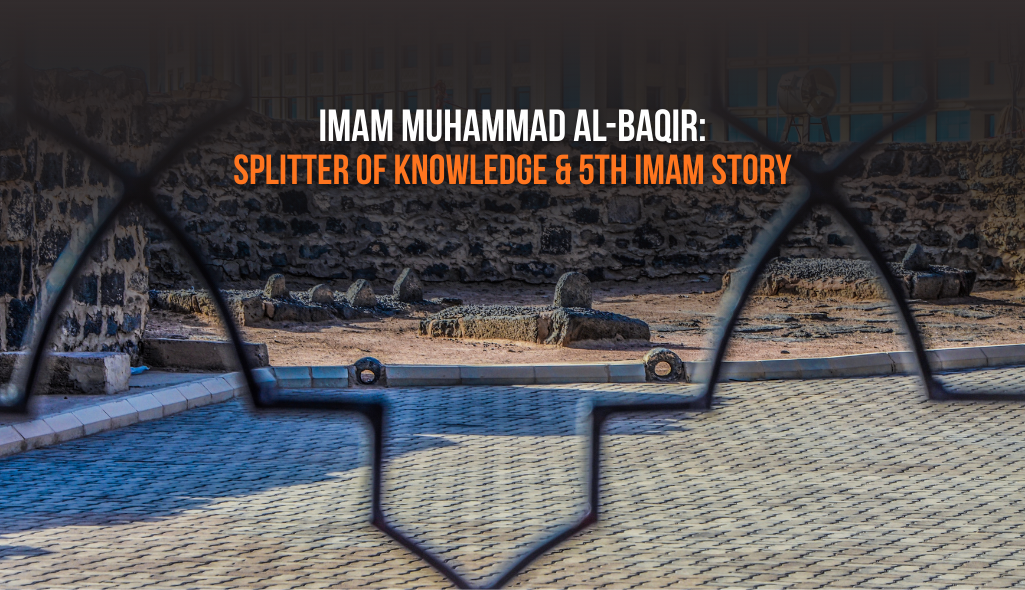
According to most historians, Imam Sajjad (A.S.) was martyred by poisoning in 25 Muharram, 95 AH (approximately 713 CE), at the age of 57. The likely culprit was Caliph Walid ibn Abdul Malik, who feared the Imam’s growing moral and spiritual influence. Imam was buried in the famous Jannat al-Baqi’ cemetery in Medina, near other members of the Ahlul-Bayt. His martyrdom was quiet, but the grief among his followers and family was deep and lasting.
What He Left Behind
Imam Zain ul Abideen (A.S.) left a legacy far greater than any political reign:
✨ A model of spiritual resistance
He showed how worship, patience, and ethics could challenge corrupt empires.
📚 Timeless texts
His Sahifa Sajjadiya continues to guide spiritual seekers, and his Risalat al-Huqooq inspires scholars and human rights advocates.
🌱 A lineage of knowledge
Through his son Imam Baqir (A.S.) and grandson Imam Sadiq (A.S.), he laid the foundation for the golden age of Islamic scholarship.
His Legacy Today
Across the world today:
Millions recite his duas during hardship Scholars study his words in universities and seminaries Spiritual seekers find healing in his connection with God Justice advocates look to his ethics as a blueprint for reform He continues to live not in palaces or statues—but in hearts softened by his words and minds awakened by his wisdom.
خاتمة
Imam Zain ul Abideen (A.S.) proved that strength isn’t always loud, and revolutions aren’t always violent. Sometimes, the deepest change begins with a whisper to God, a tear in sujood, and a life lived for others. His spiritual journey teaches us:
> You may not control the world around you, But you can control the world within you And through that, reshape the world for others.
📿 Excerpt from Sahifa Sajjadiya:
> “O Allah, make me live as long as my life is spent in obedience to You, but take me away when my life becomes a field for Satan.”
🌺 A Final Word:
Imam Sajjad (A.S.) is gone from this world, but his soul still speaks.
In every moment of patience, in every act of justice, in every tear of prayer he lives.





 12-فبراير-2026