Introduction to Safar
Safar is the second month of the Islamic calendar. In the pre-Islamic era of ignorance (Jahiliyyah), the month of Safar was not considered sacred, whereas warfare and fighting were prohibited during the sacred months. After the month of Muharram ended and Safar began, people would turn toward battles and leave their homes to go to the battlefield, resulting in houses being left empty. Due to this reason, the month came to be known as Safar (meaning emptiness).
Some people associate the month of Safar with misfortune; however, in the light of Islamic teachings, this month is like all other months. The great historical and memorable personalities associated with this month convey to us powerful lessons of piety, patience, knowledge, and sacrifice.
What Does “Safar” Mean?
The word Safar is derived from the Arabic language. According to its linguistic meaning, it refers to:
- Empty
- Desolation, or
- Homes being left vacant
During the pre-Islamic period of ignorance (Jahiliyyah), people would begin wars in the month of Safar and set out for battles. As a result, their homes were left empty. Due to this association, the month came to be known as Safar.
Why Safar Matters
This month teaches us patience, steadfastness, piety, and awareness, because several important and painful events in Islamic history occurred during it, which shaped the intellectual and spiritual direction of the Muslim Ummah.
The month of Safar conveys the message that:
- Trials come from Allah
- In difficult times, patience and faith should be strengthened
- Lessons should be learned from Islamic history to improve our lives
Therefore, the importance of the month of Safar lies in its lesson-filled events and spiritual message, not in any superstition or belief of misfortune.
Major Events of This Month
The Moon Night of Safar – Wrapped in Tears of Sorrow
The first day of Safar holds great historical and emotional significance. In 37 AH, it marked the beginning of the battle between Imam Ali (AS) and Muawiya. In 61 AH, the same day witnessed the entry of the captives of the Ahlul Bayt (AS) into Damascus. This day is deeply sorrowful for the Ahlul Bayt (AS) and their followers.
There are also special recommended practices for this day, which you can learn about by clicking on this link: Special practices of the day of 1st Safar
7th Safar: Birthday of Imam Musa Kazim (AS)
Imam Musa ibn Ja’far (AS) is the seventh Imam of the Shia school of thought. He is respected not only among Shias but also among Ahl-e-Sunnat due to his piety, devotion, knowledge, forbearance, and patience. He is remembered by the great titles “Al-Kazim” (the one who suppresses anger) and “Babul Hawā’ij” (the Door to the Fulfillment of Needs).
The life of Imam Musa al-Kazim (AS) teaches us trust in Allah, strong faith, certainty, and patience.
To learn more: The Imam of Patience – Birth Anniversary of Imam Musa Kazim (AS) | Special practices of the day of 7th Safar
9th Safar: Battle of Siffin
The Battle of Siffin is one of the most significant battles in Islamic history, which took place in 37 AH. This battle was fought between Imam Ali ibn Abi Talib (AS) and Muawiya ibn Abi Sufyan. The conflict arose over the issue of Islamic leadership and the caliphate, as some people were challenging the caliphate of Imam Ali (AS), while Muawiya had established his power in Sham (Syria).
The Battle of Siffin was not merely a military confrontation but also reflected the political, moral, and social challenges within the Muslim community. During the battle, Imam Ali (AS) demonstrated his justice, wisdom, and patience, while Muawiya tried to widen divisions among Muslims through his political strategies.
If you want to learn more: A Deep Historical Analysis of Imam Ali’s (AS) Struggle for Justice
13th Safar: Martyrdom of Bibi Sakina bint Hussain (AS)
Shehzadi Sakina, daughter of Imam Hussain (AS), was the living embodiment of her father’s great sacrifice. In her innocent eyes, one could see the deep imprint of the suffering and tragedy of Karbala. Even at a young age, she endured oppression, separation, and the pain of witnessing her father’s martyrdom, yet she upheld an example of patience and faith that still moves hearts today. Sakina (AS) made every moment of Karbala even more poignant and filled with profound human emotion.
Click Link: Remembering Bibi Sakina (SA) – The Beloved Daughter of Mola Hussain (AS)
17th Safar: Martyrdom of Imam Ali Reza (AS)
Imam Ali Reza (AS), the eighth Imam of Ahlul Bayt (AS), was a shining example of knowledge, piety, and patience. Despite the conspiracies of the enemies of Ahlul Bayt, he devoted his life to the service of religion and spreading the teachings of truth. According to some narrations, he was martyred on 17th Safar, while other accounts mention 23rd Dhu al-Hijjah 203 AH, poisoned by his enemies. His martyrdom remains a significant and memorable event in the history of Ahlul Bayt, symbolizing unwavering faith and sacrifice.
Click Link: The Story Behind His Martyrdom and Lessons It Teaches
20th Safar: Day of Arbaeen
Arbaeen is the sacred day observed on the fortieth day after the martyrdom of Imam Hussain (AS). On this day, the land of Karbala is filled with the fragrance of love, devotion, and loyalty. Pilgrims visit the holy shrine of Imam Hussain (AS) with hearts full of grief and reverence, shedding tears and pledging to follow his path. This day stands as a living symbol of faith, patience, and the love for Ahlul Bayt (AS).
Click Link: The World’s Largest Peaceful Gathering in Karbala
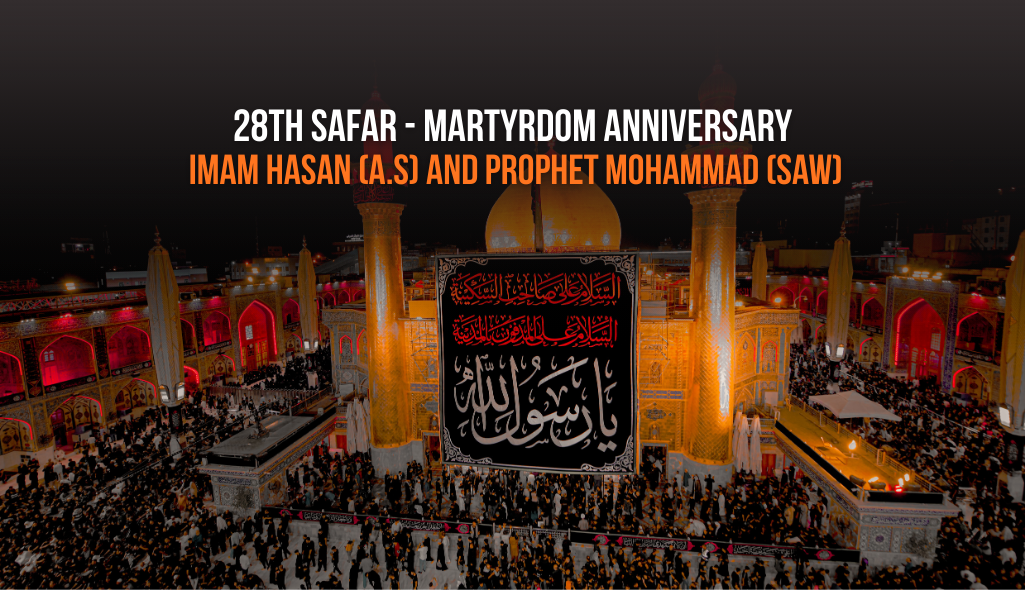
28th Safar: Martyrdom of Prophet Muhammad (PBUH) and Imam Hassan (AS)
The 28th of Safar holds a very significant place in Islamic history. On this day, the Prophet Muhammad (PBUH) passed away, leaving the Muslim Ummah in deep sorrow. On the same day, Imam Hasan (AS) was also martyred, having set a shining example of patience, piety, and the message of peace. This day reminds us that knowledge, patience, and sacrifice are values that remain timeless.
Click Link: The Imam of Peace – Imam Al Hassan Al Mujtaba (AS). His Life, Struggle and Legacy | Special practices of the day of 28th Safar
Quick Calendar of Key Dates
| Date |
Event |
Your Guide |
| 1st Safar |
Beginning of Safar (Moon sighted) |
First Day Practices |
| 3rd Safar |
The Beginning of Hardships for the Ahlul Bayt and the Trials of the Captives |
3rd Day Practices |
| 7th Safar |
Birth anniversary of Imam Al-Kazim (AS) |
7th Day Practices |
| 20th Safar |
Day of Arbaeen of Imam Hussain (AS) |
Special Practices |
| 28th Safar |
Martyrdom of Prophet Muhammad (PBUH) and Imam Hassan (AS) |
Practices of the Day |
| 29/30 Safar |
The Arrival of the captives of Ahlul Bayt (AS) in Madinah (Last day of Safar) |
Practices of the Day |
Essential Practices
Daily Fundamentals
Ziyarat Arbaeen
Try to recite it on Arbaeen (20th Safar)
Recitation of a Specific Supplication:
یا شَدیدَ الْقُوی وَیا شَدیدَ الْمِحالِ یا عَزیزُ یا عَزیزُ یا عَزیزُ ذَلَّتْ بِعَظَمَتِکَ جَمیعُ خَلْقِکَ فَاکْفِنی شَرَّ خَلْقِکَ یا مُحْسِنُ یا مُجْمِلُ یا مُنْعِمُ یا مُفْضِلُ یا لا إلهَ إلاّ أنْتَ سُبْحانَکَ إنّی کُنْتُ مِنَ الظّالِمینَ فَاسْتَجَبْنا لَهُ وَنَجَّیْناهُ مِنَ الْغَمِّ وَکَذلِکَ نُنْجِی الْمُؤْمِنینَ وَصَلَّی اللهُ عَلی مُحَمَّدٍ وَ آلِهِ الطَّیِّبینَ الطّاهِرینَ
Special Act of the Third Day:
Perform two rak’ahs of prayer:
- First rak’ah: Surah Al-Fatihah + Surah Al-Fath
- Second rak’ah: Surah Al-Fatihah + Surah Al-Ikhlas
After the prayer:
- Recite Salawat 100 times
- Recite اللّهُمَّ الْعَنْ آلَ أبی سُفْیان 100 times
- Seek forgiveness (Istighfar) 100 times
Attending Majalis
Participate in mourning gatherings to keep the message of Karbala alive.
Charitable Acts
Give in the name of the martyrs of Karbala, feed the poor, help those in need.
Special Dates
Each significant date has its own recommended practices. We’ve created detailed guides for:
1st Safar → | 3rd Safar → | 7th Safar → | 20th Safar → | 28th Safar → | 29/30th Safar →
What is Ziyarat Arbaeen?
Ziyarat-e-Arbaeen is not merely the recitation of words; it is the presence of the heart. It is the moment when a person bows their head before Imam Hussain (AS) with tears in their eyes and says, “O Hussain! Even if I am weak in body, my heart is with you.” Arbaeen teaches us that walking on the path of truth is not easy, but following the footsteps of Hussain (AS) is the true success. This Ziyarat transforms a person from within, turning pride into humility and fear into faith. Even those who cannot reach Karbala physically join the caravan of loyalty, patience, and sacrifice with their hearts.
Recitation of the special Ziyarat of Arbaeen is recommended (mustahab) and carries great reward for the lovers of Imam Hussain (AS).
If you want to read the deeds (Amaal) of Arbaeen day, please click the link: Special practices of the day of 20th Safar
Experiencing Safar in Iraq
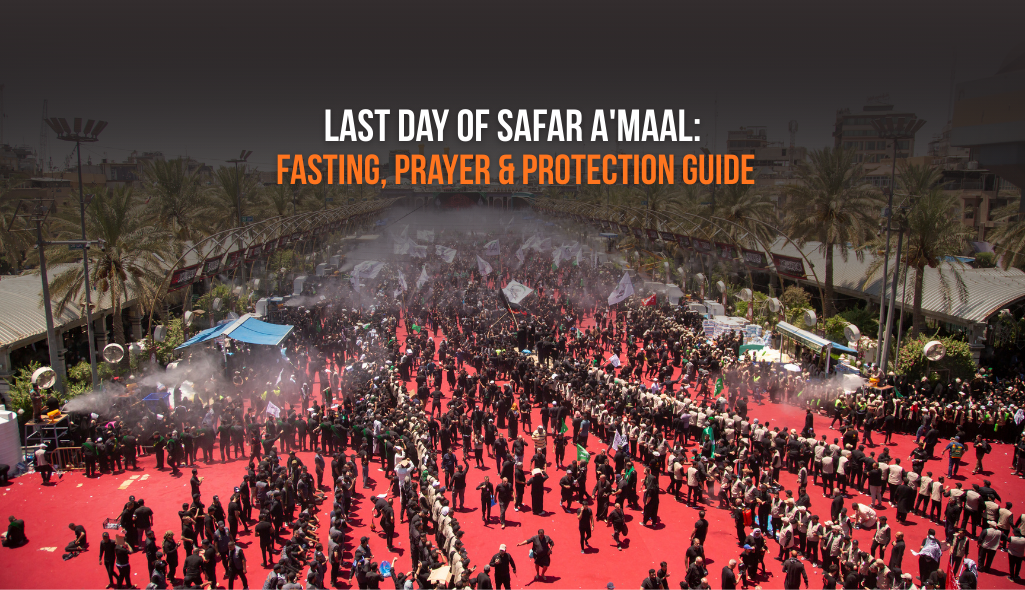
There’s something profoundly moving about spending Safar near the sacred shrines of the Ahlul Bayt (AS). The air itself feels heavy with grief and remembrance as pilgrims reflect on the immense trials faced by the family of the Prophet (PBUH) after Karbala.
During Safar, the memories of the captives—the sorrow, separation, and endurance of the Ahlul Bayt (AS)—come alive in the streets of Karbala, Najaf, and Medina. Pilgrims gather in solemn reflection, shedding tears and offering heartfelt prayers for the martyrs, experiencing the depth of love, loyalty, and patience that define the family of the Prophet (PBUH).
Visiting these sacred shrines, walking where the Ahlul Bayt (AS) once endured hardship, and participating in the commemorations allows the soul to connect with their pain, steadfast faith, and sacrifice.
Whether you join for the key days of remembrance or spend the entire month, Iraq’s holy cities provide an unparalleled spiritual and emotional journey, touching every heart with the sorrow and reverence of Safar.
Our specially curated Safar pilgrimage packages cover all the significant days and holy sites—from short journeys focused on the key commemorations to complete month-long spiritual experiences. Each package includes comfortable accommodation near the shrines, ground transportation between cities, and full support throughout your journey. Explore our Safar packages below and find the perfect fit for your ziyarat.
Note: Dates are based on the Islamic lunar calendar and vary by moon sighting. For Gregorian calendar dates, consult local Islamic authorities.
Last Updated: February 2026
For corrections: info@ziaratplanner.com
References
Online Scholarly Resources
- Mafatih al-Jinan – Shaykh Abbas Qumi
- Tarikh al-Tabari
- Bihar al-Anwar – Allama Majlisi
- Al-Irshad – Shaykh Mufid
- I’lam al-Wara – Tabarsi





 KAR- Hotel Burj Yusuf
  Inquire & Book