Introductory Words
In every era, lamps of guidance have been lit to prevent humanity from wandering in the darkness of misguidance. Yet, some personalities are not only embodiments of knowledge and action but also sources of inner peace, deep understanding of faith, and spiritual salvation. Imam Hasan al-Mujtaba (peace be upon him) is one such divine figure, whose being reflects the divine forbearance, the light of prophetic patience, and the power of reconciliation that unites hearts.
His peace treaty was not a mere political agreement but a divine decision filled with wisdom from the unseen. What appeared as silence was, in reality, a protection for the Muslim community and the preservation of thespirit of the Prophetic mission. He did not take up the sword, yet defended the truth; he did not wage war, yet won over hearts; he chose silence, yet became a voice that echoes through the ages.
In this blog, we will explore the blessed life of Imam Hasan (AS), delve into the spiritual and practical aspects of his personality, and seek to understand the wisdom behind his peace treaty so that we may draw light from his example in today’s world.
Introduction to Imam Hasan (a.s.)
Imam Hasan (peace be upon him) was the Second Imam among the Ahlal-Bayt and the elder grandson of the Holy Prophet Muhammad (peace and blessings be upon him and his family). He was the son of Imam Ali ibn Abi TaliB (a.s.) and Lady Fatimah al-Zahra (s.a.). His title was Al-Mujtaba and his kunya was Abu Muhammad.
Birth and the Wisdom Behind His Name He was born on the 15th of Ramadan, in the 3rd year after Hijrah (A.H.), in the holy city of Madinah. His name, Hasan, was given by divine command. It is the Arabic counterpart of the Ibrani name Shabbar, which was the name of Prophet Haroon’s son. Since Imam Ali (a.s.) held a status similar to that of Prophet Haroon in relation to Prophet Musa as stated in the famous Hadith of the Prophet (s): “You are to me as Haroon was to Musa” the naming of Imam Hasan followed this divine parallel.
The State of Islam in 3 A.H.: At that time, Islam was spreading rapidly. The Muslims had established a strong and organized Islamic state in Madinah. Through various military expeditions and defensive battles, the Prophet (s) and his companions were working to protect and propagate the message of Islam. That same year, the significant Battle of Uhud took place. Although it began in the Muslims’ favor, a moment of heedlessness led to a temporary setback. This era was one of laying down the social and moral foundations of the Islamic society, educating the believers and confronting the growing challenges posed by internal hypocrisy and external threats. It was into this crucial stage of Islamic development that the luminous presence of Imam Hasan (a.s.) was born a true divine blessing.
The Status of Imam Hasan (a.s.) in the Eyes of the Prophet Muhammad (PBUH) According to Sunni
Narrations.
Imam Hasan ibn Ali (a.s.), the beloved grandson of the Prophet Muhammad (peace be upon him and his
family), holds a lofty status in Islam. His virtues and spiritual rank have been preserved in numerous authentic Sunni Hadith collections. Below are some powerful narrations that reflect the deep love and respect the Holy Prophet (PBUH) had for Imam Hasan (a.s.):
1. Leader of the Youth in Paradise The Prophet Muhammad (PBUH) said:
“Al-Hasan and Al-Hussain are the leaders of the youth of Paradise.”
(Sahih Tirmidhi)
2. My Fragrant Flowers from This World The Prophet (PBUH) stated:
“Indeed, Hasan and Hussain are my two fragrant flowers (Rayhan) from this world.”
(Sahih Bukhari)
3. Love for Them Is Love for Me The Prophet Muhammad (PBUH) declared:
“Whoever loves Hasan and Husayn, loves me; and whoever harbors hatred against them, harbors hatred against me.”
(Musnad Ahmad)
4. The Prophet’s Prayers and EmbraceM The Prophet (PBUH) would often hold Imam Hasan (a.s.) in his lap, kiss his forehead, and say: O Allah! I love him, so love him too, and love those who love him.” (Sahih Bukhari, Sahih Muslim)
5. A Relationship Beyond Blood The Prophet (PBUH) would frequently call Hasan and Hussain “my sons”, even though they were his grandsons. He used to take them into his arms, carry them on his shoulders, and walk around joyfully, honoring them in front of companions and the community.
These authentic narrations from Sunni sources stand as everlasting testimony to the noble status of Imam Hasan (a.s.) in Islam. The words and actions of the Prophet Muhammad (PBUH) serve as a spiritual compass, guiding the Muslim ummah to recognize and cherish the elevated position of Imam Hasan (a.s.) a symbol of purity, peace, and divine love.
The Childhood of Imam Hasan (a.s.) A Life of Light, Love, and Divine Upbringing. The childhood of Imam Hasan (peace be upon him) was filled with purity, light, and nurturing love. He was raised in the blessed household known as “Bayt al-Nubuwwah” (The House of Prophethood) and “Ma‘dan alRisālah” (The Source of Revelation). His father, Imam Ali (a.s.), was the embodiment of knowledge, justice, and courage, while his mother, Lady Fatima al-Zahra (s.a.), was a symbol of chastity, worship, and patience. In such an environment, the upbringing of Imam Hasan (a.s.) stands as a shining example of ideal Islamic parenting.
Raised in the Arms of the Prophet (PBUH) Imam Hasan (a.s.) experienced the deep affection and spiritual care of the Prophet Muhammad (peace be upon him and his family) from a very young age. The Prophet (PBUH) would often carry Hasan and Hussain on his shoulders, embrace them, and say:
“O Allah! I love them, so love them, and love those who love them.” This was not only an expression of love but a divine declaration of their spiritual greatness.
A Bond with His Father, Imam Ali (a.s.). From early childhood, Imam Hasan (a.s.) witnessed the devotion, wisdom, and piety of his father, Imam Ali (a.s.). Imam Ali would not only teach his children religious knowledge, but also demonstrate the virtues of patience, justice, and humility in daily life. Imam Hasan absorbed these qualities and followed in his father’s footsteps from a very young age.
Nurtured by His Mother, Lady Fatima (s.a.) Lady Fatima (s.a.) provided the spiritual and moral foundation for her sons. She spent nights in worship and supplication. Imam Hasan (a.s.) once said:
“One night I saw my mother in prolonged prostration, praying for the Muslim community until dawn.” Such a motherly influence deeply shaped the soul of Imam Hasan, filling it with mercy, compassion, and a sense of responsibility for the ummah.
A Loving Bond with His Brother, Imam Hussain (a.s.) Imam Hasan (a.s.) and Imam Hussain (a.s.) were more than brothers; they were companions in spirit and purpose. They played together as children, accompanied the Prophet to the mosque, and shared a deep, inseparable love and respect for each other. This bond of brotherhood remained strong throughout their lives and became a source of strength for the Islamic message.
Imam Hasan (A.S) from 3 AH to 40 AH: Battles and His Formative Role.
1. Battle of Uhud (3 AH): The Year of His Birth Imam Hasan (A.S) was born in the same year as the Battle of Uhud. Though just a newborn, his father Imam Ali (A.S) displayed unparalleled bravery in this battle, and these early examples of valor became part of the environment that nurtured Imam Hasan (A.S)’s spiritual and moral growth.
2. Battles of Khandaq, Khaybar, and More (5–7 AH): Learning Through Observation.
During the Battles of the Trench (Khandaq) and Khaybar, Imam Hasan (A.S) was a young child, often found in the company of the Prophet Muhammad (PBUH). He would observe firsthand the ethics, discipline, and devotion of the Muslim warriors especially his father, Imam Ali (A.S), who played a central role in all major military campaigns. Though too young to fight, Imam Hasan (A.S) absorbed the emotional and spiritual weight of these moments.
3. Conquest of Makkah (8 AH) and Expedition of Tabook (9 AH): Witnessing Islamic Nobility.
At the time of the Conquest of Makkah, Imam Hasan (A.S) was around 5 6 years old. He accompanied the Prophet (PBUH) and observed the principles of mercy, forgiveness, and humility in victory. In the Expedition of Tabook, although there was no major combat, the organizational and spiritual strength of Islam left a deep impression on his young heart.
4. Event of Ghadir E Khumm (10 AH): Recognizing the Future of Leadership.
At the monumental event of Ghadir Khumm, Imam Hasan (A.S) stood beside his father as the Prophet (PBUH) publicly declared Imam Ali (A.S) as the Mawla (guardian) of the believers. This event had a lasting impact on Imam Hasan (A.S), as it defined the rightful leadership of the Ahl al-Bayt (A.S) in the eyes of those present.
5. Post Prophetic Crisis (After 11 AH). Following the Prophet’s (PBUH) demise, the Muslim ummah fell into political uncertainty. The caliphate was not handed to Imam Ali (A.S) despite Ghadir, and the Saqifah episode marked a turning point in Islamic leadership. Imam Hasan (A.S), though still young, stood firmly beside his father and witnessed the earliest crisis of succession in Islam.
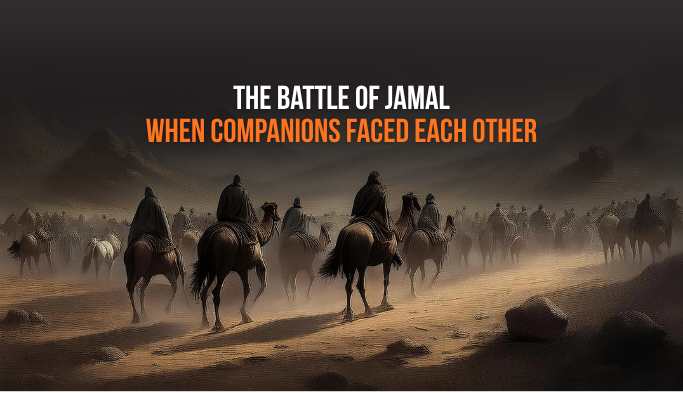
6. The Caliphate of Imam Ali (A.S) and the Era of Active Participation (35–40 AH). Battle of Jamal (36 AH): A Commander and Diplomat. In the Battle of Jamal, Imam Hasan (A.S) played multiple roles as a commander, diplomat, and preacher. He was responsible for mobilizing support in Kufa and Basra and delivered influential sermons to rally the people. He led military formations and stood firm in support of his father’s caliphate.
Battle of Siffin (37 AH): Leadership on the Battlefield. Imam Hasan (A.S) fought valiantly in the Battle of Siffin, not just as a soldier but also as a spiritual and motivational leader. He delivered speeches that inspired the Muslim army, constantly reminding them that loyalty to Imam Ali (A.S) was loyalty to the truth.
Battle of Nahrawan (38 AH): Combatting Extremism. Imam Hasan (A.S) fully supported his father in confronting the Khawarij rebellion. He actively engaged both militarily and ideologically against the radicals who had distorted the message of Islam. His role in maintaining the unity and integrity of the Muslim ummah during this volatile period was profound.
3 AH 40 AH: The Making of a Visionary Leader. From his birth in 3 AH to the martyrdom of Imam Ali (A.S) in 40 AH, Imam Hasan (A.S)’s life was a journey of spiritual grooming, political insight, and moral resilience. He did not just participate in battles with the sword but fought with wisdom, sermons, and unwavering patience to hold the ummah together. These foundational experiences became the precursors to his most defining decision the historic Treaty of Peace with Mu’awiyah, which would come in the years following his Imamate.
After the Martyrdom of Imam Ali (a.s): The State of Kufa and Imam Hassan (a.s). In the year 40 AH, on the night of 21st Ramadan, Imam Ali (a.s) was martyred in Kufa. The atmosphere was filled with grief and sorrow. A large number of Muslims expressed their profound mourning over the loss of the Commander of the Faithful. At this moment, Imam Hassan (a.s) delivered an emotional sermon in the Mosque of Kufa, highlighting the virtues of his father and formally announcing the continuation of the Imamate. Thousands of people pledged allegiance to him, accepting him as their Imam and Caliph in a very short time.
Beginning of the Imamate and Caliphate. Imam Hassan (a.s) officially took the responsibility of leading the Muslim Ummah. The majority of Muslims in Kufa, Basra, Hijaz, and Yemen accepted him as the rightful successor of the Prophet Muhammad (PBUH). Kufa became the political center of his government. However, the political landscape had become increasingly complex. On one side, Muawiyah had long revolted against Imam Ali (a.s) from Syria, and on the other, many tribal leaders in Kufa had become materialistic and hypocritical.
Public Sentiment and Internal Betrayals. Although many people outwardly pledged allegiance to Imam Hassan (a.s), their loyalty was weak. A significant number of Kufa tribes were already in contact with Muawiyah, tempted by wealth and promises of power. When Imam Hassan (a.s) prepared for battle against Muawiyah, he faced internal betrayal. Several commanders and tribal leaders defected and joined the Syrian ranks, leaving the Imam increasingly isolated.
Muawiyah’s Propaganda and Plots Against the Imam. Muawiyah launched an aggressive campaign of propaganda against Imam Hassan (a.s), portraying him as weak, worldly, and unwilling to fight though reality proved otherwise. He spread bribery, promises of high positions, and gifts among the tribes to weaken the support for the Imam. Some historical sources even mention that a close associate of the Imam attempted to assassinate him, causing physical injury.
The Historic Peace Treaty of Imam Hassan (a.s) – 41 AH. Realizing that the Kufa army lacked genuine loyalty and that continuing war would lead to unnecessary bloodshed, Imam Hassan (a.s) chose the path of peace to protect the Ummah. Muawiyah accepted the treaty under several conditions, including: After Muawiyah, the caliphate would return to the Ahlul-Bayt. No oppression would be committed against the people of Madina, Kufa, or Iraq. Cursing Imam Ali (a.s) from the pulpits would be stopped. Despite signing the treaty, Muawiyah later violated all its terms. Still, Imam Hassan (a.s) preserved the unity of the Ummah and saved it from civil war.
Life After the Treaty: 41–50 AH. Muawiyah forced Imam Hassan (a.s) to return to Madina. The Imam spent the next ten years there focusing on religious teachings, worship, and preserving the dignity of the Ahlul-Bayt. However, even during this period, the Umayyad regime continued plotting against him. He was constantly surveilled, his followers were harassed, and even his family members were troubled at times.
The Poisoning Conspiracy Against Imam Hassan (a.s) Muawiyah, eager to secure the caliphate for his son Yazid, saw Imam Hassan (a.s) as the greatest obstacle. The Imam’s popularity, lineage, and piety were unbearable for him, so he devised a plan to eliminate him. He secretly contacted Imam Hassan’s wife, Juda bint al-Ash’ath, who came from a politically opportunistic family. He promised her a large sum of gold and silver, along with marriage to Yazid, if she would poison the Imam. Driven by worldly greed, Juda agreed to the sinister plan. One day, she mixed a deadly poison in milk or honey and served it to the Imam. The poison was so potent that it caused the liver of Imam Hassan (a.s) to rupture. He began vomiting pieces of his liver and endured excruciating pain for days.
The Tragic Martyrdom of Imam Hassan (a.s). Finally, on 28th Safar, 50 AH, in Madina, Imam Hassan (a.s) embraced martyrdom. His death was not just a personal loss but a calculated political assassination.
The Reality Behind the Martyrdom. The martyrdom of Imam Hassan (a.s) was a sorrowful and treacherous killing, executed solely for political gains. Muawiyah not only eliminated a great figure of Ahlul-Bayt (a.s) but also cleared the way for the illegitimate rule of Yazid leading directly to the tragedy of Karbala. After the Martyrdom of Imam Hassan (a.s.): The Situation in Medina Imam Hassan (a.s.) was martyred on 28th Safar, 50 AH, in Medina. The news of his death plunged the city into mourning. The people of Medina and the family of the Prophet (s.a.w.w) were devastated. He was not just the beloved grandson of the Prophet (s), but also a symbol of peace and dignity who sacrificed his rightful rule to prevent bloodshed within the Muslim community.
Burial and the Obstacles Faced. As per his will, Imam Hassan (a.s.) wished to be buried next to his grandfather, Prophet Muhammad (s.a.w.w), if possible. When Imam Hussain (a.s.) and members of Banu Hashim tried to take the funeral towards the Masjid alNabawi, the Umayyads and Aisha (the Prophet’s wife) objected severely. Some narrations even state that arrows were shot at the blessed coffin, causing it to bleed. At this, Imam Hussain (a.s.) said:
Had my brother not made a will to avoid bloodshed, today the streets of Medina would be soaked in blood. Eventually, Imam Hassan (a.s.) was buried in Jannat ul-Baqi, where his shrine still stands as a symbol of truth and injustice.
The Reaction of Ahlal-Bayt (a.s.). The martyrdom deeply wounded the hearts of Imam Hussain (a.s.), Lady Zainab (s.a.), and all of Ahlal-Bayt (a.s.). Imam Hussain (a.s.) mourned with these words: O Hassan! Peace be upon you. You gave up your right to save the Ummah, and they responded by poisoning you to death.
Lady Zainab (s.a.), grief-stricken, said: O mother Fatima! Look how your son was martyred in helplessness and betrayal. For days, the house of Ahlal-Bayt remained in mourning and lamentation.
Umayyad Treachery and Political Agenda Exposed. The martyrdom of Imam Hassan (a.s.) exposed Muawiyah’s true agenda to consolidate power and ensure the throne for his son, Yazid. By eliminating Imam Hassan (a.s.), Muawiyah removed the biggest obstacle to his dynastic rule. This political assassination laid the groundwork for the tragedy of Karbala just a few years later.
Shrine of Imam Hasan (a.s.) in Jannat al-Baqi Jannat al-Baqi is a historic cemetery in Madina where many revered figures of Islam are buried, including the Ahlal-Bayt (a.s.), the noble wives of the Prophet (PBUH), prominent companions, and thousands of saints. Among these great personalities lies Imam Hasan al-Mujtaba (a.s.) the beloved grandson of the Prophet Muhammad (PBUH), the second Imam, and the leader of the youth of Paradise.
Historical Significance of the Shrine. Imam Hasan (a.s.) was martyred in 50 AH in Madina. He was buried in Jannat al-Baqi, and for centuries, a beautiful shrine with a dome stood over his grave. It served as a sacred place of visitation for Muslims from around the world.
Destruction of the Shrine. In 1324 AH / 1925 CE, with the rise of the Al Saud regime, and under the influence of Wahhabi ideology, the shrine of Imam Hasan (a.s.) along with the graves of other members of Ahlal-Bayt (a.s.) was demolished. The entire cemetery of Jannat al-Baqi was leveled, and the sacred tombs were labeled as “centers of shirk (polytheism).” This act was a spiritual tragedy for the Muslim ummah. Even today, followers of Ahlal-Bayt (a.s.) and those who revere them mourn this event, which occurred on the 8th of Dhul Hijjah, a day now commemorated as “Yawm-e-Inhadam Jannat al Baqi” (Day of the Demolition of Jannat al-Baqi).
Present Condition. Today, the blessed grave of Imam Hasan (a.s.) remains unmarked and without a structure. Pilgrims who visit Jannat al-Baqi quietly offer their salutations, recite Ziyarat, and weep in remembrance. Sitting near his resting place, one reflects on the immense sacrifices and tragedies endured by the family of the Prophet (PBUH), making the visit a deeply spiritual experience. The Reward of Ziyarat of Imam Hasan (a.s.) Imam Ja’far al-Sadiq (a.s.): Visiting Imam Hasan (a.s.) is Like Visiting a Prophet Imam Ja’far al-Sadiq (a.s.) said: Whoever visits one of our Imams from the Ahl al-Bayt, it is as though he has visited a Prophet of Allah. This includes the Ziyarat of Imam Hasan al-Mujtaba (a.s.), whose shrine in Jannat al-Baqi holds immense spiritual value.
Prophet Muhammad (PBUH): The Reward for Visiting Imam Hasan (a.s.) After His Martyrdom. The Prophet (PBUH) told Imam Ali (a.s.): Whoever visits me, or you, or your sons Hasan and Husayn during their lifetimes or after their martyrdoms I guarantee them protection from the horrors of the Day of Judgment and I will elevate their rank in Paradise. This Hadith directly emphasizes the reward for visiting Imam Hasan (a.s.), equal in virtue to visiting the Prophet himself.
Imam Husayn (a.s.) Asks About Ziyarat Imam Hasan (a.s.) Included in the Promise of Jannah. When Imam Husayn (a.s.) asked his grandfather, Prophet Muhammad (PBUH), about the reward of his visitors after martyrdom, the Prophet said:
Whoever visits me after my martyrdom, Paradise is for him.
Whoever visits your father Ali (a.s.), Paradise is for him.
Whoever visits your brother Hasan (a.s.), Paradise is for him.
And whoever visits you, Husayn (a.s.), after your martyrdom Paradise is also guaranteed for him.
This highlights the eternal reward and honor of the Ziyarat of Imam Hasan (a.s.), the beloved grandson of the Prophet.
Kamil Uz Ziyarat
Ziyarat of Imam Hasan (a.s.): A Spiritual Path to Jannah. Visiting Imam Hasan (a.s.) in Jannat al-Baqi or by reciting his Ziyarat from afar is not just an act of love. It is a sacred connection to the light of Prophethood, a deed that opens the doors to divine mercy, intercession, and Paradise.
Sayings of Imam Hassan A.S
The Eternal Value of Knowledge: A Legacy That Must Continue No matter what stage of life a person reaches, the promotion and spread of knowledge must never cease. Just as one candle lights another, knowledge and wisdom should continue to illuminate hearts and minds across generations. Imam Hasan (a.s) beautifully emphasized this noble mission when he said:
Teach others what you know and learn from others what they know. This profound teaching highlights the mutual responsibility of sharing and acquiring knowledge, forming the very foundation of an enlightened society.
Respect, Modesty, and Morality: Three Pillars of a Meaningful Life. Respect enhances human dignity, modesty preserves chastity, and morality safeguards the soul. These three qualities are essential for a noble and honorable life. However, Imam Hasan (a.s) identified the core foundations upon which these values stand.
He said:
One who lacks intellect, lacks etiquette; one who lacks courage, lacks manliness; and one who lacks modesty, lacks religion.” This timeless wisdom reminds us that: Intellect is the root of good manners. Courage is the spirit of true manhood. Modesty is the soul of faith. By nurturing these foundations, one can build a life of purpose, dignity, and deep spiritual strength.
The Foundation of Worship and Piety: Reflection and Awareness.
True worship of God and genuine piety are not based on blind following, but on deep reflection and thoughtful awareness. A person must reach the realization that God alone is truly worthy of worship, and He is our ultimate protector and guardian. This kind of worship and taqwa (God-consciousness) is meaningful and enduring. However, when piety is adopted merely out of fear or social pressure, its effects are often short-lived and superficial.
Imam Hasan (a.s) beautifully advised:
I recommend to you the taqwa of Allah and continuous contemplation, for indeed, reflection is the mother and father of all good deeds. This profound saying highlights that reflection (tafakkur) is the root of all virtues, leading the believer to sincere faith, meaningful action, and a deeper connection with the Creator.
The Secret to a Nation’s Progress. Division and disunity destroy nations, while only those nations can truly thrive that remain united and trust one another. Trust demands consultation listening to each other and making collective decisions. This, in reality, is the true secret behind the progress of any nation. As Imam Hasan (a.s) wisely stated: No nation engages in mutual consultation except that they are guided to what is right. This profound insight reminds us that mutual consultation leads to collective wisdom and progress.
Gratitude: A Sign of Noble Character. When someone does good to us and we fail to thank them, society considers us ungrateful and looks down upon such behavior. A person who does not acknowledge kindness is seen as morally low. Now imagine how base and ungrateful a person must be who fails to thank the One who constantly blesses us with countless favors Allah. Imam Hasan (a.s) beautifully said: Failure to express gratitude for blessings is a sign of baseness. This powerful statement calls us to recognize that gratitude is not just good manners it reflects the purity and nobility of one’s character. Jalwa E Noor
Conclusion: Imam Hasan (a.s) The Peace Maker of Islam The blessed life of Imam Hasan (a.s) teaches us that true courage is not only shown on the battlefield, but also in the silent sacrifices made for the unity of a nation. It lies in gathering broken hearts, in prioritizing the greater good over personal power, and in choosing peace when war seems inevitable.
Imam Hasan (a.s) made a decision that few could even imagine he stepped away from power not out of weakness, but out of wisdom, mercy, and a deep love for the Muslim Ummah. Where many saw silence, history remembers his strength. Where others sought thrones, he secured a place in the hearts of believers forever.
His legacy reminds us that the greatest victories are sometimes won by preventing war, not fighting it. He showed the world that Islam is not spread by the sword alone, but also through patience, forgiveness, and wisdom. Imam Hasan (a.s) was, and will always remain, “The Peace Maker of Islam” a shining example of prophetic character and divine leadership whose light continues to guide all those who long for justice, unity, and truth.





 06-Jun-2026