Eid ul Adha: The Festival of Faith, Sacrifice and Devotion
Eid al-Adha (Arabic: عيد الأضحى), also known as the Festival of Sacrifice, is celebrated by Muslims around the world to honor the obedience and devotion of Prophet Ibrahim (A.S.) to Allah (SWT). It is the second major Islamic festival after Eid al-Fitr and holds deep historical and spiritual meaning.
Here’s a detailed explanation of why Eid al-Adha is celebrated, along with Quranic references and important points from both Sunni and Shia traditions:
🌙 1. The Origin of Eid al-Adha: The Sacrifice of Prophet Ibrahim (A.S.)
According to Islamic tradition, Prophet Ibrahim (A.S.) saw a dream in which Allah commanded him to sacrifice his beloved son, Isma’il (A.S.). Being a devout servant, he prepared to obey the command. At the last moment, Allah replaced Isma’il with a ram, showing that it was a test of faith.
Qur’an – Surah As-Saffat (37:102–107):
“Then when he reached the age to work with him, he said, ‘O my son, I have seen in a dream that I must sacrifice you. So look, what do you think?’ He said, ‘O my father, do as you are commanded…’ And We ransomed him with a great sacrifice.”
🕋 2. Connection to Hajj and the Day of Arafah
Eid al-Adha is celebrated on 10th Dhu al-Hijjah, after the Day of Arafah (9th Dhu al-Hijjah), which is the peak of Hajj. The sacrifice performed during Eid is symbolic of Prophet Ibrahim’s submission and is also a part of the Hajj rites for pilgrims in Mina.
🕌 3. Purpose and Spiritual Meaning
- Complete submission to Allah (SWT)
- Sacrificing our ego, desires, and attachments
- Caring for the poor and needy
- Strengthening unity in the Ummah
🕊 It is not just about sacrificing an animal; it’s about spiritual sacrifice and sharing blessings.
Qur’an – Surah Al-Hajj (22:37):
“It is neither their meat nor their blood that reaches Allah, but it is your piety (taqwa) that reaches Him…”
💠 4. The Shia Perspective on Eid al-Adha
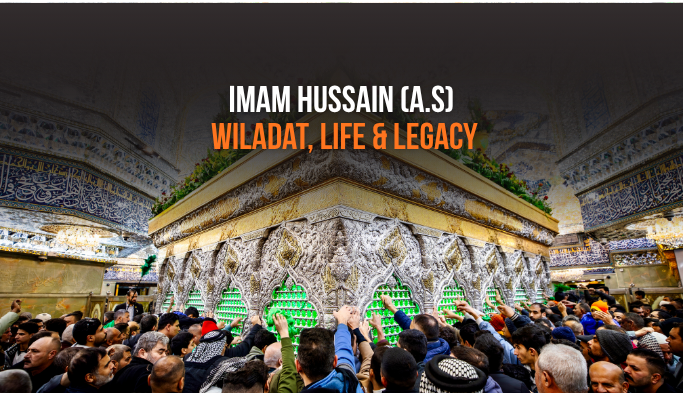
In Shia Islam, while the story of Ibrahim (A.S.) and Isma’il (A.S.) is the same, the event is commemorated with deep focus on spiritual reflection, social justice, and remembrance of the Ahl al-Bayt (A.S.). Shia traditions also connect the meaning of sacrifice with the martyrdom of Imam Hussain (A.S.), who gave the ultimate sacrifice at Karbala.
It’s a time to renew loyalty (‘ahd) to the Imams of Ahl al-Bayt and reflect on their role in preserving Islam.
🐑 5. What Do Muslims Do on Eid al-Adha?
- Perform Eid prayers in congregation
- Sacrifice a halal animal (goat, sheep, cow, or camel)
- Distribute meat: 1/3 for family, 1/3 for relatives, 1/3 for the poor
- Dress well, visit family, and give charity
- Reflect on the meaning of sacrifice and obedience
🌙 Sayings of the Prophet Muhammad (ﷺ):
“The Day of Sacrifice (Yawm-un-Nahr) is the greatest day in the sight of Allah.”
[Sunan Abu Dawood, Hadith 1765]
“It is neither their meat nor their blood that reaches Allah, but it is your piety that reaches Him.”
[Qur’an, Surah Al-Hajj 22:37]
🕌 Saying of Imam Ali (A.S.):
“Sacrifice is not just of the animal, but of one’s ego, desires, and hatred as well.”
[Attributed in the spirit of Nahj al-Balagha]
✨ The Message of Eid ul Adha:
- Faith (Iman): Demonstrated by Prophet Ibrahim (A.S.) and Prophet Ismail (A.S.)
- Sacrifice (Qurbani): Giving up what you love most for Allah
- Piety (Taqwa): Performing acts sincerely for Allah’s pleasure, not for show
- Unity & Brotherhood: Muslims coming together in prayer, sacrifice, and sharing with the needy
A beautiful and deeply meaningful connection can be drawn between Eid ul Adha and the sacrifice of Imam Hussain (A.S.). Though they are historically different events, they are spiritually and morally linked by the essence of absolute submission to Allah, sacrifice, and truth over falsehood.
🕋 Imam Hussain (A.S.) — The Living Example of Eid ul Adha’s Spirit
Centuries later, Imam Hussain (A.S.), the beloved grandson of the Prophet Muhammad (ﷺ), faced a similar but even more severe test on the plains of Karbala. He sacrificed not just his life, but also the lives of his family members, including his six-month-old son, to stand against tyranny and uphold the values of truth, justice, and Islam.
His sacrifice wasn’t just of blood — it was of comfort, family, safety, and worldly power, purely to preserve the spirit of Islam.
Imam Hussain (A.S.) said:
“I am not rising to spread evil or oppression. I rise to reform the Ummah of my grandfather.”
Like Ibrahim (A.S.), Imam Hussain (A.S.) submitted entirely to the will of Allah. He proved that true sacrifice is not bound by animals alone, but by the readiness to give up all that is dear for the sake of righteousness.
🕊 The Deeper Connection:
- Prophet Ibrahim (A.S.) laid the foundation of sacrifice
- Imam Hussain (A.S.) gave it its eternal living spirit
Both teach us:
- ✔️ True faith demands courage, sacrifice, and sincerity
- ✔️ Standing for truth may demand the ultimate price — but it’s the path to divine nearness
- ✔️ The essence of Eid ul Adha lives on through Karbala — not in form, but in spirit
Conclusion
Eid ul Adha is much more than a ritualistic slaughter of animals — it is a powerful reminder of the unwavering faith, submission, and devotion shown by Prophet Ibrahim (A.S.) and his son Prophet Ismail (A.S.). Their willingness to sacrifice everything for the sake of Allah teaches us the true essence of obedience and trust in the divine will.
This sacred occasion calls upon us to reflect inwardly — to sacrifice our ego, selfish desires, and worldly attachments. It encourages us to embrace humility, strengthen our bond with Allah, and show compassion towards others by sharing our blessings, especially with those in need.
In essence, Eid ul Adha is not just a festival, but a spiritual journey — one that revives our faith, deepens our devotion, and reinforces the values of unity, empathy, and righteousness.





 04-Jun-2026