Introduction
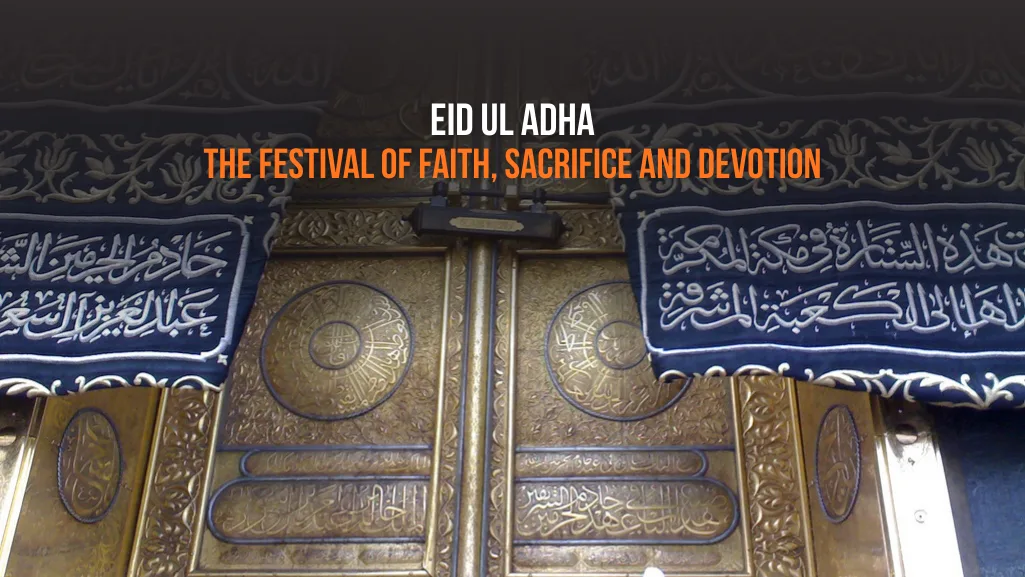
Eid ul Adha, also known as Eid al Adha or the Greater Eid, is a major celebration in the Islamic calendar. It remembers Prophet Ibrahim's willingness to sacrifice his son, Prophet Isma'il (AS), as an act of faith. Just as he was about to sacrifice him, Allah provided a ram instead. This story is a powerful lesson about devotion, faith, and trust in God.
The holiday is celebrated by Muslims worldwide. It begins with special Eid prayers and includes the ritual sacrifice of an animal, usually a goat, sheep, cow, or camel. The meat, called qurbani meat, is divided into three equal portions: one for the family, one for friends and neighbours, and one for those in need.
Eid ul Adha is a time for celebration, reflection, and acts of charity. It often falls during the holy month of Dhul Hijjah, the final month of the Muslim calendar, and it follows the annual Hajj pilgrimage to Makkah. It is also a public holiday in many countries with Muslim populations.
“"It is neither their meat nor their blood that reaches Allah, but it is your piety (taqwa) that reaches Him…"”
— Quran, Surah Al-Hajj (22:37)
The Significance of Qurbani (Sacrifice)
Beyond the historical event, the act of Qurbani (animal sacrifice) is a symbolic renewal of a Muslim's covenant with Allah. It represents the slaughtering of one's own ego and worldly desires. The Quran clarifies that it is not the meat or the blood that reaches Allah, but rather the Taqwa (piety and God-consciousness) of the heart behind the act.
“"Then when he reached the age to work with him, he said, 'O my son, I have seen in a dream that I must sacrifice you. So look, what do you think?' He said, 'O my father, do as you are commanded…' And We ransomed him with a great sacrifice."”
— Quran, Surah As-Saffat (37:102–107)
Social Justice and the Threefold Distribution
A central pillar of the festival is the mandatory sharing of the sacrifice. The meat is traditionally divided into three equal parts: one for the home, one for friends and relatives, and one specifically for the poor and needy. This ensures that the joy of the festival is not a private luxury, but a communal blessing that addresses food insecurity and strengthens social bonds.
The Connection to Hajj (The Pilgrimage)
Eid al-Adha coincides with the completion of Hajj, the fifth pillar of Islam. While millions of pilgrims finish their rites in Mecca and at Mount Arafat, Muslims worldwide join them in a global celebration of unity. It serves as a reminder that regardless of geography, race, or status, the entire "Ummah" (community) is united under the same principles of faith and sacrifice.
The Takbirat: A Chorus of Praise
From the dawn of the Day of Arafah until the end of the festival, Muslims recite the Takbirat of Tashreeq after every congregational prayer. These phrases declaring the greatness and oneness of Allah serve as the "soundtrack" of the holiday. They shift the focus from the festive celebrations back to the Creator, maintaining a state of mindfulness and gratitude.
Historical and Cultural Context of Al Adha
The story behind Eid ul Adha comes from the Holy Quran and is also found in sources like Encyclopedia Britannica. It tells how Prophet Ibrahim was tested by Allah. He was asked to sacrifice his son, Isma'il (AS), and as he obeyed with total submission, Allah sent a heavenly ram to be sacrificed instead. This moment is remembered with great respect and gratitude. The holiday ties closely to the fifth pillar of Islam — Hajj. The annual Hajj pilgrimage to Makkah ends with the celebration of Eid al Adha. The sacrifice is not just about animals but symbolizes giving up things we love for the sake of faith and kindness. Though traditions vary, the main values of faith, charity, and community are shared across Muslim cultures in places like India, Canada, and all over the world.
Celebration and Traditions of Eid Al Adha
Eid celebrations start with a special congregational prayer known as the Eid prayer. People wear new clothes, apply henna, and greet each other by saying "Eid Mubarak," which means "Blessed Eid." After prayers, Muslims perform the animal sacrifice, known as qurbani. This act follows Prophet Ibrahim's story. The sacrificed animal, usually a goat, sheep, cow, or camel is shared in three equal portions among family, friends, and the needy. During Eid ul Adha, Muslims exchange gifts, enjoy festive meals, and spend time with family and friends. Children often receive gifts and sweets. It's a celebration that strengthens the bonds of love, generosity, and faith within the Muslim community.
The Shia Perspective on Eid al-Adha
While sharing the foundational story of Prophet Ibrahim's (AS) devotion, the Shia tradition draws a profound spiritual parallel between the sacrifice of Isma'il (AS) and the eventual martyrdom of Imam Hussain (AS). The event is viewed as a precursor to the "Great Sacrifice" (Zibhin Azim) at Karbala, where the Prophet's grandson gave his life to preserve the essence of Islam. For Shia Muslims, the day is not only about the ritual of Qurbani but also about renewing Wilayah (spiritual allegiance) to the Ahl al-Bayt (AS). It is a time for deep introspection on social justice and the commitment to standing against oppression, reflecting the Imams' roles as the true guardians of Ibrahimic monotheism.
“"Sacrifice is not just of the animal, but of one's ego, desires, and hatred as well."”
— Saying of Imam Ali (AS) (Attributed in the spirit of Nahj al-Balagha)
Date and Timing in the Islamic Calendar
Eid ul Adha is celebrated on the 10th day of Dhul Hijjah, the final month of the Islamic or lunar calendar. The Muslim calendar is based on the moon, not the sun, so the date changes every year on the Gregorian calendar. The holiday lasts up to three days, though the first day is the most important. The exact date is announced after the new moon is sighted, marking the start of the lunar month. Other Islamic holidays, such as Ramadan and Eid ul Fitr, are also based on this lunar calendar system. This makes the timing special and spiritual for Muslims around the world.
Role of Muslim Aid and Charity
Muslim Aid and other charities are very active during Eid ul Adha. They help people perform the ritual sacrifice in a responsible and fair way, especially for those who can't do it themselves. These groups collect donations and distribute meat to areas where people may not get enough food. This makes sure that the values of Islam — such as compassion, justice, and equality — are part of the celebration. Charity is an important part of being Muslim, especially during holidays like Eid. Muslim Aid supports people in need and helps communities around the world feel included in the joy of Eid al Adha.
The Message of Eid al-Adha
The essence of this day is rooted in four transformative pillars:
1. Absolute Faith (Iman)
Exemplified by the unwavering trust Prophet Ibrahim (AS) and Prophet Isma'il (AS) placed in the Divine decree.
2. Spirit of Sacrifice (Qurbani)
The act of relinquishing our most cherished worldly attachments to draw closer to the Creator.
3. Purity of Intent (Taqwa)
Ensuring that our rituals are driven by sincere devotion rather than outward display.
4. Global Solidarity
Strengthening the bonds of the "Ummah" through congregational worship and the collective duty to feed the hungry.
A profound spiritual bridge exists between the trial of Ibrahim (AS) and the stand of Imam Hussain (AS). While the ram was provided to save Isma'il (AS), the sacrifice at Karbala is often reflected upon as the ultimate fulfillment of that Ibrahimic legacy. Both events serve as eternal beacons of Sabr (patience) and submission, proving that true victory lies in remaining steadfast in Truth, regardless of the personal cost.
Imam Hussain (AS): The Living Manifestation of Ibrahimic Sacrifice
Centuries after the trial of Prophet Ibrahim (AS), his descendant, Imam Hussain (AS), embodied the pinnacle of that same spirit on the sands of Karbala. Faced with the ultimate choice between submission to a tyrant or the preservation of Divine Truth, the Imam chose a path of total selflessness. He offered not only his own life but also the lives of his brothers, companions, and his youngest infant son, Ali Asghar (AS), as a testament to his devotion to Allah.
His stand was the practical application of the lessons of Eid al-Adha. While the sacrifice of the ram saved Isma'il (AS), the sacrifice of Imam Hussain (AS) saved the moral fabric of Islam itself. It was a refusal to prioritize safety, family, or worldly status over the path of justice. In this way, Karbala remains the eternal mirror of the Ibrahimic test—showing that the true essence of "Qurbani" is the willingness to lose everything in this world to gain the pleasure of the Creator.
The Deeper Connection
The relationship between these two monumental sacrifices defines the spiritual roadmap of a believer:
- Foundation: If Prophet Ibrahim (AS) provided the blueprint for sacrifice through his unwavering obedience, Imam Hussain (AS) provided its living, breathing perfection on the plains of Karbala
- The Weight of Faith: Their lives demonstrate that genuine devotion is measured by one's willingness to surrender what is most precious—whether it be a son or one's own life—solely for the sake of the Divine
- The Price of Truth: Both events serve as a timeless reminder that upholding Justice often requires the highest degree of bravery, yet it remains the only certain path to proximity with Allah
- Form & Essence: While we honor the form of sacrifice through the rituals of Eid al-Adha, the spirit of that sacrifice is perpetually renewed through the legacy of Karbala, teaching us that true "Qurbani" is an internal state of being
Conclusion
Beyond the physical ritual of animal sacrifice, this day stands as a profound testament to the absolute surrender and trust displayed by Prophet Ibrahim (AS) and Prophet Isma'il (AS). It serves as a perennial reminder that the highest form of worship is the total alignment of our will with the Divine command. This sacred time invites us to perform an "inner sacrifice"—to identify and cast aside the ego, greed, and worldly distractions that distance us from our Creator. By letting go of these attachments, we make room for humility and a more sincere connection with the Divine. The act of sharing our meat and resources is the outward expression of this internal shift, turning personal blessing into communal mercy.
Ultimately, Eid al-Adha is a transformative spiritual experience. It is a call to renew our Iman, cultivate deep-seated Taqwa, and bridge the gaps of inequality through empathy and brotherhood, ensuring that the spirit of righteousness guides our lives long after the festival concludes.
“Join the Caravan of Lovers
Our Imams have taught us that Karbala is a piece of Paradise on Earth. To perform Ziyarat on Eid is to answer a divine invitation to purify the soul just as clothes are purified with water. As the Takbirat echo in your heart, answer the call to the land where faith was written in blood so that we may live in light. Iraq is not just a destination. It is the homecoming for every soul that seeks total surrender.
Visit our page: www.ziaratplanner.com”
For more information or any queries, feel free to contact us. We are always ready to help you plan a peaceful and blessed journey.