Introduction
Who is Imam Hasan (AS):
The birth of Imam Hasan al-Mujtaba (AS) is more than a historical event—it is a reminder of the values Allah teaches in the Qur'an. Today, people face stress, conflict, and the desire for more. Imam Hasan's life shows us how to live with patience, kindness, and trust in Allah. The Qur'an tells us that Allah is with the patient and loves those who do good. Imam Hasan lived these teachings through his calm, gentle, and generous character.
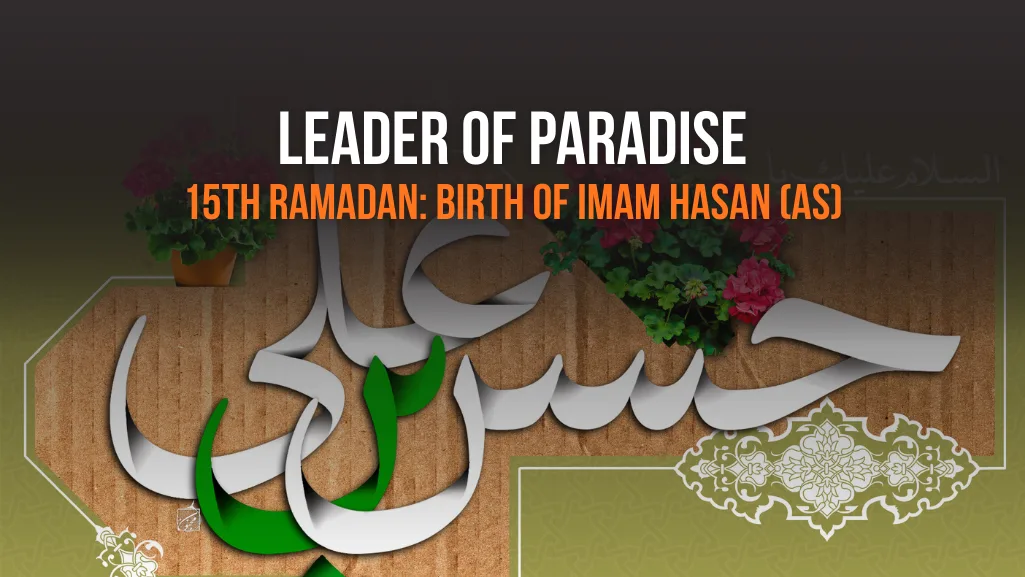
The Prophet (PBUH) called Hasan and Hussain "the leaders of the youth of Paradise", showing their purity and high status. This blog will explore Imam Hasan's patience, generosity, forgiveness, and peaceful choices, and how they guide us in our lives today.
Short Biography of Imam Hasan al-Mujtaba (AS)
| Full Name: | Hasan ibn Ali ibn Abi Talib |
| Kuniyat: | Abu Muhammad |
| Titles (Alqabat): | • Al Mujtaba (The Chosen) • Syed Shabab e Ahle Jannat (Leader of Youth of Paradise) • Al Zaki (The Pure) • Sibt e Akbar (The Elder Grandson of Prophet Muhammad PBUH) |
| Parents: | Father - Imam Ali ibn Abi Talib (AS) Mother - Sayyida Fatima al-Zahra (AS) |
| Birth (Wiladat): | 15th of Ramadan, 3 AH Birthplace: Medina |
| Martyrdom (Shahadat): | 28th Safar, 50 AH Cause: Poisoning Age: 47 years old |
Spouse and Children
Imam Hasan al-Mujtaba (AS) entered several marriages throughout his life, many of which were tied to important social, tribal, and political alliances of his era. Among his well-known wives were Juda bint al-Ashath, Umm Ishaq bint Talha, and Hind bint Suhayl, each marriage serving different communal purposes in Medina and Kufa. Imam Hasan was blessed with many children—reports vary between fourteen and over twenty, reflecting his extended and influential family line. His notable children include Hasan al-Muthanna, Zayd, Qasim (who later attained martyrdom in Karbala), and Abdullah, among others. Through these children, especially Hasan al-Muthanna, the noble lineage of Imam Hasan continues.
Background History Before the Birth of Imam Hasan (AS)
Before the birth of Imam Hasan al-Mujtaba (AS), Arabia was experiencing a major spiritual change. Islam was spreading fast, turning a society of tribal fighting and idol worship into a community guided by the Qur'an. The Prophet Muhammad (PBUH) had moved to Madinah, built the first Islamic state, and taught justice, mercy, and belief in one God. Battles like Badr, Uhud, and Khandaq and the Treaty of Hudaybiyyah strengthened the Ummah. The Prophet's household—Lady Fatimah (AS) and Imam Ali (AS)—was known as the purest family, honored in the Verse of Purification. In this blessed atmosphere, Imam Hasan (AS), the Prophet's first grandchild, was born as a light for the Ummah.
His Relationship with the Prophet (PBUH)
Imam Hasan (AS) enjoyed an exceptionally close and loving relationship with the Prophet Muhammad (PBUH). He was often seen sitting in the Prophet's lap, riding on his shoulders, and receiving his affectionate kisses and prayers. The Prophet would pause his sermons to pick him up, showing his deep love and emphasizing Hasan's purity. Hadith in Bukhari and Muslim record the Prophet saying, "Hasan and Hussain are my fragrant flowers," highlighting their special spiritual bond.
His Education and Knowledge
Growing up in the house of the Prophet (PBUH), Imam Hasan (AS) received his education directly from the greatest teachers of Islam: the Prophet himself, Imam Ali (AS), and Lady Fatimah (AS). He memorized Qur'anic teachings from childhood, absorbed prophetic wisdom, and learned eloquence, deep understanding of jurisprudence, and moral guidance. Historians like Ibn Sa'd and al-Mufid describe him as a scholar whose knowledge was recognized by companions and later generations.
Stories From His Childhood
Many beautiful stories highlight Imam Hasan's purity and noble character even as a child. One famous narration describes the Prophet carrying Hasan and Hussain and saying, "Whoever loves them loves me." Another story recorded in Tirmidhi recounts how Hasan would imitate the Prophet in prayer, and the companions would smile watching the young child perfectly mirror the Prophet's movements. His honesty and innocence became legendary, and he was known to never speak harshly or act rudely.
Character Traits Formed During Early Life
During his early years, Imam Hasan (AS) developed the foundational traits that later defined his leadership: generosity, patience, humility, bravery, and kindness. Growing up in a home of divine guidance shaped him into a person of immense self-control, compassion for the poor, and unwavering truthfulness. These virtues, nurtured by the Prophet (PBUH), would later sustain him through political challenges, betrayal, and the historic peace treaty that saved the Muslim Ummah.
Contributions
Preserving the Prophet's Teachings: As the Prophet's grandson, Imam Hasan (AS) protected true Islamic knowledge through his guidance, sermons, and deep understanding of the Qur'an and Sunnah.
Moral and Spiritual Leadership: Known for his generosity, patience, and forgiveness, he earned the title Karim Ahl al-Bayt and became a model of ethical excellence.
Preventing Civil War: His Peace Treaty with Mu'awiya saved thousands of Muslim lives and fulfilled the Prophetic hadith that he would reconcile two major Muslim groups.
Exposing Umayyad Injustice: The treaty conditions—later broken by Mu'awiya—revealed the corruption of Umayyad rule and paved the way for Imam Hussain's stand.
Strengthening the Ahl al-Bayt Legacy: Through wisdom and patience, he safeguarded the mission of the Ahl al-Bayt and guided future generations.
Battles and Military Events Throughout the Life of Imam Hasan (AS)
Imam Hasan al-Mujtaba (AS) lived during a time of intense political and military turbulence in the early Muslim community. From his childhood under the Prophet (PBUH) to his participation in major battles alongside Imam Ali (AS) and finally the political conflict with Mu'awiya during his own Imamate, he witnessed and participated in key military events that shaped Islamic history.
Early Years in the Lifetime of Prophet Muhammad (PBUH)
Though Imam Hasan (AS) was a child during the Prophet's lifetime, he was present during important historical moments, demonstrating early piety and attachment to Islam. Imam Hasan (AS) accompanied the Prophet (PBUH) on journeys like Hudaybiyyah, giving him early exposure to Islam's struggle for peace and justice. These experiences shaped his character, teaching him leadership, sacrifice, and strong Islamic ethics for his future role.
Major Battles During the Caliphate of Imam Ali (AS)
As an adult, Imam Hasan (AS) played an active role in three major battles alongside his father, Imam Ali (AS). He served as a commander, advisor, and a source of strength for the army.
Battle of Jamal (36 AH): During the conflict in Basra, Imam Hasan (AS) encouraged the people of Kufa to support Imam Ali, organized troops, and led a division with calmness and courage. His speeches and leadership helped unite the army and reduce bloodshed, contributing to Imam Ali's victory.
Battle of Siffin (37 AH): When Mu'awiya opposed Imam Ali, Imam Hasan fought bravely on the front lines. He motivated soldiers, joined strategic discussions, and helped keep the army united. The battle ended in arbitration due to Mu'awiya's tricks, revealing the dishonesty of his side.
Battle of Nahrawan (38 AH): Against the extremist Kharijites, Imam Hasan helped organize the army, protect civilians, and support his father. Their defeat restored temporary peace and showed Imam Hasan's dedication to justice and safety for the community.
The Peace Treaty (Sulah) With Mu'awiya
After Imam Ali (AS) was martyred in 40 AH, Imam Hasan (AS) became the leader of a troubled Muslim Ummah. Mu'awiya refused to accept him and marched with a large Syrian army. Imam Hasan gathered the people of Kufa and sent 12,000 soldiers, but the army was weak and divided. Mu'awiya bribed commanders, causing many to defect, and fear spread. Some soldiers even attacked Imam Hasan, showing that fighting would only bring major Muslim bloodshed.
With wisdom, Imam Hasan chose peace. The treaty required Mu'awiya to follow the Qur'an and Sunnah, protect the Shia, and not appoint a successor. Although Mu'awiya broke it, the treaty exposed Umayyad injustice and prepared the path for Karbala.
Opposition to Imam Hasan (AS)
Reasons:
Power and Political Ambition: Mu'awiya and other rulers feared Imam Hasan's rightful authority and saw the Ahl al-Bayt as a threat to their plans for dynastic rule.
Jealousy of His Virtue: His closeness to the Prophet (PBUH), knowledge, and generosity created love among the people, which sparked envy among his rivals.
Tribal and Economic Interests: Some tribes opposed him because his just leadership would end their corrupt privileges and wealth.
Internal Betrayal: Certain individuals in Kufa accepted bribes from Mu'awiya, weakening Imam Hasan's support and even attempting to harm him.
Fear of Losing Control: Many leaders resisted him simply because his moral authority challenged their political power.
Consequences:
Opposition to Imam Hasan (AS) caused the Muslim Ummah to lose the unity established by the Prophet (PBUH). Political rivalry and betrayal created deep divisions that shaped future conflicts. This resistance also opened the door for the Umayyad dynasty, a rule marked by injustice and oppression, as noted in historical sources. Mu'awiya broke every condition of the peace treaty, even admitting he fought only for power, exposing the true nature of his leadership. This hostility eventually led to the rise of Yazid and the tragedy of Karbala. Imam Hasan's patience revealed Umayyad corruption, and Imam Hussain's martyrdom completed the awakening.
Wasiyat (His Last Words)
Imamate to Imam Hussain (AS): He clearly appointed Imam Hussain (AS) as his successor. (al-Irshad, vol. 2, p. 18)
Advice on Patience: He encouraged patience and truth, preparing Imam Hussain (AS) for future trials. (al-Irshad; Muruj al-Dhahab)
Burial Instructions: Take his body to the Prophet's grave; if prevented, bury him in Jannat al-Baqi'. (Tabari; Ibn al-Athir)
No Bloodshed: He ordered that no fighting occur during his funeral. (al-Irshad; Ibn Kathir)
Family Guidance: He advised piety, unity, and holding firmly to truth. (Muruj al-Dhahab)
Final Prayer: He entrusted everything to Allah.
Death, Funeral, and Burial
The Poisoning and Final Moments
According to al-Tabari and al-Mas'udi, Imam Hasan (AS) was poisoned multiple times, but the final and fatal poisoning was carried out through Marwan ibn al-Hakam's pressure on Imam Hasan's wife, Ju'da bint al-Ash'ath, who administered the poison in exchange for wealth and promises of marriage from Mu'awiya. As the poison spread, Imam Hasan suffered intense pain for days. Shaykh al-Mufid narrates that during his final moments, Imam Hussain (AS) sat beside him, and Imam Hasan said:
“"My brother, I am leaving you and returning to my Lord… Nothing hurts me except the oppression of my enemies and the betrayal of those who claim to love us."”
His final request was clear: "Do not let a drop of blood be shed for me." (al-Irshad)
Imam Hasan (AS) passed away at the age of 47, in Safar, 50 AH.
The Funeral Procession
When Imam Hasan's body was prepared, Imam Hussain (AS) led the funeral prayer. As Imam Hasan wished, his body was taken toward the grave of the Prophet PBUH so he could "renew his covenant." But the funeral was stopped by Aisha and Umayyad forces. According to Tarikh al-Tabari and al-Bidaya wa'l-Nihaya, Aisha came out on a mule shouting, "Do not let him be buried in my house!" Marwan ibn al-Hakam and Umayyad soldiers blocked the procession and even shot arrows at the coffin. One arrow struck the bier. Even after this insult, Imam Hussain (AS) avoided any fighting, honoring his brother's will.
Burial in Jannat al-Baqi'
After seeing the hostility and remembering Imam Hasan's will, Imam Hussain (AS) ordered that his brother be taken to Jannat al-Baqi'. There, Imam Hasan (AS) was buried beside his grandmother Lady Fatimah bint Asad, as mentioned in al-Irshad. The people of Madinah cried deeply. Mas'udi writes, "Never had Madinah seen a day of mourning like the day Imam Hasan was buried." The companions remembered him as the Chief of the Youth of Paradise, the beloved grandson of the Prophet PBUH, and the man whose patience saved the Ummah from civil war. His grave in Baqi' became a place of great spiritual respect, later destroyed in 1925.
Virtues of Imam Hasan (AS)
“The Prophet (PBUH) said: "Hasan and Hussain are the leaders of the youth of Paradise."”
— Sahih al-Bukhari, Hadith 2704; Tirmidhi 3768
“The Prophet (PBUH) also said: "O Allah, I love him, so love those who love him."”
— Sahih Muslim, Hadith 2424
Known as "Karim Ahl al-Bayt" (The Generous One). His generosity and character are recorded in:
- Tabaqat Ibn Sa'd, vol. 5
- Al-Mas'udi, Muruj al-Dhahab
Karamat (Miracles) of Imam Hasan (AS)
Dua for rain answered during drought. (Al-Irshad, Shaykh al-Mufid)
People who sought refuge with him always received help and blessings. (Muruj al-Dhahab, al-Mas'udi)
His miracle of generosity—giving away his entire wealth twice and half three times— reported in: Tabaqat Ibn Sa'd
Benefits of Visiting His Shrine (Ziyarat)
Imam Hasan (AS) is buried in Jannat al-Baqi', a cemetery the Prophet (PBUH) frequently visited and prayed for its people. (Sahih Muslim - Book of Funerals)
Jannat al-Baqi' is described as a place of barakah and spiritual purity in classical travel works: Rihlat Ibn Jubayr
Sending salam to the Ahl al-Bayt brings mercy and divine reward. (Sunan al-Tirmidhi, Hadith 969 - virtue of visiting graves)
Spiritual Blessings of Visiting Karbala in Memory of Imam Hasan (AS)
Visiting Karbala in memory of Imam Hasan (AS) brings immense spiritual peace, forgiveness, and closeness to the Ahl al-Bayt. Scholars mention that remembering Imam Hasan at the shrine of his beloved brother Imam Hussain opens doors of mercy, healing, and answered prayers. Pilgrims feel a deep connection to their faith, renewed hope in their lives, and blessings for their families.
“Book Your Ziyarat 2026 Now - Limited seats, reserve early for best prices!
Visit: www.ziaratplanner.com | Email: info@ziaratplanner.com | WhatsApp: +964 786 206 0777”
For more information or any queries, feel free to contact us. We are always ready to help you plan a peaceful and blessed journey.