Introduction
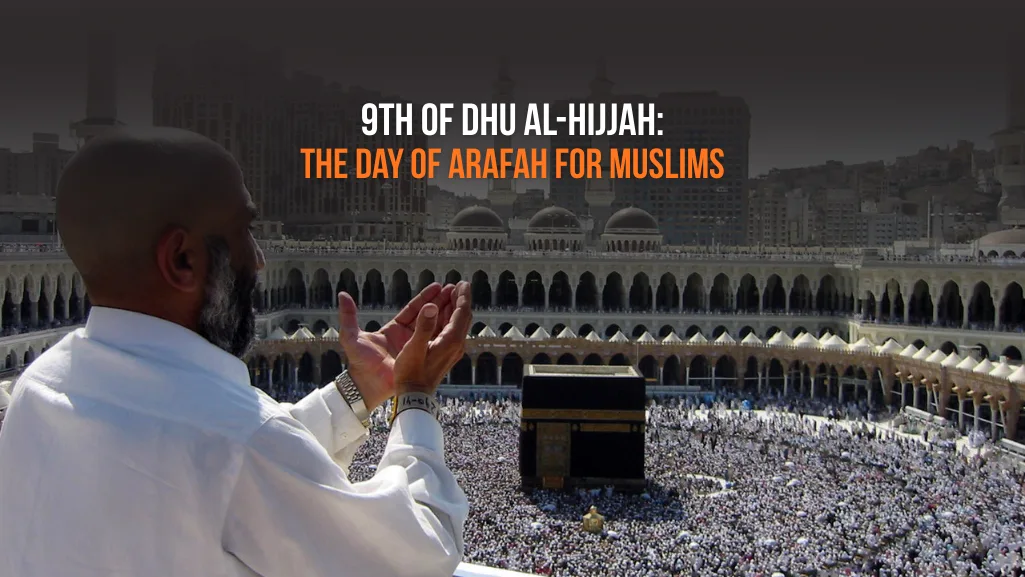
The Day of Arafah is on the 9th of Dhul Hijjah and is one of the most important days in the Islamic calendar. This year the Day of Arafah is expected to fall on Tuesday 26th May 2026.
It was on this day that Allah (SWT) perfected His religion, completed His favours upon His beloved Prophet Muhammad (PBUH), and approved Islam as a way of life! Subhan'Allah.
Allah (SWT) refers to this day in Surah al-Maidah of the holy Quran:
“"This day I have perfected for you your religion and completed My favour upon you and have approved for you Islam as religion."”
— Quran 5:3
The Day of Arafah is also known as Yawm Al-Waqf (the Day of Standing), referring to the fact that pilgrims stand in front of their Lord for long periods of time, asking for His divine mercy.
Arafah: The Essence of Hajj
For pilgrims performing Hajj, the Day of Arafah is the most significant day and is the essence and heart of the pilgrimage.
Arafah is a vast plain near Makkah where pilgrims gather during Hajj from noon (Zawal) until sunset on the 9th of Dhu al-Hijjah. Standing (Wuquf) at Arafat is the core pillar of Hajj; without it, Hajj is incomplete.
Imam Ja'far al-Sadiq (AS) said:
“"If people knew what is in Arafah, they would never think their supplications are rejected."”
— Al-Kafi, vol. 4
Why Is the Day of Arafah So Important?
The Day of Arafah is a very important day for Muslims, as it is a day of immense divine forgiveness, mercy and blessings.
It is a day of redemption for Muslims and an opportunity for purification and seeking Allah's pleasure. Many of us may have fallen short in our pledges made during Ramadan to improve our character and behaviour and to become closer to Allah (SWT). The Day of Arafah offers another opportunity to cleanse our hearts and remember our purpose and destination.
Arafah is also the day in which the Prophet Muhammad (PBUH) made his farewell sermon during his final pilgrimage.
For those performing Hajj, the Day of Arafah is the most important day. As the Prophet Muhammad (PBUH) said:
“"Hajj is Arafah."”
— Abu Dawud
Also, Allah (SWT) when referring to the day of Arafah in Surah al-Maidah says it is the Day on which He perfected His religion, completed His favors upon His beloved Prophet Muhammad (PBUH), and approved Islam as a way of life (Quran 5:3).
After the sun rises on Dhul-Hijjah 9, pilgrims leave Mina to Arafah. Staying in Arafah is a major pillar of Hajj.
Recommended Acts on the Day of Arafah
The following acts of worship are highly encouraged on the Day of Arafah:
1. Fasting
It is highly recommended to fast the Day of Arafah if one is not performing Hajj. Fasting on this day is sunnah and expiates sins of the previous year and the coming year. It is a powerful way to gain blessings and become closer to Allah (SWT).
2. Increase Acts of Worship
As the most virtuous day of the year for Muslims, it's important to increase our good deeds in order to gain the blessings of the day. Whether we are performing Hajj or at home this year, we should devote ourselves to dhikr and seek nearness to Allah. The best acts of dhikr on this day include offering nafl (optional) prayers, reading Quran and sending salawat (salutations) upon the Prophet (PBUH).
3. Make Lots of Dua (Supplication)
The Day of Arafah is a day of acceptance of dua and Allah showers His mercy and forgiveness to those who turn to Him. Make abundant heartfelt duas for yourselves, your family and for the Muslim ummah, that Allah forgives our sins, fulfills our needs, and allows us to become closer to Him. It is also sunnah to recite the Tahleel (Laa ilaaha il-lal-laah), Takbeer (Allahu Akbar) and Tahmeed (Alhamdulillaah) frequently on the Day of Arafah, and on the days of Eid – 11th, 12th and 13th of Dhul Hijjah.
4. Give Sadaqah
It's important to remember our brothers and sisters in need across the globe on this blessed day. Giving sadaqah is one of the most virtuous acts of worship, and giving sadaqah on this holy day can help us gain blessings. The Prophet Muhammad (PBUH) said:
“"Sadaqah extinguishes sin as water extinguishes fire."”
— Tirmidhi
5. Reflect and Show Gratitude
The Day of Arafah is a time for introspection and reflection. We should aim to reflect upon our actions during the past year, seek to rectify our shortcomings, and ask for forgiveness for our sins. The Day of Arafah is also a blessed time to reflect on the blessings that Allah (SWT) has provided us with, and to thank Him. Many Muslims celebrate the day by strengthening ties with family and friends, exchanging greetings and sharing food.
What Do Pilgrims Do on Hajj on the Day of Arafah?
After praying Fajr Salah in Mina, pilgrims performing Hajj head to the plains of Arafat. They recite istaghfar (asking for forgiveness) and make earnest dua. Upon reaching Mount Arafat, pilgrims observe shortened Dhuhr and Asr prayers (2 rakat instead of 4).
On this day there is a sermon delivered from Masjid al-Nimra on Mount Arafat.
Fasting on the Day of Arafah
For those who are unable to perform Hajj, it is highly recommended to fast on the Day of Arafah. There is great reward in doing so, as Prophet Muhammad (PBUH) also said:
“"It expiates for the past and coming years."”
— Hadith, Muslim
Allah forgives sins on the Day of Arafah even if they are many, and we should not underestimate the immense mercy of Allah.
“"As for you staying till the evening in Arafah, then Allah descends to the sky of the world and He boasts about you to the Angels, and says: 'My slaves have come to Me, looking rough, from every deep valley hoping for My mercy, so if your sins were equivalent to the amount of sand or the drops of rain or like the foam on the sea I will forgive them. So go forth My slaves! Having forgiveness and for what or who you have interceded for.'"”
— Tabarani
However, pilgrims who are performing Hajj do not generally fast as they are travellers, and fasting would be difficult for them. The main focus for them on this day is dua.
“"The people of knowledge consider it recommended to fast on the Day of Arafah, except for those at Arafah."”
— Tirmidhi
Fasting on the Day of Arafah is a great way of earning Allah's pleasure. In order to gain maximum benefit, as well as refraining from food and drink, we should aim to refrain preoccupying our thoughts with anything other than Allah, and to contemplate on His glory and mercy while seeking His grace of forgiveness.
Is Fasting Mandatory on the Day of Arafah?
Fasting on the Day of Arafah is not mandatory, but it is highly recommended for those who are not performing Hajj, according to all madhabs (schools of thought).
It is a sunnah of the Prophet Muhammad (PBUH) to fast on the Day of Arafah, on which Allah loves to forgive his servants. The blessings of fasting on the Day of Arafah can benefit Muslims for the whole year.
Dua for the Day of Arafah
Muslims are encouraged to recite the following dua on the day of Arafah:
لَا إِلَهَ إِلَّا اللهُ، وَحْدَهُ لَا شَرِيكَ لَهُ، لَهُ الْمُلْكُ وَلَهُ الْحَمْدُ، وَهُوَ عَلَى كُلِّ شَيْءٍ قَدِيرٌ
Transliteration:
Laa ilaaha ill-allaahu, waḥdahu laa shareeka lah, lahul-mulku wa lahul-ḥamdu, wa huwa 'alaa kulli shay'in qadeer
Translation:
"None has the right to be worshipped except Allah, alone, without a partner. To Him belongs sovereignty and all praise and He is over all things omnipotent."
The Prophet Muhammad (PBUH) said:
“"The best supplication is the supplication on the Day of Arafah, and the best words that I and the prophets before me have said are 'La ilaha illa Allah, wahdahu la sharika lah, la hul mulk wa lahul hamd wa huwa ala kulli shayin qadeer.'"”
What Are the Mistakes That Should Be Avoided in Arafah?
Below are common mistakes people make to avoid being at Arafah:
- Some pilgrims do not recite the Talbiyah aloud on their way from Mina to Arafah. It was proven that the Prophet (PBUH) continued to recite the Talbiyah until he threw the pebbles of Al-Aqabah on the day of Eid
- One of the most serious mistakes that some pilgrims make is to stop outside Arafah and then stay there until the sun sets, after which they leave for Muzdalifah. Those who stand in these places have not performed Hajj. There are big and clear signs showing the boundaries of Arafah
- Some people think that they have to go to the place where the Messenger of Allah (PBUH) stood beside the mountain and stand there. They put themselves through a great deal of trouble to reach that place. This is wrong. It was proven that the Prophet (PBUH) said, "I am standing here but all of Arafah is the place of standing"
- Some pilgrims think that the mountain by which the Prophet (PBUH) stood is holy, so they go and climb it seeking blessings from the stones and soil around it. These are unacceptable bid'ahs (innovations in religion)
- Some people think that it is essential to pray Zhuhr and Asr Prayers with the imam in the mosque, seeking that place from far away. This causes them a great deal of difficulty and many of them go astray, which makes Hajj extremely hard for them, and they crowd one another and upset one another
What Ibadah Can You Do During the Night of Dhul-Hijjah 9?
The night of 9th Dhul Hijjah will be spent in Muzdalifah. After praying in Arafah till Maghrib Prayers, you leave for Muzdalifah. On your way from Arafah to Muzdalifah, remember Allah and seek His forgiveness.
What to Do Once You Have Reached Muzdalifah?
Once you have reached Muzdalifah, enjoin Maghrib and Isha Prayers at the time of the Isha. If you think you might miss these prayers due to overcrowding Muzdalifah, then you may perform prayers on your way. Then when you reach Muzdalifah, you can sleep till dawn as per the Sunnah of the Prophet. However, according to some scholars you can leave after midnight.
It would be most beneficial to get as much rest as possible because, for the next three days you will physically exert yourself while the stoning of the devils. You should collect pebbles for rami in Muzdalifah.
It is also Sunnah to recite the Tahleel (Laa ilaaha il-lal-laah), Takbeer (Allahu Akbar) and Tahmeed (Alhamdulillaah) frequently on the Day of Arafah, and on the days of Eid – 11th, 12th 13th of Dhul Hijjah.
As a day in which Allah loves to forgive those who turn to him, remember to also turn to Allah with sincerity and ask for forgiveness for past sins.
Historical Context
The 9th of Dhu Al-Hijjah also marks a somber event in history: the martyrdom of Muslim ibn Aqil, the cousin and envoy of Imam Hussain (AS), in Kufa. Many Muslims include his remembrance and a visit (Ziyarat) to him in their prayers on this day.
Spiritual Significance
The word Arafah comes from the root Ma'rifah, meaning deep knowledge or recognition. It is a day dedicated to:
- Self-Recognition: Understanding one's own weaknesses and dependence on the Creator
- Divine Recognition: Recognizing the absolute power and mercy of Allah
- The Completion of Religion: It is believed that on this day, the verse of Ikmal al-Din (completion of religion) was revealed to the Prophet Muhammad during his Farewell Pilgrimage
Conclusion
The 9th of Dhu al-Hijjah is a divine opportunity given once a year to cleanse the soul, mend the heart, and reconnect with Allah. Whether in Arafat or at home, no believer should let this day pass without dua, tears, and hope.
For more information or any queries, feel free to contact us. We are always ready to help you plan a peaceful and blessed journey.