“"Fasting is for a limited number of days. But whoever among you is sick or on a journey (traveler) – then an equal number of other days. And Allah intends ease for you, and He does not want hardship for you."”
— Surah Al-Baqarah, verse 184
Introduction
Traveling during Ramadan can raise many questions about fasting, prayer, and religious responsibilities. In Shia Fiqh, specific rules apply to travelers regarding whether they can fast, how to determine iftar time, and when qaza becomes obligatory. This detailed FAQ guide explains all essential rulings in a simple and clear way, helping every Shia Muslim understand their duties while traveling in the holy month of Ramadan.
Complete FAQs
Is It Disliked for a Traveler to Eat Fully in Ramadan?
Yes. For a traveler and a person who has a valid excuse for not fasting, it is makrooh (disliked) to eat to full satisfaction during the days of Ramadan.
Can a Traveler Keep Obligatory or Recommended Fasts During Travel?
A traveler cannot keep obligatory or recommended (mustahab) fasts while traveling.
However, in Madina, if a person wants to observe a fast for fulfillment of a need (dua/hajat), he may keep a mustahab fast, and according to obligatory precaution, it should be observed on Wednesday, Thursday, and Friday.
What If the Journey Itself Is Haram?
If the journey is haram (forbidden), then:
• The prayer must be offered in full form (not shortened)
• And the person must keep the fast
Examples of a haram journey include:
• A wife traveling without her husband's permission for a non-obligatory trip
• A child traveling in a way that causes pain or serious distress to parents
Is It Permissible to Travel in Ramadan Without Any Need?
Yes, it is permissible to travel in Ramadan even without necessity.
Can Someone Travel Only to Escape Fasting?
Traveling in Ramadan is allowed, but traveling only to avoid fasting is makrooh (disliked). It is also disliked to travel before the 24th of Ramadan.
However, traveling for Hajj, Umrah, Ziyarat, or a genuine need is not disliked.
Does the Rule of Full Prayer in Makkah and Madinah Apply to Fasting?
Question: In books like Tawzih-ul-Masail, it is written that one can offer full prayers in Makkah and Madinah even without intent to stay ten days. Does the same rule apply to fasting?
Answer: No, this rule applies only to prayer, not to fasting. Wherever you do not intend to stay at least 10 days, you cannot keep any fast — neither obligatory nor recommended.
If a Person Is Fasting and Travels to a Place Where Fajr Has Not Occurred Yet, Can He Eat?
Yes, in this situation, it is permissible to eat and drink.
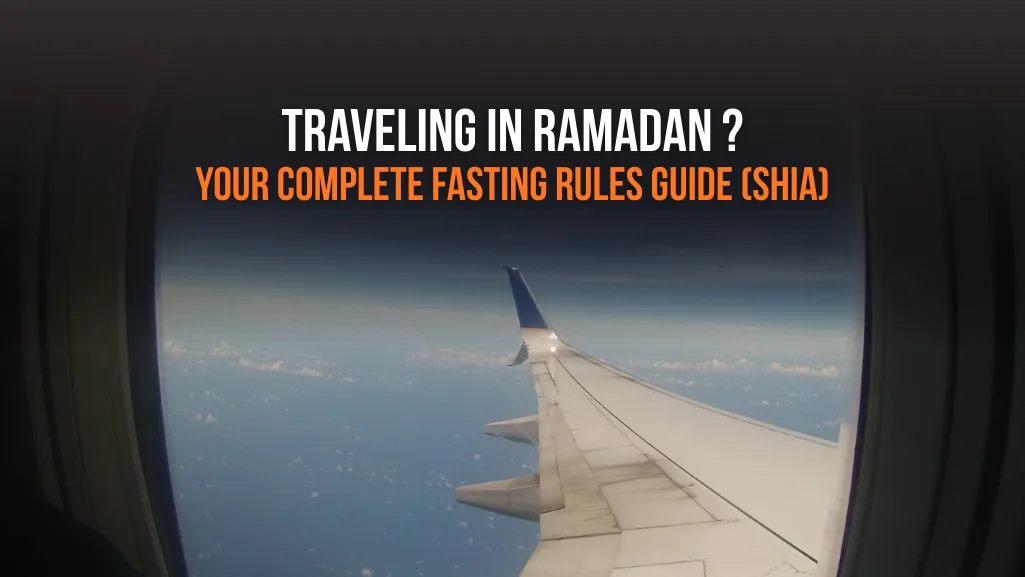
How to Determine Iftar Time in an Airplane or Very High Buildings?
If someone is traveling in a plane or staying in very tall buildings, then according to obligatory precaution, the person should:
• Follow the sunset according to their own horizon (ufuq)
• Not rely only on the ground-level timetable
• Break the fast only when fully satisfied that real sunset has occurred
What Is the Minimum Distance That Prevents Fasting?
If the total distance of travel (going + returning) is 44 km or more, then the fast will not be valid. Until the actual journey starts, fasting remains obligatory.
“⚠ Important: If someone intentionally breaks the fast early thinking, "I will travel later," but the trip gets canceled, then both Qaza and Kaffarah become obligatory.”
What If the Journey Starts After Midday (Zawal)?
If the journey starts after midday (Zawal), the fast of that day remains valid and must be completed.
What If the Journey Starts Before Midday?
If the first point of travel begins before Zawal:
• One must remain in the state of fasting until actual travel begins
• That day's fast will not be counted
• Qaza of that day becomes obligatory
How Should Missed Fasts Be Compensated During Travel?
For every day missed due to travel, one Qaza fast must be kept after returning. These Qaza fasts must be completed before the next Ramadan.
Who Is Allowed to Fast While Traveling?
Only two types of people can fast while traveling:
• A person who is sure that he will stay in one place for at least 10 days
• A frequent traveler (Katheer-us-Safar) whose job involves constant travel
Can One Fast in Places Where Full Prayer Is Optional?
In places like:
• Makkah
• Madinah
• Karbala (Imam Husayn's shrine area)
• Masjid-e-Kufa
One may offer full prayers, but fasting is still not allowed (neither wajib nor mustahab).
Is There Any Recommended Behavior for Travelers in Ramadan?
It is recommended (mustahab) for a traveler that even if he is not fasting, he should still avoid acts that normally invalidate fasting, out of respect for the sanctity of Ramadan.
Conclusion
Traveling in Ramadan is allowed in Shia Fiqh, but it comes with clear responsibilities and spiritual etiquette. A traveler is exempt from fasting in most cases, yet must respect the sanctity of the holy month by avoiding unnecessary acts that break the fast. Understanding these rulings helps believers observe Ramadan correctly, fulfill missed fasts through Qaza, and maintain a strong connection with Allah even while on a journey. By following these Islamic guidelines, travelers can balance both ease and obedience during the blessed month of Ramadan.
Plan Your Blessed Ramadan Journey Today
If you want your fasts to remain valid, avoid Qaza, and at the same time attain the honour of Ziyarat during the blessed nights of Ramadan, then this is the perfect opportunity for you.
Imagine spending your Ramadan in the sacred land of Karbala or the beautiful city of Najaf, where every prayer feels deeper, every fast becomes more meaningful, and every moment brings you closer to Allah.
- Your personal needs
- Your travel plan
- Your budget
We provide complete comfort, guidance, and spiritual-focused facilities so you can focus only on your worship and Ziyarat.
“For more information or any queries, feel free to contact us.
Visit: www.ziaratplanner.com | Email: info@ziaratplanner.com | WhatsApp: +964 786 206 0777
We are always ready to help you book a peaceful and blessed journey.”
For more information or any queries, feel free to contact us. We are always ready to help you plan a peaceful and blessed journey.