Introduction
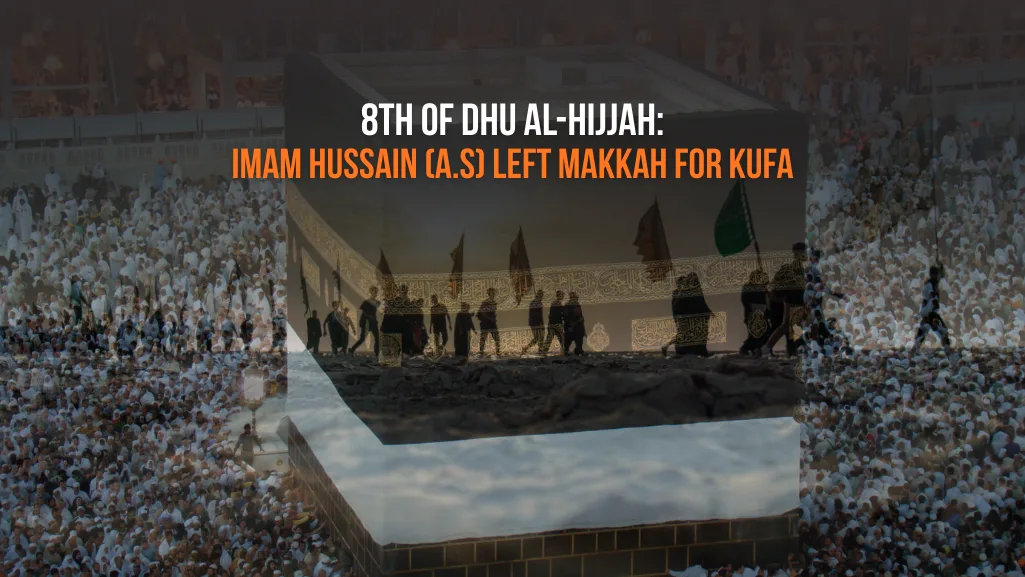
Imam Hussain (AS) converted his Hajj to Umrah and left Makkah on the 8th of Dhu al-Hijjah (Day of Tarwiyah) to prevent bloodshed and preserve the sanctity of the Ka'bah, thwarting Yazid's plot to assassinate him amidst the Hajj pilgrims. His mission to reform Islam required action outside the sacred precinct, not martyrdom within it, leading to his journey towards Kufa. His sermons, like the one in Mina, emphasized reforming the corrupt religious and political state, upholding divine justice, and fulfilling the duty to guide people, even if it meant facing sacrifice.
Reasons for Converting Hajj to Umrah (Taqsir)
1. Preventing Assassination
Yazid's forces were in Makkah disguised as pilgrims, intending to kill Imam Hussain (AS) and blame it on other groups, which would have desecrated the holy city.
2. Preserving the Ka'bah's Sanctity
By leaving, Imam Hussain (AS) avoided a potential battle and bloodshed within the sacred precincts of Makkah, protecting its honor.
3. Fulfilling a Higher Purpose
His mission was to reform the Ummah, not to die in Makkah. His dream, as related by some, was to proceed to Iraq to fulfill his divine duty, not to become a martyr in the holy city.
4. Avoiding Arrest
He feared being arrested by Yazid's agents and forcibly brought to him, which would have hindered his objective.
Hadith: Imam Hussain (AS) Entered Makkah to Perform Umrah
علي بن إبراهيم عن أبيه و محمد بن إسماعيل عن الفضل بن شاذان عن حماد بن عيسى عن إبراهيم بن عمر اليماني عن أبي عبد الله (عليه السلام) أنه سئل عن رجل خرج في أشهر الحج معتمراً ثم رجع إلى بلاده قال لا بأس و إن حج في عامه ذلك و أفرد الحج فليس عليه دم فإن الحسين بن علي (عليه السلام) خرج قبل الترویة بيوم إلى العراق و قد كان دخل معتمراً
— Translation:
Ali Bin Ibrahim, from his father, and Muhammad Bin Ismail, from Al Fazl Bin Shazaan, from Hammad Bin Isa, from Ibrahim Bin Umar Al Yamani, from Abu Abdullah (AS) having been asked about a man who went out during the months of Hajj to perform Umrah, then he returned to his city. He said: 'There is no problem; and even if he performed Hajj during that year of his, and exclusive Hajj, so there is no blood (of a sacrificial animal) upon him, for Al-Hussain Bin Ali went out to Al-Iraq before Al-Tarwiyya by a day, and he had entered (Makkah) to perform Umrah'.
— Al Kafi V 4, The Book of Hajj, Ch 207, h 3
The Great Sacrifice: Why Imam Hussain (AS) Converted Hajj into Umrah
On the 8th of Dhu al-Hijjah, while thousands of Muslims were preparing to head toward Mina to begin the rituals of Hajj, Imam Hussain (AS) performed the Umrah al-Mufradah (the individual pilgrimage), donned his regular clothes, and departed the Holy City of Makkah.
To the casual observer, this seemed like an abrupt departure. To the Imam, it was a calculated move to save the sanctity of the Kaaba and the essence of Islam.
The Primary Reasons for Departure
According to historical tradition and the words of the Imam himself, there were three primary reasons for this decision:
1. Preserving the Sanctity of the Haram
The Umayyad Caliph, Yazid, had sent a group of assassins disguised as pilgrims with daggers hidden under their Ihram (pilgrimage robes). Their mission was to kill the Imam even if he was clinging to the curtains of the Kaaba.
The Logic: Imam Hussain (AS) did not want the blood of the Prophet's grandson to be shed within the Holy Sanctuary, which would desecrate the holiest site in Islam forever.
Imam (AS) said:
“"I do not like that the sanctity of this House be violated because of me."”
— Al-Tabari, Tarikh al-Umam wa al-Muluk, vol. 4, p. 251; Ibn Tawus, Al-Luhuf, p. 24
By leaving Makkah, Imam Hussain (AS) ensured that no blood would be shed near the Ka'bah, preserving its holiness.
2. Clarifying the Truth (The Kufan Invitation)
The Imam had received thousands of letters from the people of Kufa claiming they had no leader and were ready to stand against the tyranny of Yazid. By leaving for Kufa on the busiest day of the year, he ensured that the entire Muslim world would ask: "Why is the grandson of the Prophet leaving when everyone else is arriving?" It turned his journey into a global statement.
3. Divine Command
The Imam frequently mentioned that he saw his grandfather, Prophet Muhammad (SAW), in a dream, who told him:
“"O Hussain, go forth, for Allah has willed to see you martyred."”
Hajj Is Invalidated by Danger to Life
In Islamic law, if a person's life is in serious danger, Hajj is no longer obligatory, and it is permissible to perform Umrah instead. Imam Hussain (AS) completed the rites of Umrah and then departed.
— Shaykh al-Tusi, Tahdhib al-Ahkam, vol. 5, p. 451; Allama Hilli, Tahrir al-Ahkam, vol. 1, p. 92
Imam Hussain (AS) acted fully within Islamic law, not against it.
To Fulfill His Divine Mission (Imamate & Reform)
Imam Hussain (AS) did not leave Makkah out of fear, but to save Islam from destruction. He clearly declared:
“"I have not risen out of arrogance or corruption. I have risen to seek reform in the Ummah of my grandfather."”
— Shaykh al-Mufid, Al-Irshad, vol. 2, p. 37; Al-Majlisi, Bihar al-Anwar, vol. 44, p. 329
The preservation of Islam was greater than any single act of worship.
The Sermon of Departure: "Death is Adorned for Mankind"
Before leaving, the Imam delivered a powerful sermon that outlined his destiny:
“"Death is adorned for the sons of Adam as a necklace is adorned on the neck of a girl. I am as eager to meet my ancestors as Jacob was to meet Joseph... Whoever is ready to spill his heart's blood for us and has settled his soul on meeting Allah, let him depart with us."”
— Bihar al-Anwar, Vol. 44, p. 366; Luhuf by Sayyid Ibn Tawus, p. 53
Historical Background
After Yazid ibn Mu'awiyah demanded allegiance (bay'ah), Imam Hussain (AS) clearly refused, as Yazid's rule represented open corruption, tyranny, and deviation from Islam. Imam Hussain (AS) arrived in Makkah and remained there for about four months. During this time:
- He received hundreds of letters from the people of Kufa, inviting him to lead them
- Yazid secretly sent assassins disguised as pilgrims to kill Imam Hussain (AS), even inside the Haram
— Shaykh al-Mufid, Al-Irshad, vol. 2, pp. 33–35
Al-Mufid's Account
Al-Mufid said: 'And the going out of Muslim Bin Aqeel, may Allah have Mercy on him, at Al-Kufa was on the day of Tuesday of eight (days) past from Zul Hijjah of the year sixty, and he, may Allah have Mercy on him was on the day of Wednesday of six (days) vacant from it, on the day of Arafaat, and Al-Hussain headed from Makkah to Al-Iraq during the day Muslim went out at Al-Kufa, and it was the day of Al-Tarwiyya after his stay at Makkah for the remainder of Shaban, and the month of Ramazan, and Zul Qadah, and eight (days) vacant from Zul Hijjah of the year sixty.'
And there had gathered Al-Hussain, for the duration of his stay at Makkah, a number from the people of Al-Hijaz, and a number from the people of Al-Basra and increased to the People of his Household and his friends.
And when Al-Hussain wanted to head to Al-Iraq, he performed Tawaaf of the House (Kabah) and performed Sa'ee between Al-Safa and Al-Marwa and released from his Ihraam and converted it to an Umrah, because he was not able upon completing the Hajj, fearing he would be arrested at Makkah and be sent to Yazeed Bin Muawiya.
He went out hurriedly with his family, and his children, and the ones from his Shias who had joined with him, and the news of Muslim did not happen to have reached him of his going out, on the day he went out, based upon what we have mentioned.
— Bihar Al-Anwaar, V 44, The book of History – Al-Hassan, Ch 37 h 2
Conversation with Muhammad ibn al-Hanafiyya
Muhammad ibn al-Hanafiyya came to Al-Hussain during the night in which Al-Hussain intended the going out from Makkah during its morning. He said to him:
“"O my brother! The people of Al-Kufa are such, you know of their treachery with your father, and your brother, and I am fearing that your state would be like the state of the past. So, if you could view to stay, for you are the most honourable with the Sanctuary and its safety."”
Sermons of Imam Hussain (AS) in Makkah
Sermon Before Leaving Makkah
Imam Hussain (AS) addressed the people saying:
“"Whoever is ready to sacrifice his life for our sake and has resolved to meet Allah, should accompany us, for I am leaving tomorrow."”
— Al-Tabari, Tarikh, vol. 4, p. 252; Ibn A'tham al-Kufi, Al-Futuh, vol. 5, p. 21
This sermon shows:
- Imam (AS) was fully aware of martyrdom
- His movement was open, conscious, and principled
Departure on 8th Dhul-Hijjah (Yawm al-Tarwiyah)
While pilgrims were preparing to go to Mina, Imam Hussain (AS) left Makkah with:
- His family (including women and children)
- Loyal companions
This act symbolized:
- Choosing truth over ritual
- Choosing justice over personal safety
- Choosing Islam over silence
— Al-Baladhuri, Ansab al-Ashraf, vol. 3, p. 171
Key Sermons & Messages
The Message to the People of Kufa (via Muslim ibn Aqeel)
He explained that while the AhlulBayt (AS) had previously remained silent for public welfare, the situation under Yazid was dire, with the Sunnah of the Prophet (SAW) diminishing and ignorance returning.
The Sermon of Mina
Delivered to religious leaders, this sermon articulated his core mission: not for political power or wealth, but to demonstrate the shining principles of Islam, reform the land, and secure the rights of the oppressed, calling on scholars to help fight the powers corrupting the faith.
Conversation with Farazdaq
The poet Farazdaq told him, "People's hearts were with you, but their swords were against you," to which Imam Hussain (AS) replied, "Allah does what He wishes. I leave it to Him who proposes the just cause," showing his trust in God's plan despite the apparent dangers.
On the 8th of Dhu al-Hijjah (the Day of Tarwiyah), after performing Tawaf and Sa'i, Imam Hussain (AS) released himself from Ihram (performing Taqsir - cutting hair/nails) and set out towards Iraq with his family and companions, marking the beginning of the journey to Karbala.
Conclusion
Imam Hussain (AS) converting his Hajj into Umrah was not abandoning worship, but protecting the soul of Islam. His decision teaches us that:
- The sanctity of human life and sacred places must be preserved
- Rituals must never be separated from justice and truth
- Standing against oppression is sometimes the highest form of worship
The journey that began on 8th Dhul-Hijjah reached Karbala, where Islam was forever revived through sacrifice.
Hajj teaches obedience, but Karbala teaches purpose. Imam Hussain (AS) showed that when Islam is in danger, sacrifice becomes worship.
For more information or any queries, feel free to contact us. We are always ready to help you plan a peaceful and blessed journey.