About Sha’ban: The Month of the Prophet (s)
What does “Sha’ban” mean?
The word Sha’ban comes from the Arabic root sha’aba, which carries the meanings of spreading, branching out, and distributing. Classical Islamic scholars explain that the name reflects the nature of the month itself: divine mercy spreads through it, blessings branch into every aspect of life, and the provisions of grace are distributed generously to those who seek them. It is a month in motion — not a month of waiting, but of active preparation.
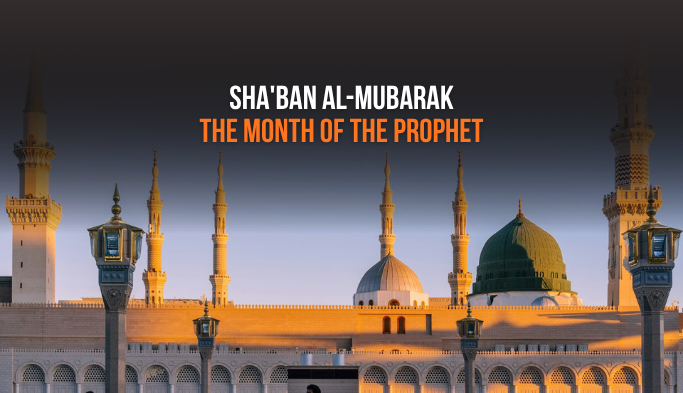
The Prophet Muhammad (s) said: “Rajab is the month of Allah, Sha’ban is my month, and Ramadan is the month of my Ummah.” (Iqbal al-A’mal, Sayyid Ibn Tawus) To enter a month that the Prophet (s) called his own is an invitation to draw nearer to everything he represented: to the Quran he received, to the Ahlul Bayt (as) he left as its custodians, and to the standard of worship and character his life embodied.
Why does Sha’ban matter?
Sha’ban occupies a specific position in the spiritual calendar: it is the bridge between Rajab — the month of repentance and turning toward Allah — and Ramadan — the month of fasting, the Quran, and the harvest of what Rajab planted. A believer who has used Rajab for sincere istighfar and enters Sha’ban already softened arrives at Ramadan in a different state than one who begins the preparation only when Ramadan is announced.
The Prophet (s) fasted more extensively in Sha’ban than in any other month outside Ramadan. When asked why, he explained that it is the month in which deeds are presented before Allah — a reason to ensure the record of those deeds is in its best possible form. (Iqbal al-A’mal; Mafatih al-Jinan, Shaykh Abbas Qumi) The three-month sequence of Rajab, Sha’ban, and Ramadan is not three separate events — it is a single arc of preparation, and Sha’ban is its middle and most practically demanding stretch.
What Sha’ban asks of the believer
The tradition consistently describes Sha’ban as a month for building consistency rather than intensity. Ramadan demands a full transformation of daily routine — early Fajr, iftar, Tarawih or Tahajjud, intensive Quran. Those who arrive at Ramadan having spent Sha’ban fasting regularly, maintaining salawat, reciting Munajat Sha’baniyah, and giving charity arrive with habits already in place. Those who arrive having done nothing different find the first week of Ramadan the hardest, and the month shorter for it.
Key Dates and Events in Sha’ban
3rd Sha’ban — Wiladat of Imam Hussain ibn Ali (as)
The birth anniversary of the third Imam, the grandson of the Prophet (s), the Master of Martyrs whose stand at Karbala preserved the truth of Islam for every generation after it. A day of joy observed with charity, gathering, and reflection on what his life and death mean. For his full biography, see our dedicated Wiladat post. For the specific amaal of this day — fasting, the 3rd Sha’ban dua, Dua al-Hussain — see our amaal guide.
4th Sha’ban — Wiladat of Hazrat Abbas ibn Ali (as)
The birth anniversary of Qamar Bani Hashim — the Moon of the Hashimites, the standard-bearer of Karbala, the man who reached the Euphrates with both arms intact and returned without either of them to the camp that was still thirsty. A day to remember what loyalty looks like at its fullest possible expression, observed with charity, gathering, and the Ziyarat of his shrine in Karbala.
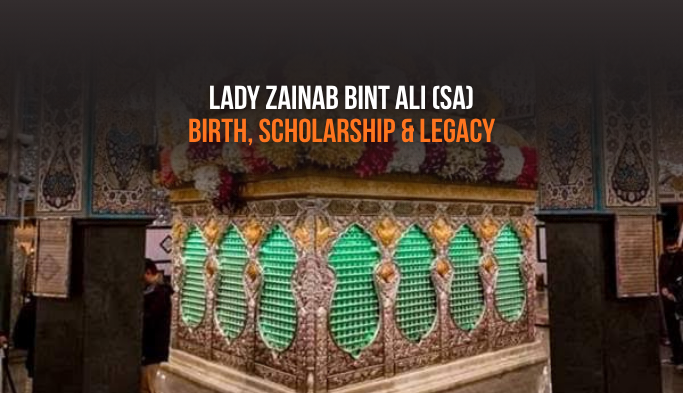
5th Sha’ban — Wiladat of Lady Zainab bint Ali (sa)
The birth anniversary of the voice that carried Karbala’s message from the battlefield to the world — through the streets of Kufa, through the court of Damascus, and through fourteen centuries of remembrance. Without her sermons, the events of Ashura might have been suppressed in Umayyad narrative. Her birthday in Sha’ban falls between the birthdays of the two brothers she outlived and mourned and honoured.
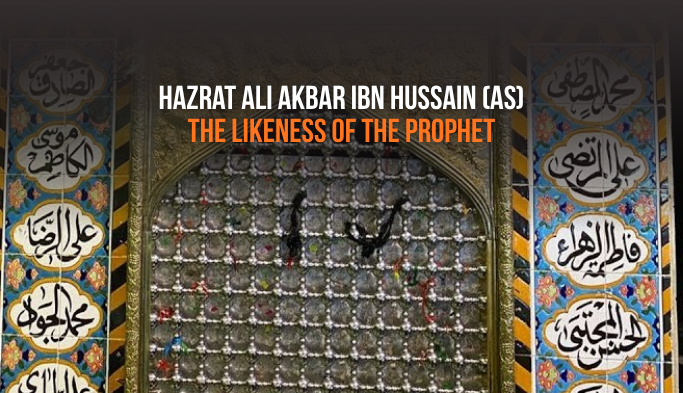
11th Sha’ban — Wiladat of Hazrat Ali al-Akbar ibn Hussain (as)
The birth anniversary of the eldest son of Imam Hussain (as), who was martyred at Karbala before his father’s eyes. Ali al-Akbar (as) is remembered for his resemblance to the Prophet (s) in character, voice, and appearance — a resemblance so strong that Imam Hussain (as) would look at him during the journey and remember his grandfather. His birth date varies across classical sources; the 11th of Sha’ban is the date most commonly observed in the devotional tradition.
15th Sha’ban — Nisf Sha’ban: Wiladat of Imam al-Mahdi (atfs) and the Night of Forgiveness
The most significant night of Sha’ban and one of the most significant nights of the year. The night of the 15th — beginning at Maghrib of the 14th — is described by Imam al-Baqir (as) as the best night after Laylat al-Qadr. It is the birthday of Imam Muhammad al-Mahdi (atfs), the twelfth Imam, born in 255 AH in Samarra. On this same date in 329 AH, the final deputy Ali ibn Muhammad al-Samarri (ra) died and the Major Occultation began. For the full amaal of this night, see our Nisf Sha’ban worship guide. For the Imam’s biography, see our dedicated post.
18th Sha’ban — Wafat of Hussain ibn Ruh al-Nawbakhti (ra)
The death anniversary of the third deputy of Imam al-Mahdi (atfs), who served for twenty-one years — the longest of the four deputies — under constant Abbasid surveillance. He was imprisoned and revealed nothing. His death on the 18th of Sha’ban, 326 AH, marked the final transition within the Minor Occultation’s deputy system, as he had already appointed Ali ibn Muhammad al-Samarri to succeed him.
Sha’ban in the Holy Cities of Iraq
For those who have visited the shrines of the Ahlul Bayt (as) in Iraq during Sha’ban, the contrast with the same cities in any ordinary month is striking. The three Wiladat days — 3rd, 4th, and 5th Sha’ban — transform Karbala and Kadhimiya in particular. The shrines are illuminated. The courtyards fill with pilgrims who have come specifically for the celebrations. Charitable food distribution begins outside the shrine gates in the early morning and continues through the night. Scholars deliver lectures on the lives of the Imams and figures being commemorated. The atmosphere carries the specific character of Shia communal joy — not the loud revelry of ordinary celebration, but the warmth of a people gathered in love for the household of their Prophet.
The 15th night transforms the atmosphere again. In Karbala especially, the shrine of Imam Hussain (as) on the night of Nisf Sha’ban draws enormous gatherings for all-night worship. The recommendation to perform Ziyarat of the Imam on this night from wherever one is has its fullest expression in those who are actually there — prostrating at his threshold on the night that is also the birthday of his descendant, the awaited Imam. The combination produces a spiritual intensity that pilgrims consistently describe as unlike anything else in the calendar.
How Sha’ban Prepares the Believer for Ramadan
The three-month stairway is a description, not a metaphor. Rajab clears the account through repentance and istighfar. Sha’ban builds the capacity for sustained worship: fasting becomes more regular, salawat more constant, night prayers more habitual, charity more natural. Ramadan does not then arrive as a foreign demand — it arrives as the next step on a path that has been walked for two months already.
The Prophet’s (s) own practice in Sha’ban is the clearest instruction available: he fasted extensively, he increased his worship, and he connected the month’s devotion explicitly to his love for his family and the community he was preparing for the greatest month of the year. Following that practice — sincerely, consistently, without waiting for Ramadan to begin the effort — is how Sha’ban is supposed to work.
For those whose practice of Sha’ban includes Ziyarat of the Ahlul Bayt (as) in Iraq — honouring the Wiladat celebrations, observing Nisf Sha’ban at the shrines, and building the spiritual momentum that carries through to Ramadan — our 2026–2027 Iraq Ziyarat Packages are open throughout Sha’ban, with departures to Karbala, Najaf, Kadhimiya, and Samarra.
Visit: www.ziaratplanner.com





 06-Jun-2026