The 13th: A Wiladat and the Beginning of Three Sacred Days
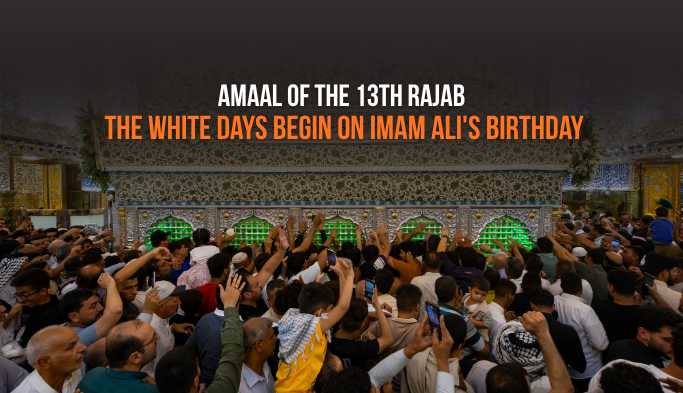
The 13th of Rajab carries two distinct honours that together make it one of the most significant dates of the month. It is the Wiladat of Imam Ali ibn Abi Talib (as) — born inside the Ka’bah, the first Imam, the gate of the Prophet’s city of knowledge — and it is the first day of Ayyam al-Beed: the White Days, the three-night spiritual program (13th, 14th, 15th) for which specific prayers have been transmitted through the Ahlul Bayt (as) with exceptional rewards. For the full account of Imam Ali’s (as) birth, his battles, his governance, and his shrine in Najaf, see our dedicated Wiladat post.
This guide addresses the amaal: how to spend the night and day of the 13th in worship, drawing on the classical devotional tradition preserved in Mafatih al-Jinan (Shaykh Abbas Qumi) and Iqbal al-A’mal (Sayyid Ibn Tawus).
Understanding the Ayyam al-Beed Program
The White Days — the 13th, 14th, and 15th of every lunar month — are named for the full or near-full moon that lights the nights. In the month of Rajab, they take on additional significance: specific prayers have been transmitted for each of the three nights, forming a progressive sequence that builds from the 13th to the 15th.
Imam Ja’far al-Sadiq (as) said: “Whoever performs these prayers will gain the reward of Rajab, Sha’ban, and Ramadan — and his sins will be forgiven except shirk.” (Mafatih al-Jinan, Shaykh Abbas Qumi; Iqbal al-A’mal, Sayyid Ibn Tawus)
The structure is deliberate: two rak’aat on the 13th night, four on the 14th, six on the 15th. The gradual increase is itself a teaching — that spiritual growth is built step by step, that the believer who commits to the first night has already begun something that the next two nights will complete.
The 13th also begins the three-day fast that precedes Amal Umm Dawud on the afternoon of the 15th — taught by Imam al-Sadiq (as) as one of the most powerful acts of Rajab for the relief of hardship and the fulfilment of needs. (Iqbal al-A’mal, Sayyid Ibn Tawus)
Night Amaal: The 13th Night of Rajab
The Special Two-Rakaat Prayer
The central act of this night is a two-unit prayer with a specific method — more detailed than the general Rajab night prayer — transmitted in Mafatih al-Jinan for these three nights. In each rak’ah, recite:
- Surah al-Fatiha — once
- Surah Yasin (Surah 36) — once
- Surah al-Mulk (Surah 67) — once
- Surah al-Ikhlas (Surah 112) — once
This prayer combines three of the most substantial surahs of the Quran in a single act of worship: Surah Yasin on the reality of human life and the resurrection, Surah al-Mulk on the absolute sovereignty of Allah over all creation, and Surah al-Ikhlas on the pure oneness of the Creator. Together they form something closer to a meditation on the foundations of faith than a routine prayer. Recite each with presence, not speed. After completing the prayer, remain in supplication — the moments immediately after salah are among the most accepted times for dua. (Mafatih al-Jinan; Iqbal al-A’mal)
Ihya al-Layl — Reviving the Night
Beyond the specific prayer, the 13th night is an invitation to spend as much of the night as possible in worship. Recitation of the Quran, additional voluntary prayers, personal supplication, and the dhikr of Allah fill the hours in which the world is quiet and the heart is most available to receive what it asks for. Even an hour of sincere night worship — deliberately carved out from sleep — carries a weight that the same hour in daylight does not.
Istighfar and Dhikr
Rajab is described in the tradition as the month of seeking forgiveness, and its nights are the prime time for that turning. Recite the following abundantly throughout the night:
أَسْتَغْفِرُ اللهَ وَأَتُوبُ إِلَيْهِ
“Astaghfirullaha wa atubu ilayh” — “I seek Allah’s forgiveness and I turn repentantly to Him.”
Intersperse the tasbih throughout the night — between prayers, in moments of stillness, while lying down before sleep:
سُبْحَانَ اللهِ وَالْحَمْدُ لِلَّهِ وَلَا إِلَٰهَ إِلَّا اللهُ وَاللهُ أَكْبَرُ
“SubhanAllahi walhamdulillahi wa la ilaha illallahu wallahu akbar” — “Glory be to Allah; all praise is for Allah; there is no god save Allah; Allah is the Greatest.”
And send salawat upon the Prophet (s) and his household — his household, whose first Imam was born on this very day:
اللَّهُمَّ صَلِّ عَلَى مُحَمَّدٍ وَآلِ مُحَمَّدٍ
“O Allah, send blessings upon Muhammad and the family of Muhammad.”
Day Amaal: The 13th Day of Rajab
Fasting — The Beginning of Three Days
The 13th is the first of the three-day fast recommended throughout the Ayyam al-Beed. Fasting on these days fulfils the narration from the Prophet (s) that fasting three days of every month is like fasting for a lifetime. (Al-Kafi, Shaykh al-Kulayni; Wasa’il al-Shi’a, Shaykh al-Hurr al-Amili) In Rajab, these three days carry additional weight as a sacred month fast. Intend the fast before Fajr — and if continuing for all three days toward Amal Umm Dawud on the 15th, set that intention now. The 13th fast opens a three-day window that the 14th and 15th will complete.
Quran Recitation
The fasting hours of the day are best filled with Quran rather than left empty. Recite with reflection — attending to meaning rather than rushing through pages. The same surahs recited in last night’s prayer (Yasin, al-Mulk, al-Ikhlas) are fitting for daytime recitation as well. Any surah read with presence on a sacred day carries its reward.
Charity
The Ayyam al-Beed are among the best days for sadaqah. Imam Ja’far al-Sadiq (as) taught that charity protects from calamity and is among the acts most beloved to Allah in the sacred months. (Al-Kafi, vol. 4) On a day that celebrates the birth of Imam Ali (as) — who distributed the contents of the treasury equally among all Muslims regardless of their standing, and who gave away his food to the poor on three consecutive nights even when his own family was fasting — charity is the most direct way to participate in his spirit.
Personal Supplication for Your Needs
The 13th of Rajab, combining the blessings of the sacred month, the Ayyam al-Beed, and the Wiladat of the first Imam, is one of the best days of the year for personal dua. After the Dhuhr prayer and in the quiet of the afternoon, raise your hands and address Allah about what you carry. The tradition describes this combination of sacred times and personal sincerity as particularly receptive for fulfilled needs.
Three Nights, One Direction
The 13th begins what the 15th will complete. The believer who observes the night prayer tonight, fasts tomorrow and the day after, and performs Amal Umm Dawud on the afternoon of the 15th has observed one of the most structured and powerful three-day programs of worship in the entire Rajab tradition. Each day builds on the last. Each night’s prayer adds two more rak’aat to what came before. It is a sustained act, not a single gesture — and sustained acts, the Imams consistently taught, are the ones most beloved to Allah.
On this day — the birthday of Imam Ali (as), whose shrine in Najaf receives millions of pilgrims each year — the most fitting way to close is with salawat and with the intention to stand at that shrine. Our 2026–2027 Iraq Ziyarat Packages include Najaf as a central destination alongside Karbala, Kadhimiya, and Samarra. Come and begin your own three nights at the shrine of the Imam born today.
Visit: www.ziaratplanner.com





 04-Jun-2026