The Moon of the Hashimites
The day after Imam Hussain’s (as) birth anniversary — the 4th of Sha’ban — belongs to his brother. Abbas ibn Ali (as), born in Madinah in 26 AH, is one of the most beloved figures in the entire tradition of the Ahlul Bayt (as). His titles speak to what he was: Qamar Bani Hashim — the Moon of the Hashimites; Alamdar — the Standard-Bearer; Al-Saqqa — the Water-Carrier; Abu al-Fadl — the Father of Virtues. Every title is a chapter in a life that ended in Karbala carrying a water-skin with no hands.
His birth anniversary in Sha’ban — the month of the Prophet (s) — is a day of joy for the lovers of the Ahlul Bayt (as): joy for a man who embodied what loyalty actually looks like when it is tested past all ordinary limits.
Biography at a Glance
| Full Name: |
Abbas ibn Ali ibn Abi Talib (as) |
| Kunyat: |
Abu al-Fadl (Father of Virtues) |
| Titles: |
Qamar Bani Hashim (Moon of the Hashimites), Alamdar (Standard-Bearer), Al-Saqqa (Water-Carrier) |
| Father: |
Imam Ali ibn Abi Talib (as), the first Imam |
| Mother: |
Lady Fatima bint Hizam — Umm al-Banin (sa) |
| Wiladat (Birth): |
4th Sha’ban, 26 AH — Madinah |
| Shahadat (Martyrdom): |
10th Muharram, 61 AH — Karbala, Iraq (Day of Ashura) |
| Notable half-brothers: |
Imam Hasan al-Mujtaba (as), Imam Hussain (as), Lady Zainab (sa) |
| Shrine: |
Karbala, Iraq — adjacent to the shrine of Imam Hussain (as) |
Umm al-Banin: The Mother Who Raised a Lion
The story of Abbas (as) begins with his mother. Lady Fatima bint Hizam — known by her title Umm al-Banin, the Mother of Sons — was sought by Imam Ali (as) specifically because of her family’s reputation for courage. He asked his brother Aqil, who was skilled in Arab genealogy, to find him a woman from a lineage known for bravery. Aqil recommended the daughter of Hizam al-Kilabiyya. Imam Ali (as) married her, and from that union came Abbas and his three brothers — all of whom would die at Karbala beside their half-brother Imam Hussain (as).
Umm al-Banin raised her sons to love the Ahlul Bayt (as) with the kind of love that does not negotiate and does not retreat. She outlived all four of her sons, and her grief after Karbala became itself a model of loyalty — she refused to listen to the news of Karbala before asking first about the condition of Imam Hussain (as), saying that if he had survived, her own sons were nothing to mourn. (Bihar al-Anwar, Allama Majlisi, vol. 45)
His Character: What Childhood in That Household Produces
Abbas (as) grew up as the half-brother of Imam Hussain (as) — not merely a family member but a devoted companion and protector from his earliest years. Classical accounts describe a young man of unusual physical strength and unusual inner composure: fearless in a way that did not seek confrontation, loyal in a way that did not require explanation. He trained in the traditions of Arab warriors while absorbing the spiritual discipline of a household that understood what faith actually demanded.
When Imam Hussain (as) called him “my brother, my soul, my comfort” — as narrated in the maqtal literature — it was not the language of sentiment. It was the language of a man describing the person who had been his closest support through every year of his adult life.
He fought alongside his father Imam Ali (as) in the battles of Jamal, Siffin, and Nahrawan. By the time Karbala arrived, he had spent decades in the company of the first and third Imams, absorbing their understanding of what the stand for truth actually requires of a person.
Karbala: Where the Titles Were Earned
On the plains of Karbala, Abbas (as) served as Alamdar — the standard-bearer who carries the flag of the army, the person who must not lower it as long as anyone is alive to fight. His role was both military and symbolic: as long as the flag held, the Imam’s side was present. He held it.
The moment that has defined his memory across fourteen centuries is the water mission. On the 10th of Muharram, the children and women of Imam Hussain’s (as) camp had been without water for three days — the enemy had blockaded the Euphrates. Abbas (as) broke through the lines and reached the river. He filled the water-skin. According to narrations, he did not drink himself — in a river, thirsty, with water at his lips — because the children in the camp were thirsty first. (Kamil al-Ziyarat, Ibn Qulawayh; Bihar al-Anwar, vol. 45)
On the return, the enemy intercepted him. One arm was severed. He shifted the water-skin. The other arm was severed. He held it with his chest and kept moving. An arrow struck the water-skin. The water was lost. He fell. The children did not receive the water he died carrying.
That is the story the tradition has preserved in every detail, because every detail matters. What it reveals is not merely bravery — the battlefield was full of brave men that day. What it reveals is the specific quality of a person who, at the moment of extremity, thinks of others first.
What Imam Zayn al-Abidin (as) Said About Him
The narration most often quoted about the spiritual station of Abbas (as) comes from his nephew — Imam Ali ibn al-Hussain Zayn al-Abidin (as), who survived Karbala and witnessed everything. He said:
“May Allah have mercy on my uncle Abbas. He preferred his brother over himself and sacrificed himself for his brother, until his two hands were severed. Allah replaced them with two wings with which he flies in Paradise with the angels, as Allah granted Ja’far ibn Abi Talib. Abbas has, near Allah the Blessed and Exalted, a status that all the martyrs will envy on the Day of Resurrection.” (Bihar al-Anwar, Allama Majlisi, vol. 45; Kamil al-Ziyarat)
A nephew who watched his uncle die on that day, who carried the grief of Karbala for the rest of his long life — this is his testimony. The martyrs will envy him. Not because he died more painfully, but because of what his death expressed: the fullest possible form of a human being choosing another’s need over their own life.
His Shrine in Karbala and the Journey to Stand There
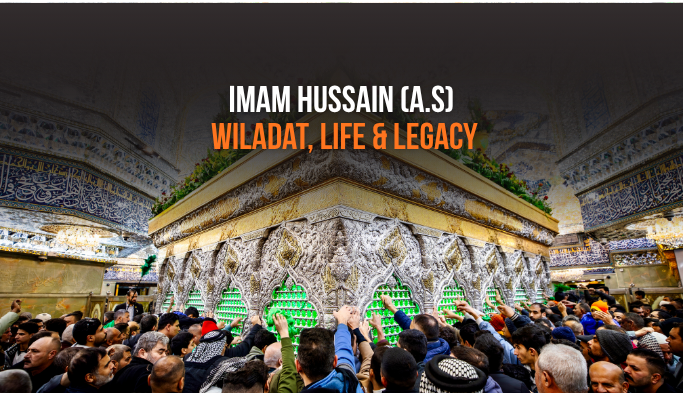
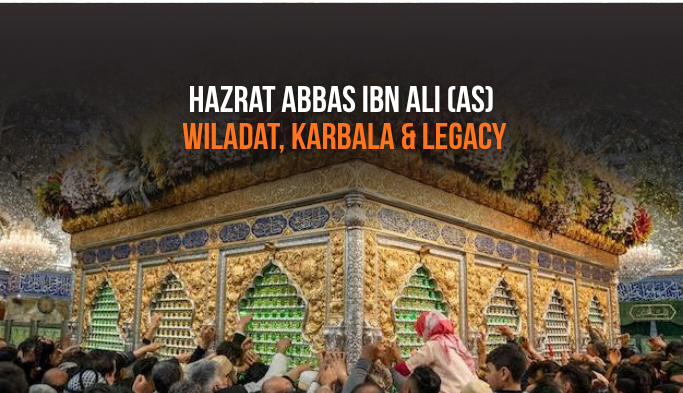
The shrine of Abbas (as) stands in Karbala beside the shrine of Imam Hussain (as) — two golden domes visible from each other, as the two brothers were visible to each other on the day one watched the other fall. Millions of pilgrims visit both shrines each year, with Arba’een drawing the largest annual human gathering on earth.
To stand at the shrine of Abbas (as) is to stand at the place where the water-skin was filled and the arms were lost and the children remained thirsty. It is among the most powerful sacred sites in the world, and not only because of its architecture.
On his Wiladat, the 4th of Sha’ban, the most fitting act of devotion is to intend the journey. Our 2026–2027 Iraq Ziyarat Packages include Karbala as the central destination — both the shrine of Imam Hussain (as) and the shrine of his brother, the Moon of the Hashimites, Abu al-Fadl al-Abbas (as).
Visit: www.ziaratplanner.com





 04-Jun-2026