The Imam Who Survived Karbala to Carry What the Martyrs Could Not
On the day of Ashura in 61 AH, when every other member of Imam Hussain’s (as) household who could fight had been killed, one man remained alive — and survived because he was too ill to stand. Ali ibn al-Hussain (as) — the fourth Imam of the Ahlul Bayt (as), known as Zayn al-Abidin (Adornment of the Worshippers) and al-Sajjad (the Frequently Prostrating One) — was carried as a captive from Karbala to Kufa, then to Damascus, in chains, sick, watching the heads of his father and uncles and brothers being carried on lances ahead of him.
What he did with the thirty-four years he lived after Karbala is the subject of this post. It is not a small story.
Biography at a Glance
| Full Name: |
Ali ibn al-Hussain ibn Ali ibn Abi Talib (as) |
| Kunyat: |
Abu al-Hasan; Abu Muhammad; Abu Abdillah |
| Titles: |
Zayn al-Abidin (Adornment of the Worshippers), al-Sajjad, Sayyid al-Sajidin, Dhu al-Thafanat (He of the Calluses) |
| Father: |
Imam Hussain ibn Ali (as), the third Imam |
| Mother: |
Lady Shahrbanu (sa) — daughter of Yazdgerd, the last Sassanid emperor, according to most narrations; accounts vary |
| Wiladat (Birth): |
38 AH — Madinah (exact month disputed across narrations) |
| Shahadat (Martyrdom): |
94–95 AH — Madinah; poisoned by the order of al-Walid ibn Abd al-Malik |
| Period of Imamate: |
34 years (following Karbala) |
| Son: |
Imam Muhammad al-Baqir (as), the fifth Imam |
| Buried: |
Jannat al-Baqi, Madinah — alongside his uncle Imam Hasan al-Mujtaba (as) |
Karbala and the Chains to Damascus
Imam al-Sajjad (as) was approximately 23 years old at the time of Karbala. He was severely ill on the day of Ashura — some accounts say soldiers who approached him with swords were turned away by others who said: the sickness is enough for him. (Al-Irshad, Shaykh al-Mufid) This illness, which saved his life, was also the means by which the Imamate was preserved: he was the only surviving adult male of Imam Hussain’s (as) immediate family.
Lady Zainab (sa) protected him when soldiers came for him in the aftermath. He was shackled at the neck and his feet were fastened under the belly of the camel for the journey to Kufa because he was too weak to sit upright. In Damascus, before Yazid, the Imam spoke — calling the pulpit planks of wood that had lost their Islamic purpose, questioning aloud how a man who held the Prophet’s family in chains could claim to represent the Prophet’s religion. The accounts describe Yazid as disturbed. (Bihar al-Anwar, Allama Majlisi, vol. 45; Al-Luhuf, Sayyid Ibn Tawus)
Eventually released, he returned to Madinah and lived the remaining thirty-four years of his life there — in the city that had been his grandfather’s city and was now under Umayyad control.
The Charity No One Knew About Until He Died
In Madinah, the Imam conducted a parallel life that no one witnessed until it ended.
Abu Hamza al-Thumali narrated: every night, the Imam loaded food on his own shoulders and carried it in the dark to the houses of the poor. He would say at each door: “Charity made in darkness appeases the wrath of God.” Those who received it did not know who was leaving it. After his death, those night deliveries stopped — and only then did the recipients understand who had been coming. The marks the baskets had left on his shoulders were visible when they washed his body for burial. (Bihar al-Anwar, vol. 46)
Muhammad ibn Ishaq recorded that there were families in Madinah who had been sustained by an unknown benefactor for years and discovered only at the Imam’s death that it had been him. Ibn Sa’d wrote that when a poor person came to him at the door, he would say: “Before charity reaches the hand of the one who receives it, it reaches the hand of God.”
One account describes the Imam secretly helping a cousin in need who did not recognise him — and who, not knowing who his benefactor was, complained openly about how little attention Ali ibn al-Hussain paid to his relatives. The Imam heard this, said nothing, and continued. When the Imam died and the nightly provision stopped, the cousin went to his grave and wept.
He twice distributed his entire property among the poor. He bought slaves specifically to free them — so many that a significant number of freed servants lived in Madinah as a kind of community owing their freedom to him.
Al-Sajjad: What the Title Means
Malik ibn Anas — the founder of the Maliki legal school, not a Shia partisan — said: “Ali ibn al-Hussain (as) made a thousand rak’aat of prayer every day before he passed away. That is why he was called Zayn al-Abidin.”
Another account: when the Imam prepared for prayer, he would visibly tremble. Someone asked him why. He said: “Woe be to you! Do you know before whom I am about to stand?”
His title Dhu al-Thafanat — He of the Calluses — referred to the condition of his knees, palms, and forehead: the skin had hardened like the knees of a camel from the sheer volume of his prostrations. When they washed his body, they saw the marks of a lifetime of standing before Allah.
This worship was not performance. It was the spiritual strategy of an Imam under Umayyad surveillance who could not lead armies, could not give public political speeches without danger, and chose to fill the space available with a worship so intense that it became its own form of witness. (Bihar al-Anwar, vol. 46; Al-Irshad, Shaykh al-Mufid)
Al-Sahifa al-Sajjadiyya: The Psalms of Islam
Al-Sahifa al-Sajjadiyya — the collection of supplications attributed to Imam al-Sajjad (as) — is among the most important documents in Islamic literature. It is sometimes called the Psalms of Islam for the depth and beauty of its language, and it has been translated into multiple languages and studied by scholars of Islamic spirituality across traditions.
The Sahifa is not a collection of requests. It is a systematic exploration of the believer’s relationship with Allah — through gratitude, through acknowledgment of human weakness, through the daily rhythms of morning and evening, through concern for parents, through the awareness of death. The Imam wrote in a time when explicit religious leadership and political commentary were dangerous. He wrote supplications instead — and through them, he described the full landscape of what authentic Islamic faith looks like in an era of oppression and loss.
In one of the Sahifa’s most frequently quoted passages, the Imam addresses Allah with deliberate self-diminishment: “Here I am, O Lord, thrown down before You — the one whose back is weighed down by mistakes, whose lifetime has been consumed by sins, who in his ignorance disobeyed You while You did not deserve that from him.” An infallible Imam, speaking in those terms — teaching, through the language of his own supplication, how a believer is meant to stand before Allah: small, honest, without pretension. (Sahifa al-Sajjadiyya, Supplication 16; Iqbal al-A’mal, Sayyid Ibn Tawus)
His other major work, Risalat al-Huquq — the Treatise on Rights — lists fifty-one rights: the rights of Allah, of the body, of the tongue, of the prayer, of parents, of children, of teachers, of friends, of enemies, of the poor. It is the first systematic treatment of Islamic ethics structured around the concept of rights rather than obligations, and it remains studied today.
His Shrine and His Legacy
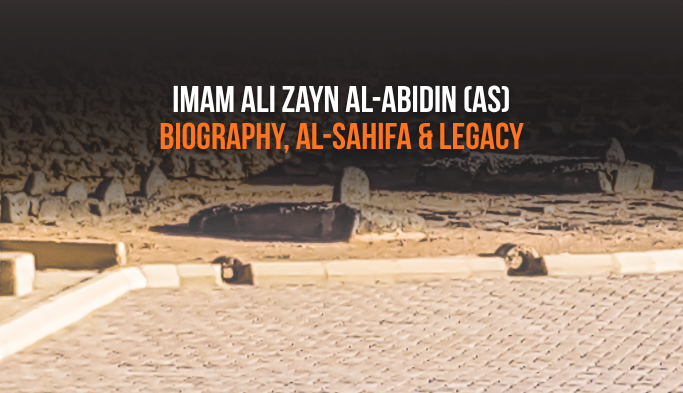
Imam al-Sajjad (as) was martyred by poison in 94–95 AH, on the order of the Umayyad caliph al-Walid ibn Abd al-Malik. He is buried in Jannat al-Baqi in Madinah, alongside his uncle Imam Hasan al-Mujtaba (as). The Baqi cemetery, though its structures have been demolished, remains a sacred site.
His legacy is the proof that the Imamate cannot be extinguished by political power. The Umayyads imprisoned his family, killed his father, watched him in chains — and he responded with supplications that are still recited daily by millions, with charity that outlasted the dynasty that tried to silence him, and with prostrations so numerous that they left marks visible on his body at death.
For those whose love for the fourth Imam draws them toward the family he protected — the father buried in Karbala, the grandfather in Najaf, the descendants in Kadhimiya and Samarra — our 2026–2027 Iraq Ziyarat Packages bring you to all four cities. The Imam who survived Karbala to carry its message forward is honoured everywhere his family rests.
Visit: www.ziaratplanner.com





 06-Jun-2026