Introduction
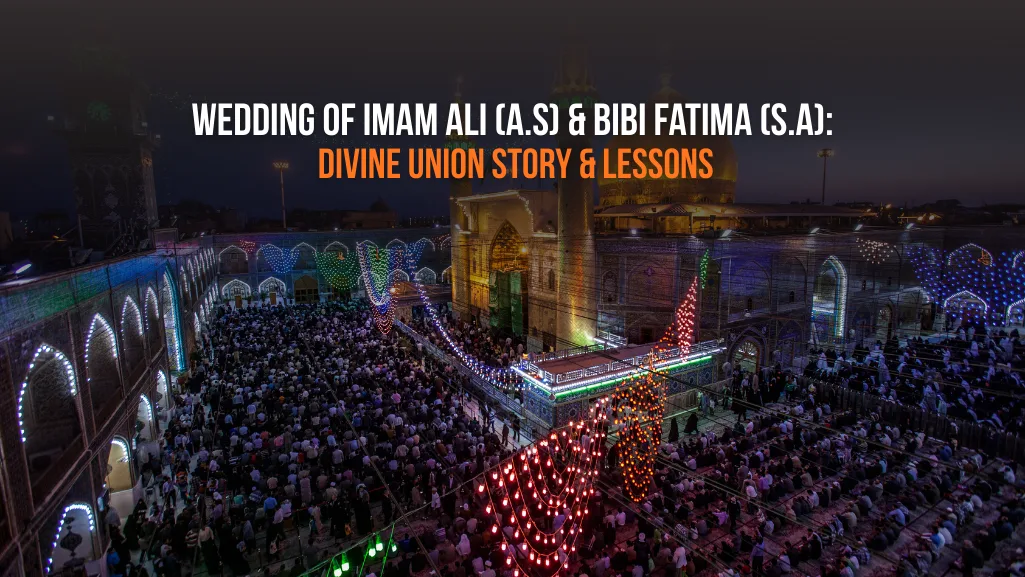
Among the key events in Islamic history, few are as cherished as the union of Imam Ali (AS) and Bibi Fatima (SA). Their marriage was no ordinary event; it was divinely ordained, representing love, selflessness, and total devotion to Allah (SWT).
This blog explores their story, including Imam Ali's (AS) heartfelt proposal, Lady Fatima's (SA) mahr, and how this marriage continues to inspire generations of believers.
The Proposal: A Divine Selection
The Suitors and Divine Will
As Fatima (SA) matured, several companions of the Prophet sought her hand in marriage. However, Muhammad (PBUH) turned them away, stating that the decision lay solely in the hands of Allah. This act underscored the importance of divine guidance in the choice of a spouse, a principle that resonates deeply within Islamic teachings.
Proposals for Bibi Fatima (SA)
After the migration to Madinah, many respected companions of the Prophet (SAW) expressed their desire to marry Bibi Fatima (SA). Among those who proposed were some well-known and wealthy companions. However, whenever a proposal was presented, the Prophet (SAW) would remain silent or politely decline, saying that the matter of Fatima's marriage was in the hands of Allah.
This clearly shows that her marriage was not to be decided on the basis of wealth, status, or social rank, but by divine command.
Imam Ali's (AS) Modesty and the Prophet's Response
Imam Ali (AS), who had been raised in the house of the Prophet (SAW) and was deeply devoted to Islam, also wished to marry Bibi Fatima (SA). However, due to his modesty and limited financial means, he hesitated to approach the Prophet directly.
Eventually, encouraged by companions, Imam Ali (AS) went to the Prophet (SAW) and expressed his intention. The Prophet warmly welcomed him and asked whether he possessed anything for mahr (dowry). Imam Ali (AS) replied that he owned only his sword, armor, and a camel. The Prophet advised him to sell his armor, which then became the simple mahr of Bibi Fatima (SA).
Divine Approval of the Marriage
Angel Jibraeel (AS) descended with Allah's command, informing the Prophet (SAW) that Allah Himself had solemnized the marriage of Ali and Fatima in the heavens. The Prophet (SAW) then performed the nikah on earth.
This divine approval highlights the spiritual rank of both Imam Ali (AS) and Bibi Fatima (SA) and confirms that their marriage was chosen by Allah, not by human preference.
The Chosen One: Ali ibn Abi Talib
Allah's selection for Fatima's spouse was none other than Ali ibn Abi Talib, the son of Abu Talib and a cousin of Muhammad. Ali's character, bravery, and unwavering faith made him a fitting partner for Fatima, and their union would soon become a model for generations to come.
Imam Ali's (AS) Proposal
Several of the Prophet's (SAW) companions had asked for Bibi Fatima's (SA) hand, but their proposals were respectfully declined. Eventually, Imam Ali (AS), encouraged by his special bond with the Prophet (SAW), approached him to express his desire. Though hesitant at first, the Prophet (SAW) was overjoyed.
The Wedding: A Celebration of Faith and Community
The Marriage Proposal
Two months after the Battle of Badr, Ali approached Muhammad with a heartfelt request for Fatima's hand. Understanding Ali's intentions, the Prophet joyfully sought Fatima's consent. Her silence was interpreted as acceptance, marking the beginning of a sacred partnership.
The Wedding Feast
On the last day of Zilqa'ad in 2 AH, Muhammad (PBUH) invited the Muhajireen and Ansar to celebrate the marriage of Fatima and Ali. During this gathering, he formally confirmed Fatima's consent, recited the marriage sermon, and declared them husband and wife, invoking blessings upon them.
A Joyous Procession
The wedding procession was a moment of communal joy, resonating with shouts of "Allah-o-Akbar." Salman the Persian held the reins of the she-camel as the community celebrated, creating an atmosphere of festivity and divine praise that enveloped the couple on their journey to their new home.
The New Home: Building a Life Together
A Sacred Bond
Fatima and Ali's marriage was characterized by mutual respect, shared values, and unwavering faith in God. Both were raised in the household of the Prophet and Khadija, instilling in them a deep sense of purpose and service to Allah. Their partnership was harmonious, as they dedicated their lives to worship and the betterment of their community.
A Family of Faith
The couple was blessed with four children—two sons, Hassan and Hussain, and two daughters, Zainab and Umm Kulsum. Their household became a nurturing environment where the teachings of the Qur'an were woven into the fabric of their family life, ensuring that their children grew up with a strong spiritual foundation.
The Life of Fatima: A Model of Devotion
Embracing Domestic Duties
Fatima Zahra's life was filled with the responsibilities of motherhood and household management. Despite the physical demands, including grinding grain and baking bread, she carried out her duties with grace and cheerfulness. Her strength was drawn from her remembrance of God, turning mundane tasks into acts of devotion.
The Role of Prayer and Worship
For Bibi Fatima, prayer was not just a duty; it was her greatest pleasure. She immersed herself in worship, finding solace and strength in her connection to Allah. This dedication to prayer not only shaped her spiritual life but also created a serene and loving atmosphere for her family.
The Significance of Their Union in Islamic History
A Model for Future Generations
The marriage of Fatima and Ali serves as a timeless example of love, loyalty, and spiritual devotion. Their partnership laid the groundwork for the Islamic values of family, community, and service to God. As the parents of the Imams of Shia Islam, their legacy continues to influence millions of Muslims worldwide.
The Impact on the Muslim Community
Fatima and Ali's contributions to the early Muslim community were profound. Their unwavering commitment to Islam and their roles as educators and leaders helped to solidify the foundations of the faith. Their children, particularly Hasan and Husayn, would play critical roles in the future of the Muslim community, exemplifying the ideals instilled in them by their parents.
When Did Imam Ali (AS) and Sayyida Fatima (SA) Get Married?
Their wedding took place on the 1st of Dhul Hijjah, 2 AH about ten months after their engagement.
The Prophet (SAW) asked his wife to accompany Bibi Fatima (SA) to Imam Ali's (AS) home. He personally performed the nikkah, solemnizing this divinely blessed marriage.
What Was Bibi Fatima's (SA) Mahr?
Bibi Fatima's (SA) mahr was between 400 and 500 dirhams.
When the Prophet (SAW) asked Imam Ali (AS) if he had anything to offer as mahr, he replied that he owned a sword, armor, and a camel. Rasoolallah (SAW) advised him to sell his armor to provide the mahr.
This teaches that true love isn't about wealth or extravagance—it's about sincerity and sacrifice in the path of Allah (SWT). The simplicity of the mahr reflects the profound faith and humility that defined their union.
Lessons from Their Marriage
Their marriage was a living example of Islamic values. Here are five key lessons we can take from their example:
1. Simplicity Over Extravagance
Their wedding was simple and sincere, without the pressure of material expectations. It reminds us to prioritize faith and character over wealth.
2. Trust in Divine Will
The Prophet (SAW) waited for divine guidance before accepting the proposal. Imam Ali (AS) and Bibi Fatima (SA) trusted Allah's (SWT) wisdom completely.
3. Shared Purpose
They built a life around faith and service, united in their mission to support the Prophet (SAW) and Islam.
4. Gratitude in Hardship
Despite living with little, they stayed thankful and patient. Their example shows that true happiness comes from gratitude and reliance on Allah (SWT).
5. Mutual Respect
Their marriage was full of love, support, and kindness. They respected each other deeply and worked together in all aspects of life.
Conclusion
The marriage of Bibi Fatima Zahra and Ali ibn Abi Talib is more than a historical event; it is a source of inspiration for Muslims around the world. Their story continues to resonate, reminding us of the power of love and faith in overcoming challenges and fostering a life dedicated to Allah.
“At Iraq Package, we honor the values embodied in this sacred union—faith, devotion, and the importance of family. As we facilitate your spiritual journeys, we invite you to reflect on the lessons drawn from the lives of Bibi Fatima (SA) and Imam Ali (AS).
www.ziaratplanner.com”
For more information or any queries, feel free to contact us. We are always ready to help you plan a peaceful and blessed journey.