What Is Dahw al-Ard?
On the 25th of Dhul Qa’dah, Shia Muslims observe one of the most profound yet least discussed days in the Islamic calendar: Dahw al-Ard (دحو الأرض) — the day on which Allah spread out the surface of the earth.
The phrase itself comes from two Arabic words: dahw (دحو), meaning to spread, extend, or unfold, and ard (الأرض), meaning the earth. Linguistically and theologically, it refers to the divine act by which Allah transformed the planet’s surface from a primordial state — entirely covered in water — into habitable dry land, capable of sustaining mountains, valleys, rivers, plants, animals, and human civilization.
This was not the original creation of the earth from nothing. Rather, it was the moment of preparation — the act of making the earth liveable. The Quran alludes to this event in Surah al-Nazi’at:
وَالْأَرْضَ بَعْدَ ذٰلِكَ دَحَاهَا
Translation: “And the earth — after that He spread it out.” (Quran 79:30)
Classical Shia scholars, including those drawing from Bihar al-Anwar and Mafatih al-Jinan, understand this verse as the Quranic foundation for the event commemorated on the 25th of Dhul Qa’dah. The earth was stretched and prepared — and from that spreading, all of life’s conditions became possible.
The Significance of This Day
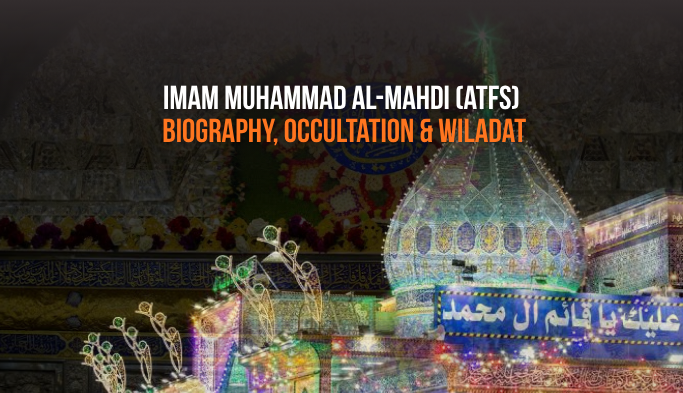
Shia narrations connect Dahw al-Ard not only to the spreading of the earth but to a cluster of events that mark it as one of the most blessed days of the year. Among the events narrated as occurring on this day: the birth of Prophet Ibrahim (as), the birth of Prophet Isa (as), the landing of the Ark of Prophet Nuh (as) on Mount Judi, and the departure of Prophet Muhammad (s) from Madinah with his companions for the Farewell Pilgrimage. Certain narrations also associate this day with the future reappearance of Imam al-Mahdi (atfs).
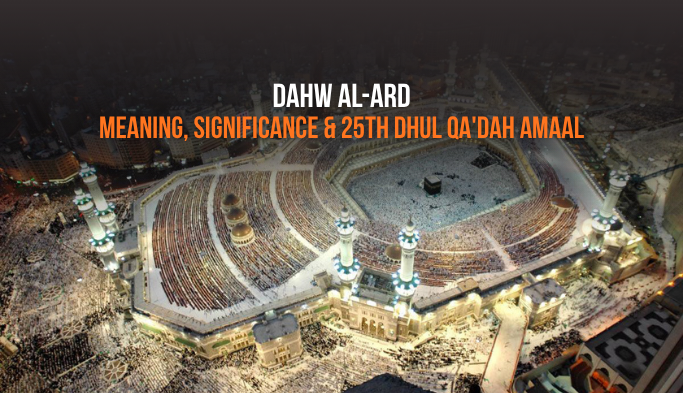
There is also a narration connecting the first land to emerge during Dahw al-Ard to the site beneath the Ka’bah in Makkah. This is theologically significant: it suggests that the Ka’bah is not merely a qiblah designated after the fact, but the spiritual and cosmic centre around which creation itself unfolded. The earth, in a sense, grew outward from that sacred point. Makkah was blessed not by later human designation alone, but from the very moment the earth became earth.
Taken together, these narrations establish Dahw al-Ard as a day layered with meaning — creation, prophecy, pilgrimage, and the promised future all converging on a single date in Dhul Qa’dah.
What Dahw al-Ard Teaches the Believer
Reflecting on the spreading of the earth is, at its core, an act of tawakkul — a recognition that the ground beneath our feet, the air we breathe, the rivers and mountains and plains that sustain all life are not accidents. They are provisions. They were arranged, deliberately and with wisdom, by the same Allah whose will governs every moment of every human life.
Contemplating this cultivates gratitude that goes beyond words. The land was not spread so that it could be exploited or taken for granted. It was spread as a trust — placed under human stewardship. The Quran’s language of khalifah (vicegerent, steward) carries this weight: humans were given the earth to tend, not merely to use. Reflecting on Dahw al-Ard, then, is also a moment to examine how honestly we are fulfilling that role.
There is a further, more personal lesson. Just as the earth was spread and prepared before it could support life, believers are encouraged to understand their own spiritual growth in similar terms. The heart must be expanded — through worship, reflection, repentance, and generosity — before it can sustain faith in its fullest form. Dahw al-Ard becomes a metaphor as much as a history: the soul too must be prepared for what it is meant to carry.
Recommended Acts of Worship on the 25th of Dhul Qa’dah
Fasting
Fasting on Dahw al-Ard is among the most emphasized acts of this day in Shia narrations. The reward mentioned in classical sources is exceptional — fasting with sincerity is reported to be equivalent in merit to fasting seventy months, with forgiveness extending across seventy years of sins. For those unable to fast the full day, sincere intention, repentance, and other acts of worship still carry spiritual benefit. The fast serves as a conscious expression of gratitude for the earth and all that it provides — a recognition, through temporary hunger, of how much we are ordinarily given.
Ghusl (Ritual Bath)
Performing Ghusl is recommended on Dahw al-Ard, either at night or during the day. The symbolism is direct: just as the earth emerged purified from the waters on this day, the believer consciously cleanses body and soul in preparation for the worship that follows.
Prayer and Supplication
Two rakaat prayer, recitation of the Quran, and sincere dua are all encouraged on this day. This is a time to ask for forgiveness, to seek guidance, and to consciously bring one’s intentions into alignment with the lessons of Dahw al-Ard — gratitude, humility, and reliance on Allah. The same Creator who spread the earth watches over every detail of every life. Addressing Him on the anniversary of that spreading carries its own particular weight.
Charity (Sadaqah)
Giving in charity is strongly recommended on Dahw al-Ard. Providing for those in need on this day is a way of participating in the divine mercy that the day itself commemorates — sharing from the provisions Allah spread across the earth for all of humanity, not only for ourselves.
Ziyarat of Imam Ali al-Ridha (as)
Some Shia narrations specifically recommend reciting the Ziyarat of Imam Ali al-Ridha (as) on Dahw al-Ard. This connection is meaningful: Imam Ridha’s (as) birth anniversary falls on the 11th of Dhul Qa’dah, just fourteen days before Dahw al-Ard, making the entire month feel as though it is built around his presence. Reciting his Ziyarat on this day strengthens the believer’s connection to the Ahlul Bayt (as) and links the blessings of this cosmic day to the guidance of the Imams.
Answering the Day in Person
Dahw al-Ard is a day that invites stillness and reflection — on creation, on mercy, on our own smallness before Allah’s wisdom. It is also a day that, if observed sincerely, can redirect a believer’s life toward what matters. The earth was spread so that human beings could live on it with purpose. The question this day places before every believer is simple: how are we using what we were given?
For those whose hearts are drawn toward answering that question through Ziyarat — through physically standing at the shrines of the Ahlul Bayt (as) and renewing their covenant with the family of the Prophet (s) — our 2026 Iraq Ziyarat Packages are open for the coming season. Karbala, Najaf, Kadhimiya, and Samarra are waiting.
The earth was spread so that you could walk it. Walk it toward them.
Visit: www.ziaratplanner.com





 04-Jun-2026