The Final Days of Dhul Qa’dah: A Sacred Threshold
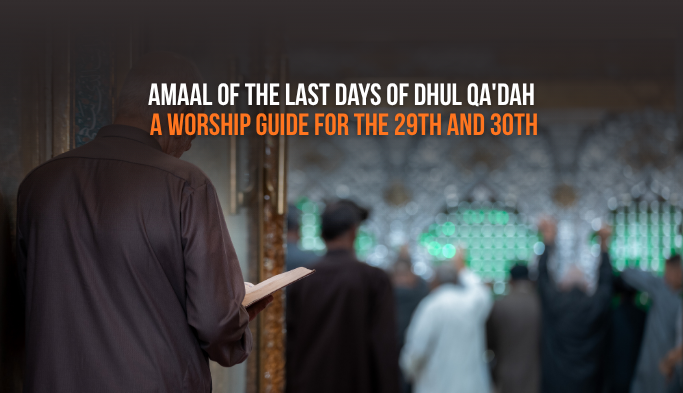
The 29th and 30th of Dhul Qa’dah are not simply the end of a month. They are a threshold — the closing of one sacred month and the opening of another. Behind you lies Dhul Qa’dah, with its own blessed days: the births of Lady Fatima Masooma (sa) and Imam Ali al-Ridha (as), the spreading of the earth on Dahw al-Ard, and the Shahadat of Imam Muhammad al-Jawad (as) on the 29th itself. Ahead lies Dhul Hijjah — the month of Hajj, of Ghadir, of the first ten blessed days that the Prophet (s) described as the best days for worship in the entire year.
The believer who arrives at Dhul Hijjah already in a state of worship — fasting, repentant, in dhikr — arrives prepared. These final days of Dhul Qa’dah are the preparation. They are an invitation to close one chapter with sincerity and open the next with intention.
Note: The 29th is also the day of Shahadat of Imam Muhammad al-Jawad (as). It is appropriate to observe it with both mourning for the Imam and the worship acts below. (See our post on the Shahadat of Imam al-Jawad for his biography and legacy.)
Preparation: Ghusl, Niyyah, and the Night Before
Begin each night — the night of the 28th moving into the 29th, and the night of the 29th moving into the 30th — with Ghusl if possible. The ritual bath of purification is a recommended etiquette for nights of elevated worship throughout the sacred months. Follow it with a sincere intention (niyyah): that you are dedicating this night and day to Allah alone, seeking His pleasure, His forgiveness, and His closeness. An intention made honestly changes everything that follows.
Night Amaal: From Isha to Fajr
Tahajjud — The Night Prayer
Rising for voluntary prayer in the last third of the night is one of the most consistently praised acts in Islamic tradition, and these nights — at the close of a sacred month — are among the best times to observe it. Pray in sets of two rak’aat: recite Surah al-Fatihah and any surah you know in each unit. After each set, remain seated and turn to Allah in dua before rising for the next. Two rak’aat offered with full presence of heart outweigh far more offered in haste. (Iqbal al-A’mal, Sayyid Ibn Tawus)
Quran Recitation
Even a few verses read slowly and with understanding carry great weight in a sacred month. The nights before the 29th and 30th are nights to let the Quran do what it is meant to do: illuminate, soften, and reorient the heart. Read with the intention of receiving guidance, not only completing an act.
Dua for Forgiveness
These nights are particularly suited for the supplication attributed to the Prophet (s) asking Allah to separate us from our sins:
اَللّٰهُمَّ بَاعِدْ بَيْنِي وَبَيْنَ خَطَايَايَ كَمَا بَاعَدْتَ بَيْنَ الْمَشْرِقِ وَالْمَغْرِبِ
Translation: “O Allah, place between me and my sins a distance as great as that between the East and the West.”
Before sleep on each night, also make personal dua in your own words for forgiveness, for the wellbeing of your family, and for acceptance of the worship you have offered throughout the month.
Salawat and Ziyarat
Sending at least one hundred salawat upon the Prophet (s) and the Ahlul Bayt (as) each night is recommended throughout the sacred months. On the night before the 29th especially — given its connection to Imam al-Jawad (as) — reciting Ziyarat Ashura or Ziyarat Warithah is a fitting way to honour the Imam while also observing the worship of this sacred night. The Ziyarat texts are available in Mafatih al-Jinan.
Day Amaal: From Fajr to Maghrib
Fasting
Fasting on both the 29th and 30th of Dhul Qa’dah is among the most strongly encouraged acts at the close of this month in Shia devotional tradition. It is not obligatory, but Shia scholars describe it as mustahab — highly recommended — precisely because these days fall within a month that Allah has declared sacred. Intend the fast before Fajr, and let the hunger itself become a form of awareness: you are a dependent creature, and what sustains you comes from Him.
Fajr, Dhuhr, and Asr with Full Presence
The obligatory prayers on these days should be offered with more care than usual. After Fajr: recite Ayatul Kursi, seek forgiveness (istighfar), and remain in dua for your family and for the believers. After Dhuhr and Asr: pause before rising. These moments after obligatory prayer — when the heart has just been in salah — are among the most accepted times for personal supplication.
Dhikr Throughout the Day
Distributing dhikr across the hours of a fasting day keeps the heart engaged rather than merely hungry. The traditional pattern of SubhanAllah (33 times), Alhamdulillah (33 times), Allahu Akbar (34 times) after each prayer may also be used as a recurring anchor throughout the day. What matters is presence: words said automatically carry less than words said with awareness of who is being addressed.
Sadaqah — Charity
Giving in charity at the close of a sacred month is a way of sealing its worship with generosity. Even a small amount given sincerely carries immense reward. Imam Ja’far al-Sadiq (as) taught that sadaqah protects from calamity and is among the acts most beloved to Allah in these months. (Al-Kafi, vol. 4) If you can give on both days, do so.
Reciting Ziyarat After Zuhr
After the Zuhr prayer on either day, reciting Ziyarat Ashura, Ziyarat Jami’ah al-Kabirah, or Ziyarat Warithah is recommended. These texts connect the believer’s heart to the Ahlul Bayt (as) and draw the mercy that is associated with that connection throughout the sacred months. The full texts are in Mafatih al-Jinan.
Closing the Day and the Month
At Maghrib on the 30th, when the fast breaks and Dhul Qa’dah formally ends, pause before eating. Say Alhamdulillah — and mean it. You have completed a sacred month. Whatever was offered in it with sincerity is with Allah. Whatever was neglected can still be addressed, because the arrival of Dhul Hijjah is itself another open door.
The months Allah has declared sacred are not given to us to exhaust us. They are given to us as opportunities — concentrated windows in which every act of worship carries more than its ordinary weight, and every sincere turning of the heart toward Allah is met with mercy in return.
For those who wish to carry that turning beyond the prayer mat and into the world — to stand at the shrines of the Ahlul Bayt (as) in Iraq during Dhul Hijjah, which begins the moment Dhul Qa’dah ends — our 2026 Iraq Ziyarat Packages are open. Karbala, Najaf, Kadhimiya, and Samarra are ready to receive those who come.
Visit: www.ziaratplanner.com






 06-Jun-2026