The Day the Minor Occultation Ended
The 15th of Sha’ban, 329 AH. In Baghdad, a man named Ali ibn Muhammad al-Samarri (ra) lay dying. Six days earlier, a letter had arrived — a tawqi’, a signed communication from the Hidden Imam — informing him that he would die within six days, that he should not appoint a successor, and that the phase of history that had operated through the four deputies was now ending. He had read the letter. He had prepared. And now the moment it described had arrived.
When Ali ibn Muhammad al-Samarri (ra) died, the Minor Occultation of Imam al-Mahdi (atfs) ended and the Major Occultation began — the phase that continues to the present day, in which no individual holds a specific, appointed deputyship from the Imam. The same date — the 15th of Sha’ban — that the tradition celebrates as the birthday of the promised Imam is also, seventy-four years later, the date on which the last person who spoke directly on his behalf drew his final breath. On Sha’ban’s most sacred night, a cycle that began with a birth closed with a death, and a new era opened.
Ali ibn Muhammad al-Samarri (ra) is not a figure whose name is widely known beyond the dedicated study of Shia history. He deserves to be known better — because without him, and without the three deputies who preceded him, the Shia community might not have survived the transition from the visible Imamate to its hidden phase.
Biography at a Glance
| Full Name: |
Ali ibn Muhammad al-Samarri |
| Kunyat: |
Abu al-Hasan |
| Title: |
Al-Safir al-Rabi’ (The Fourth Deputy) — fourth and final Na’ib of Imam al-Mahdi (atfs) |
| Birth: |
Exact date unknown — 3rd century AH |
| Wafat: |
15th Sha’ban, 329 AH (941 CE) — Baghdad, Iraq |
| Period of Deputyship: |
~3 years (326–329 AH) |
| Preceded by: |
Hussain ibn Ruh al-Nawbakhti (ra) — the third deputy |
| Shrine: |
Baghdad, Iraq |
The Minor Occultation: What the Four Deputies Held Together
When Imam Hasan al-Askari (as) was martyred in 260 AH, his son — the twelfth Imam, Muhammad ibn al-Hasan al-Mahdi (atfs) — entered what the tradition calls the Minor Occultation: a period of concealment lasting approximately 69 years, during which the Imam was hidden from public view but still accessible to his community through a structured system of four appointed deputies.
These four men — Uthman ibn Sa’id al-Askari, his son Muhammad ibn Uthman, Hussain ibn Ruh al-Nawbakhti, and Ali ibn Muhammad al-Samarri — collectively formed the bridge between the visible Imamate and the Major Occultation. Their responsibilities were specific and demanding: they received and transmitted the Imam’s tawqi’at (written directives), answered religious questions on his behalf, managed the collection and distribution of Khums, identified and refuted false claimants to the deputyship, and maintained the network of regional representatives across the Muslim world. (Bihar al-Anwar, Allama Majlisi, vol. 51; Al-Irshad, Shaykh al-Mufid)
They did all of this under constant Abbasid surveillance. The caliphate knew that a promised figure — the Mahdi — was expected from the Prophet’s (s) family. They had maintained agents in the household of Imam al-Askari (as) to prevent the birth or survival of his son. When those efforts failed, they monitored everyone who might serve as a connection to the Hidden Imam. The deputies operated in this environment for nearly seven decades — carefully, quietly, maintaining a community’s connection to its Imam without giving the government a thread to pull.
His Three Years as the Fourth Deputy
Ali ibn Muhammad al-Samarri assumed the deputyship following the death of Hussain ibn Ruh al-Nawbakhti in approximately 326 AH. He had been a trusted associate of his predecessor, already embedded in the network and familiar with its workings. The transition was designed to be seamless — the Imam’s community needed to know who their contact was, and al-Samarri’s appointment was conveyed through the same channel that all deputyship appointments had used: written communication from the Imam himself.
He served for approximately three years. The sources that describe his personality consistently note his discretion, his calm under pressure, and his trustworthiness with sensitive information. In an era when exposure could mean imprisonment or death, those qualities were not incidental — they were the qualifications for the role. (Kitab al-Ghaybah, Shaykh al-Tusi; Al-Irshad, Shaykh al-Mufid)
The Final Tawqi’: A Letter That Ended an Era
Six days before his death, on the 9th of Sha’ban 329 AH, Ali ibn Muhammad al-Samarri received the last written communication from the Imam that would ever be formally issued through the deputyship system. The letter, preserved in classical Shia sources, read:
“O Ali ibn Muhammad al-Samarri, may Allah magnify the reward of your brethren in your loss. You will die within six days. Complete your affairs and do not designate anyone to assume your position after your death, for the second occultation has now commenced. There shall be no reappearance except by the permission of Allah, the Exalted, and that after a long passage of time, when hearts become hardened and the earth becomes filled with injustice. And some among my Shia will claim to have witnessed me — indeed, whoever claims to have seen me before the rise of al-Sufyani and the celestial cry, he is a liar and a fabricator. There is no power or strength except with Allah the Most High, the Most Great.” (Bihar al-Anwar, Allama Majlisi, vol. 51; Kitab al-Ghaybah, Shaykh al-Tusi)
This letter does several things simultaneously. It gives al-Samarri advance notice of his own death — six days, specific. It formally announces the commencement of the Major Occultation. It explicitly prohibits the appointment of a fifth deputy. And it preemptively identifies any future claim of direct deputyship — any person who claims to be seeing or hearing from the Imam during the Major Occultation — as a liar. The Imam closed the door on false claimants in the same letter that announced the door’s closing.
Al-Samarri showed the letter to those around him. When the six days elapsed, he died. Those present asked him in his final moments if there was any instruction he wanted to leave. He said: “The matter belongs to Allah; He will accomplish it.” (Bihar al-Anwar, vol. 51) He said nothing further, and passed away. His words were the last words of the Minor Occultation.
What He Left Behind
The Major Occultation that began with his death has now lasted over eleven centuries. The system the four deputies built — the redirection of religious questions to qualified scholars, the collection of Khums through the scholarly community, the maintenance of the Shia network without a single central point of contact that could be dismantled — became the infrastructure through which Shia Islam survived and grew across the world that followed.
Ali ibn Muhammad al-Samarri (ra) did not choose his role or its timing. He inherited a network at its final stage and discharged his responsibility until the moment the Imam’s letter told him it was done. That faithfulness — sustained over three years in a dangerous environment, without seeking recognition, ending in a composed acceptance of a predicted death — is a form of service that the tradition honours as sincerely as it honours the more visibly dramatic acts of the Imams and their companions.
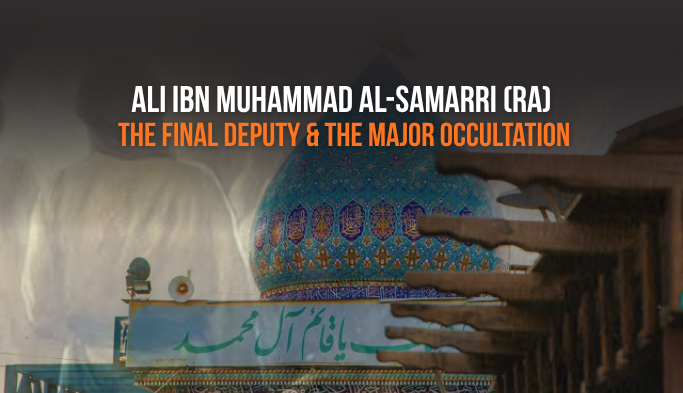
His shrine is in Baghdad, Iraq — in the city where he lived, served, and died. For those making Iraq Ziyarat, visiting his shrine is a connection to the moment the Major Occultation began and to the man who was the last to receive the Imam’s direct written word. Our 2026–2027 Iraq Ziyarat Packages serve all of Iraq’s holy sites. Ask about including the shrine of the fourth deputy in your journey.
Visit: www.ziaratplanner.com






 06-Jun-2026