The Child Who Was Hidden Before He Was Born
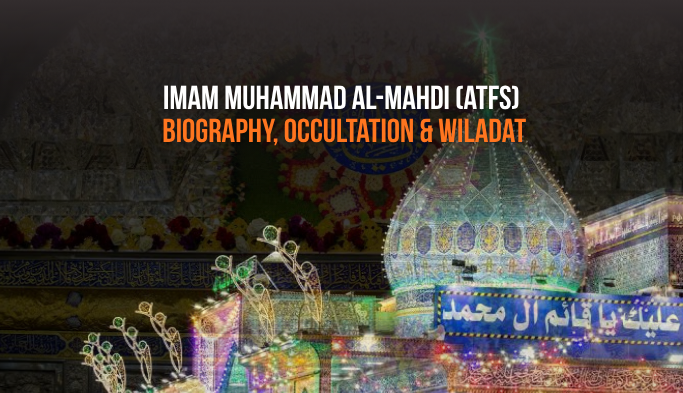
The 15th of Sha’ban, 255 AH. In a house in Samarra under constant Abbasid surveillance, a child was born whose existence the entire machinery of the caliphate had tried to prevent. They had stationed spies. They had sent midwives into the Imam’s household. They had monitored every arrival and departure for years. And yet Imam Muhammad ibn al-Hasan al-Mahdi (atfs) — the twelfth Imam of the Ahlul Bayt (as), the promised guide, the Imam of our time — was born, was kept hidden, and survived.
Allah says in the Quran:
وَعَدَ اللَّهُ الَّذِينَ آمَنُوا مِنكُمْ وَعَمِلُوا الصَّالِحَاتِ لَيَسْتَخْلِفَنَّهُمْ فِي الْأَرْضِ
Translation: “Allah has promised those among you who believe and do righteous deeds that He will surely grant them succession upon the earth…” (Surah al-Nur, 24:55)
Shia scholarship understands this promise as finding its complete fulfilment in the reappearance of Imam al-Mahdi (atfs). The child born in Samarra on the 15th of Sha’ban was not born into ordinary circumstances. He was born into a divine plan — one that began long before his birth and continues today.
Biography at a Glance
| Full Name: |
Muhammad ibn al-Hasan al-Askari (atfs) |
| Kunyat: |
Abu al-Qasim |
| Titles: |
Al-Mahdi (The Guided One), Al-Hujjah (The Proof), Sahib al-Zaman (Master of the Age), Baqiyatullah (The Remnant of Allah), Imam-e-Zamana |
| Father: |
Imam Hasan al-Askari (as), the eleventh Imam |
| Mother: |
Lady Narjis Khatoon (sa) |
| Wiladat (Birth): |
15th Sha’ban, 255 AH — Samarra, Iraq |
| Imamate began: |
260 AH (at the martyrdom of his father) |
| Minor Occultation: |
260–329 AH (approximately 69 years) |
| Major Occultation: |
329 AH — present day |
| Status: |
Alive, by the will of Allah, in occultation (Ghaybah) |
| Sacred Sites: |
Sardab of Samarra (place of his disappearance), Iraq; Masjid-e-Jamkaran, Qom, Iran |
Born Under Abbasid Watch
The Abbasid caliphs had read the same narrations that the rest of the Muslim world had read. Prophet Muhammad (s) had said, in traditions transmitted across Shia and Sunni scholarship, that a guided leader from his household — called al-Mahdi — would rise to fill the earth with justice as it had been filled with injustice. They could do arithmetic: the chain of Imams was progressing, and they knew whose son would eventually carry the promise. The solution they chose was the one Pharaoh had chosen before them: surveil, restrict, and prevent.
Imam Hasan al-Askari (as) — the eleventh Imam and the father of the promised child — spent his Imamate under house arrest in Samarra. His household was watched. His wife’s condition was monitored. The Abbasid government sent agents and midwives to report any evidence of pregnancy. The parallel with Pharaoh’s campaign against the infant Musa (as) was not lost on the scholars of the time.
Allah concealed the pregnancy of Lady Narjis Khatoon (sa) and kept the birth of the twelfth Imam from all but a small circle of trusted witnesses. Those who were allowed to see him confirmed what his father had already made clear: the chain of Imamate had its twelfth link, and the promise had been fulfilled. (Bihar al-Anwar, Allama Majlisi, vol. 51)
The Occultation: Two Stages of a Divine Plan
When Imam Hasan al-Askari (as) was martyred in 260 AH, the twelfth Imam assumed the Imamate while still a child. Almost immediately, the Abbasid danger made his public presence impossible. By the command of Allah, he entered into Ghaybah — concealment — which the tradition describes as a divine mercy, not an abandonment.
The Ghaybah unfolded in two stages.
The Minor Occultation (Ghaybah Sughra, 260–329 AH) lasted approximately 69 years. During this period, the Imam communicated with the Shia community through four appointed deputies — Na’ibs — who relayed his instructions and carried questions to him. These four deputies were: Uthman ibn Sa’id al-Askari; his son Muhammad ibn Uthman; Hussain ibn Ruh al-Nawbakhti; and Ali ibn Muhammad al-Samarri. (Bihar al-Anwar, vol. 51; Al-Irshad, Shaykh al-Mufid)
Written letters from the Imam — tawqi’at — were distributed through the deputies. These letters resolved disputes, guided communities, and confirmed or corrected religious positions. The minor occultation was a period of transition: teaching the community how to function without direct access, preparing it for what would follow.
When Ali ibn Muhammad al-Samarri, the fourth and final deputy, was near death in 329 AH, he received a letter from the Imam informing him that the next stage was beginning. No fifth deputy would be appointed. The Major Occultation (Ghaybah Kubra) had begun — the stage that continues to the present day.
In the Major Occultation, no individual has a specific, appointed role as the Imam’s direct representative. The Imam himself instructed the believers to refer to qualified and pious scholars who follow the Quran and the teachings of the Ahlul Bayt (as). He also warned, explicitly, that anyone claiming to have a direct special deputyship before the signs of his reappearance should be disbelieved. (Bihar al-Anwar, vol. 51)
His Contribution: Guidance Across an Age
An Imam in occultation still guides. This is the central claim of Shia theology regarding the Major Occultation, and it is not a claim about miraculous appearances — it is a claim about the structure of divine leadership. The Imam’s existence, even hidden, is described in the tradition as the reason the world continues to hold together. The existence of the Hujjah — the proof of Allah on earth — is the condition under which the world is sustained. (Al-Kafi, Shaykh al-Kulayni, vol. 1)
His most visible contributions to Islamic history were made during the Minor Occultation: the four deputies maintained the community’s connection to authentic guidance during a period of intense political persecution. The system of Marja’iyya — referring religious matters to the most learned, pious scholars — which continues to define Shia Islamic practice, was established by the Imam’s own instruction before the Major Occultation began. Every Shia Muslim who follows a qualified scholar in religious matters is, in a real sense, following the Imam’s last directive.
His final and most complete contribution will come with his reappearance: the establishment of divine justice, the revival of authentic Islam, and the fulfilment of what every prophet from Adam (as) onward announced.
His Words in Occultation
The letters transmitted during the Minor Occultation — the tawqi’at — remain a direct source of the Imam’s own words. Among what has been transmitted from them:
“We are aware of your affairs, and nothing of your condition is hidden from us.”
“Pray more for the hastening of the reappearance, for that is your relief as well.”
“Whoever obeys Allah is our friend, and whoever disobeys Allah is our enemy, regardless of who they are.”
These statements, preserved in classical hadith collections, reveal an Imam who is present and aware even while hidden — who asks for the community’s prayers and responds to its conduct. (Bihar al-Anwar, vol. 53; Ihtijaaj, Shaykh al-Tabrisi)
Samarra: The City of His Birth and Disappearance
The Imam was born in Samarra and entered the occultation in Samarra. The Sardab — the underground cellar — in the shrine complex of Samarra is the location associated with his disappearance from public view. It is within the same complex as the shrines of his father Imam Hasan al-Askari (as) and his grandfather Imam Ali al-Hadi (as).
Visiting Samarra is described in classical sources as an act that renews faith and strengthens the bond between the believer and the Imam of their time. To stand at the shrines of the tenth and eleventh Imams — and at the Sardab where the twelfth entered his occultation — is to stand at the point where the visible chain of Imamate passed into its hidden phase.
On his Wiladat, there is no more fitting act than to turn toward Samarra in heart, or in person. Our 2026–2027 Iraq Ziyarat Packages include Samarra alongside Karbala, Najaf, and Kadhimiya — the four cities that hold the household of the Prophet (s) in Iraq. Come and stand where the promised Imam was born.
Visit: www.ziaratplanner.com





 04-Jun-2026