The Most Blessed Night After Laylat al-Qadr
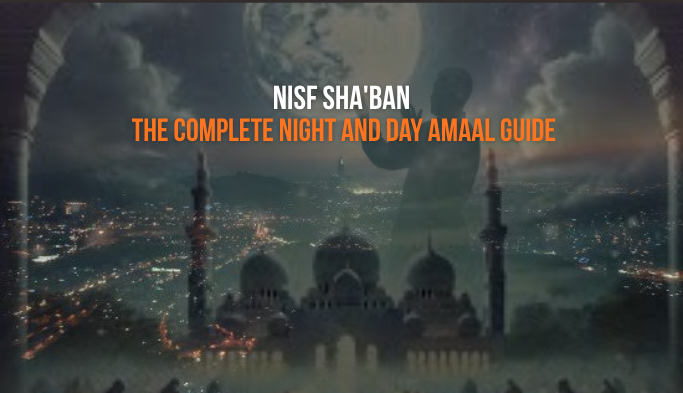
The 15th of Sha’ban — Nisf Sha’ban, the midpoint of the Month of the Prophet (s) — is one of the most elevated nights in the Shia Islamic calendar. It is known by different names in different parts of the world: Nisf Sha’ban in Arabic, Shab-e-Barat in South Asian tradition. By any name, the night begins at Maghrib on the 14th of Sha’ban and continues until Fajr of the 15th.
Imam al-Sadiq (as) is reported to have transmitted from Imam al-Baqir (as): “This is the best of nights after Laylat al-Qadr. On this night Allah grants His bounty and forgives sins out of His generosity. So strive to come close to Allah.” (Mafatih al-Jinan, Shaykh Abbas Qumi)
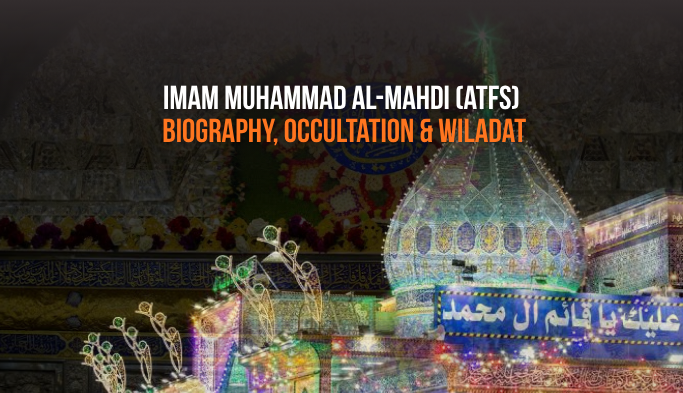
For Shia Muslims, this night carries an additional dimension of joy: it is the night of the birth of Imam Muhammad al-Mahdi (atfs), the twelfth Imam, born in Samarra in 255 AH. The night that is already described as the greatest of nights outside Ramadan is also the birthday of the Imam whose return the world awaits. Worshipping on this night is an act of devotion to Allah, of love for the Prophet’s (s) household, and of hope in the fulfilment of what was promised.
Before the Night Begins: Preparation
The night calls for deliberate preparation. Perform Ghusl before Maghrib — the ritual bath of purification with which so many of the sacred nights of the year open. Wear clean clothes. Make a clear niyyah: you are dedicating this night to Allah, to worship, to supplication, and to drawing closer to the Ahlul Bayt (as). If you have been observing the three-day build-up since the 13th, you arrive at this night already in a state of fasting and worship. If not, there is still time to intend the night fully.
Plan the hours between Maghrib and Fajr with intention. A night given to worship without structure often dissolves into wakefulness without worship. The acts below are a framework — not a checklist to rush through, but a sequence to move through with presence.
Night Amaal: From Maghrib to Fajr
Two-Rakaat Prayer After Isha
After the obligatory Isha prayer, offer a two-unit voluntary prayer. In the first rakaat, recite Surah al-Fatiha followed by Surah al-Kafirun. In the second, recite Surah al-Fatiha followed by Surah al-Ikhlas. After completing the prayer, recite SubhanAllah 33 times, Alhamdulillah 33 times, and Allahu Akbar 34 times. Then raise your hands and make sincere dua. This prayer pattern is narrated in Mafatih al-Jinan from Imam Ja’far al-Sadiq (as). (Mafatih al-Jinan, Shaykh Abbas Qumi)
Dua Kumayl
Dua Kumayl — the supplication taught by Imam Ali (as) to Kumayl ibn Ziyad — is among the most recommended acts for the nights of Sha’ban. When the 15th night falls on the eve of a Friday (Thursday to Friday), it carries the added significance of Dua Kumayl’s traditional night, but it is appropriate on any Thursday night of Sha’ban, and particularly on the 15th night whenever it falls. Recite it slowly, attending to its meaning — it is a dua about the full weight of what the relationship between a servant and Allah actually is. The full text is in Mafatih al-Jinan.
Salat Ja’far al-Tayyar (Optional)
Imam Ali al-Ridha (as) is reported to recommend Salat Ja’far al-Tayyar on this night — a specific voluntary prayer with particular recitations in each unit. It is described as carrying immense reward. The method is in Mafatih al-Jinan. For those unfamiliar with the prayer, abundant nawafil (voluntary prayers) offered with sincerity serve equally well. The night belongs to those who fill it, however they are able.
Dhikr and Tasbih
Between the prayers, spend time in dhikr — the continuous remembrance of Allah that keeps the heart from drifting even when the formal prayers are complete. Recite 100 times each: SubhanAllah, Alhamdulillah, Allahu Akbar, and La ilaha illa Allah. These are not formulas to produce quickly. They are statements about who Allah is and what the relationship between the believer and the Creator actually means. One hundred SubhanAllah said with awareness of what glory means — that is worth more than a thousand said by reflex.
Ziyarat of Imam Hussain (as) from a Distance
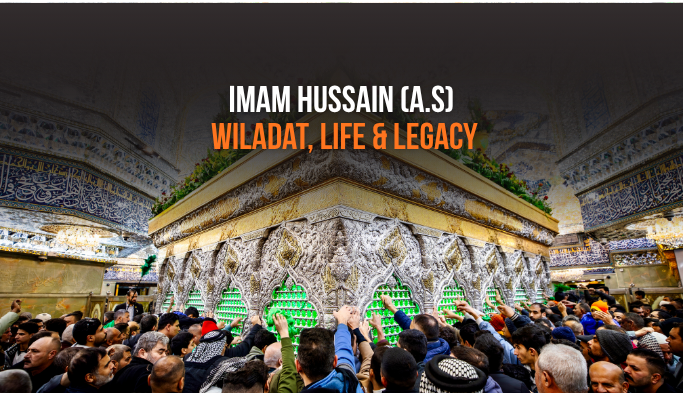
One of the most significant specific recommendations for the 15th night of Sha’ban is the Ziyarat of Imam Hussain (as). Classical sources describe a specific method for those who cannot physically be in Karbala: go to an elevated place — a roof or high terrace — look toward the right and left, raise your hands toward the sky, and address the Imam:
اَلسَّلَامُ عَلَيْكَ يَا أَبَا عَبْدِ اللّٰهِ
Translation: “Peace be upon you, O Aba Abdillah.”
Then continue with the Ziyarat text and personal salutation to the Imam. The full Ziyarat for this night is in Mafatih al-Jinan. The narrated reward for visiting — or directing the heart toward — the Imam on this night is among the greatest described for any act of devotion in the Sha’ban tradition. (Mafatih al-Jinan; Iqbal al-A’mal, Sayyid Ibn Tawus)
Dua for Imam al-Mahdi (atfs)
This is the Imam’s birthday. Whatever else this night contains, it contains that. Classical sources recommend specific supplications for this night asking Allah for the hastening of his reappearance, for his safety, and for the fulfilment of what his Imamate represents — the completion of what the prophets and Imams before him began. The texts are in Mafatih al-Jinan under the Amaal of Nisf Sha’ban. Recite them with the awareness that you are addressing Allah on behalf of a longing that the entire tradition shares: the return of the one who will fill the earth with justice as it has been filled with injustice.
Quran, Salawat, and Istighfar Through the Night
Fill the remaining hours of the night with Quran recitation — slowly, with reflection — and with salawat and istighfar. Before Fajr, sit quietly and address Allah with whatever is in your heart: the things you have not said in any formal prayer, the regrets you carry, the hopes you are afraid to name. This is the night of Allah’s open mercy. Bring everything.
The Day of the 15th
Fasting on the 15th of Sha’ban is narrated as a companion to the night’s worship — completing what the night began by extending the physical sacrifice into the daylight hours. If the three-day fast from the 13th has been observed, today is its culmination. If not, today’s fast stands on its own. (Iqbal al-A’mal; Mafatih al-Jinan)
The day continues what the night opened: salawat after each prayer, personal dua for yourself and your family, Quran recitation with meaning rather than speed, and charity — giving from what you have in a month whose Prophet (s) described generosity as one of its defining acts. End the day by asking Allah to carry you from Sha’ban into Ramadan in a state better than the one you began.
اللَّهُمَّ بَارِكْ لَنَا فِي رَجَبٍ وَشَعْبَانَ وَبَلِّغْنَا رَمَضَانَ
“O Allah, bless us in Rajab and Sha’ban, and deliver us to Ramadan.” (Bihar al-Anwar, Allama Majlisi)
The 15th night of Sha’ban is one of the deepest spiritual gifts the Islamic year offers. For those who wish to receive it at the shrine of the Imam whose birthday it celebrates — or at the shrine of Imam Hussain (as) in Karbala, whose Ziyarat is specifically recommended for this night — our 2026–2027 Iraq Ziyarat Packages cover Karbala, Najaf, Kadhimiya, and Samarra. Come for the night of the Imam born on the 15th, and stand where his grandfather’s household rests.
Visit: www.ziaratplanner.com





 04-Jun-2026